

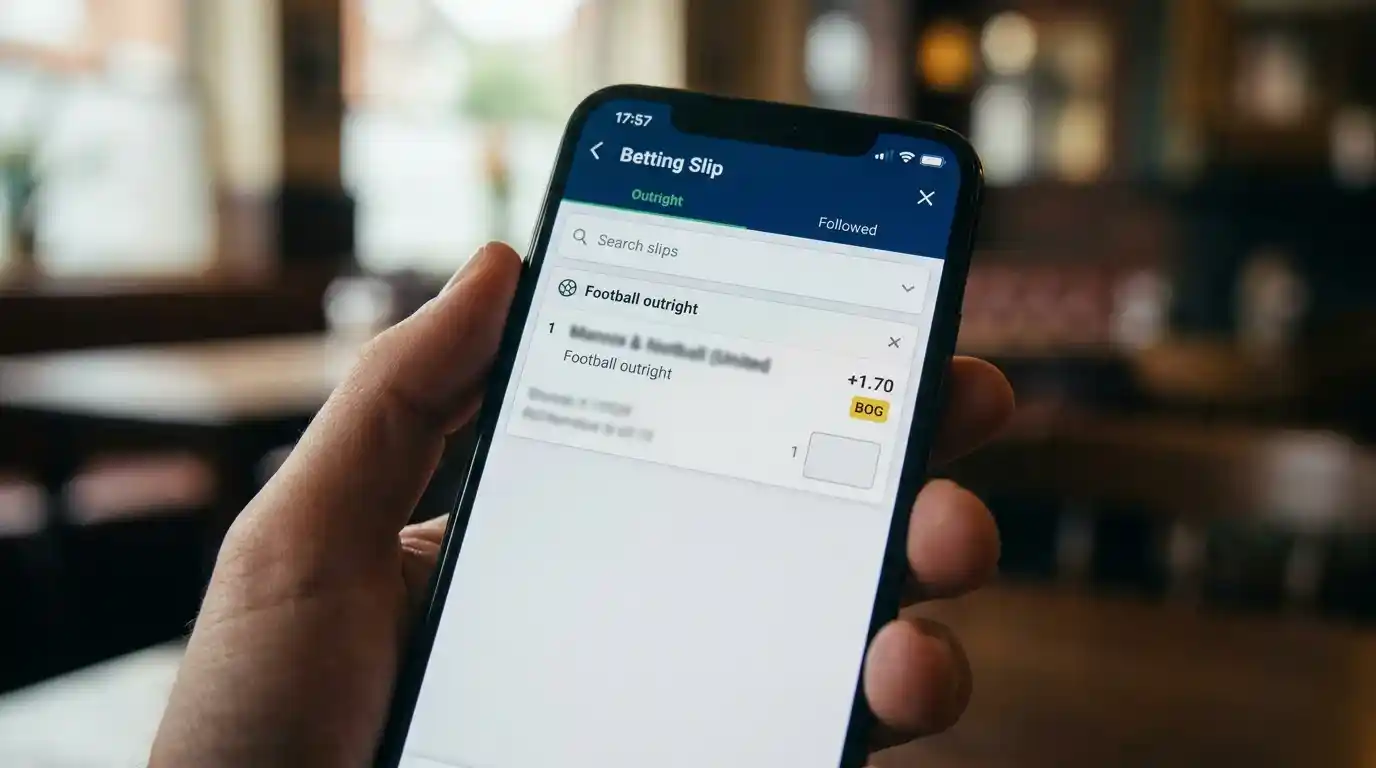
Why BOG migrated from horse racing into football outrights
Best Odds Guaranteed was, for the longest time, a horse-racing thing. You took an early price, the SP came in bigger, and the operator paid you the SP instead. Football didn’t really have an equivalent because there’s no starting price in a Premier League match — the price you take is the price you get.
That changed slowly through the last decade as UK operators started extending BOG into football outrights — title winner, top four, top scorer, manager of the season. The logic was retail. UK remote sports betting produced £2.6 bn in GGY in the year to March 2025, and £1.3 bn of that was football. The operators couldn’t ignore the demand to put their flagship promotional mechanic onto their flagship sport. Today, BOG on football is a niche but meaningful corner of the UK market. It’s also one of the most misread offers on a betting slip.
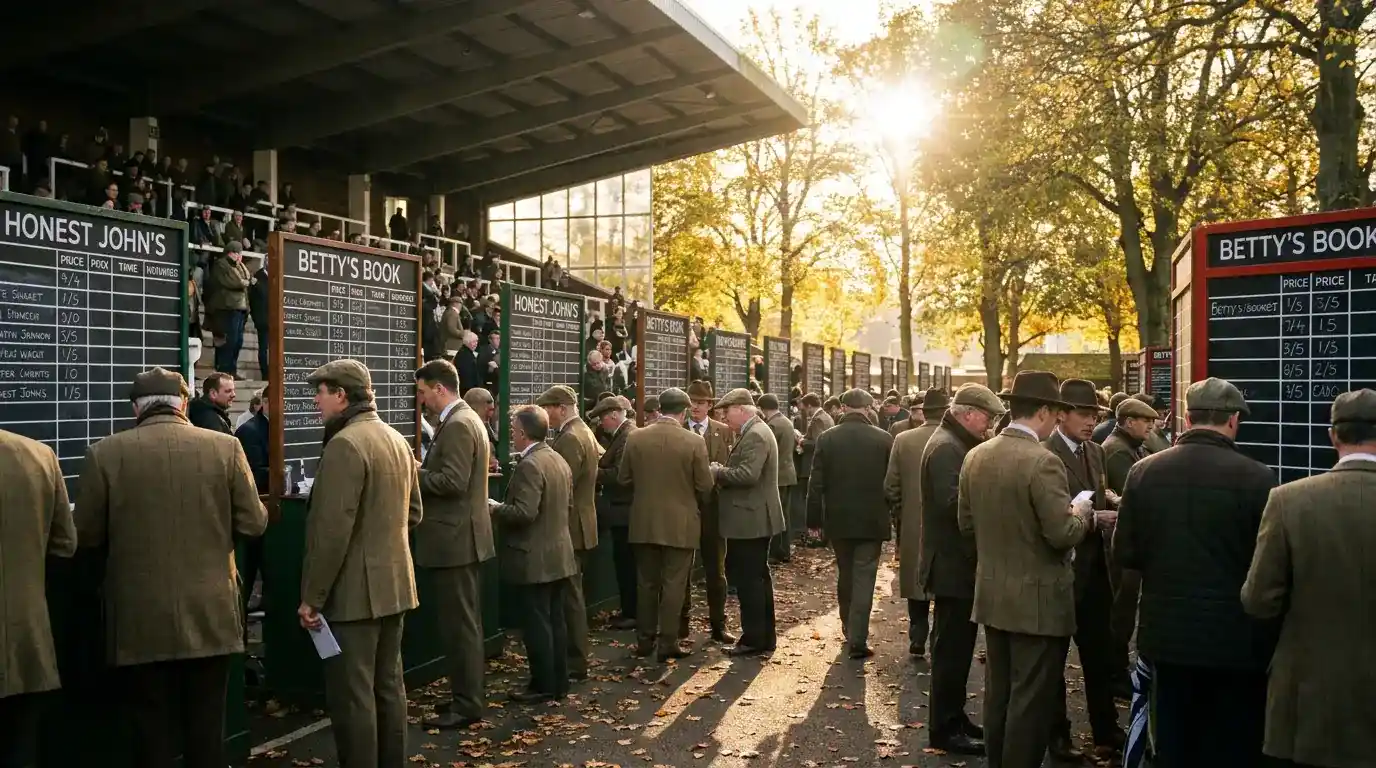
What BOG actually pays — and when it does not
The promise is simple. You back a selection at an early price. The price drifts before the qualifying event. The operator pays you out at the larger of your taken price and the final price at the cut-off. If your price shortened instead of drifting, you keep the early price you took.

That’s the headline. The detail kills most of the value. BOG on football is almost always tied to specific markets — usually outrights — and almost never extended to standard 1X2 match betting. It’s also tied to a specific timing rule. The “final price” against which BOG is compared isn’t the price at kick-off of every relevant match. It’s the price at some defined cut-off — often midnight before the first matchday, sometimes the published SP at a specific window.
The biggest catch I see punters miss is the qualifying-stake rule. Most UK operators only apply BOG to cash stakes, not free bets, and not bonus-funded stakes. Place a £10 free bet at 8/1 on Liverpool to win the title, the price drifts to 12/1, you don’t get the upgrade. That’s not buried fine print — it’s a structural feature of how the operator funds the offer.
Which football markets typically qualify
The list is shorter than the marketing implies. Premier League and EFL title outrights are usually in. Top four, top six, relegation outrights, manager-of-the-season markets — usually in. Player markets like top scorer and PFA Player of the Year — usually in at the top three or four operators.
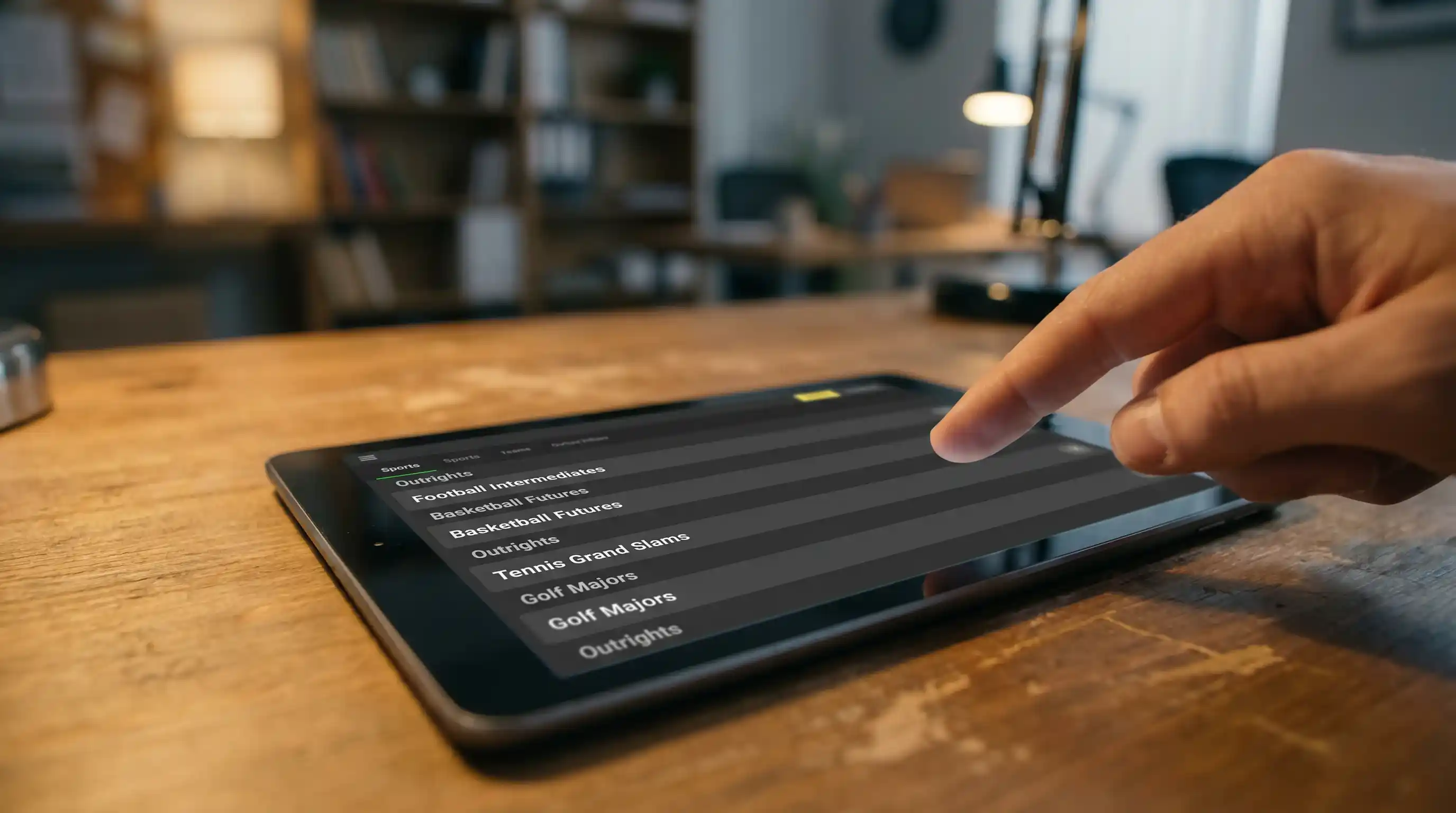
Cup outrights for the FA Cup, EFL Cup and continental competitions are inconsistent. Some operators carry BOG on them, others don’t. Group-stage outrights from international tournaments — Euros, World Cup — tend to be covered. Knockout-stage outrights become spottier.
What never qualifies, at any UK operator I work with, is the standard match market. No 1X2 BOG. No correct-score BOG. No first-goalscorer BOG. No BTTS BOG. The reason is straightforward — these markets don’t have a published starting price the way an outright does, and the operator has no clean reference point against which to upgrade. The BOG mechanic, structurally, depends on an aggregated late price that doesn’t exist in the same form for a 90-minute match market.
How different UK operators run BOG on football
The rules differ enough between operators that two BOG offers on the same outright can pay out differently. Some operators define the “final price” as the price 24 hours before the qualifying event. Others use the price at the moment the market closes for new bets. A few link it to an aggregated industry SP.
Maximum-stake caps are common — typically £100 to £200 per qualifying bet. Anything above the cap reverts to the taken price. The cap matters more than punters realise because a £500 outright at 10/1 with a £100 BOG cap is really a £100 BOG bet plus a £400 standard bet stitched together. Operators rarely flag that explicitly.

The UKGC has been increasingly direct about how offers are presented to UK consumers. As Andrew Rhodes, the regulator’s chief executive, put it in late 2025: “There will be no more warnings for those actors. I’m not talking about you, I’m talking about providers who may be also servicing the illegal market. There will be no warnings.” That posture extends well beyond illegal operators — it sets the tone for how licensed UK bookmakers are expected to communicate BOG terms. If a market is excluded from BOG, that exclusion has to be visible in the slip, not buried in the T&Cs. The licensed UK operators with serious market share — and William Hill alone held 37.83% of UK sports betting PPC click-through in February 2026 — are generally clean on this front. Smaller licensees are where the inconsistency turns up.
Best Odds Guaranteed versus price boost — not the same product
This trips up punters constantly. A BOG offer and a price boost look similar on a slip — both decorate a selection with a small graphic and promise something extra. They’re different mechanics.
BOG is conditional and after-the-fact. You don’t get the upgrade until the market settles. If the price didn’t drift, you don’t get anything. The benefit is statistical — across a long sequence of BOG-qualifying bets, the average upgrade is worth a small percentage of total turnover.
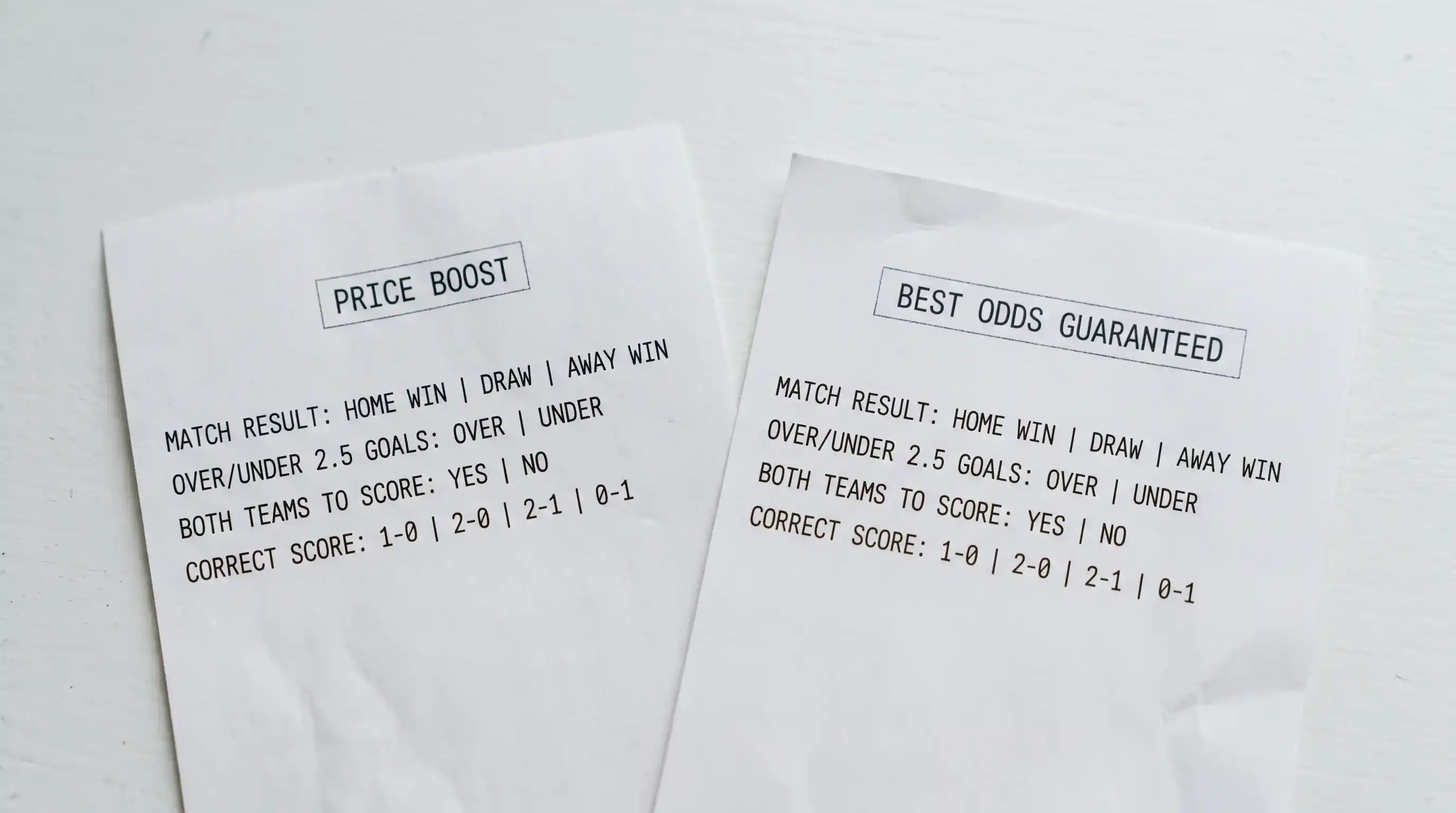
A price boost is unconditional and up-front. The operator simply pays a better price than the standard book. 7/4 becomes 2/1. 5/2 becomes 11/4. You take that price and it’s yours regardless of what happens to the market afterwards. The catch is that boosts usually carry a maximum stake — often £10 or £25 — which limits how much you can actually deploy.
A useful rule of thumb: take the boost on small stakes for selections you’d back anyway, and rely on BOG for the larger stakes that exceed the boost cap. The two mechanics interact rather than competing.
A worked example on a Saturday outright
Let’s walk through how this actually plays out. I back Aston Villa to finish in the Premier League top four at 11/4 in early September. The market’s final cut-off price, defined by my operator as the closing line of round 28, settles at 7/2. I bet £25.
Standard settlement: £25 at 11/4 returns £93.75 (profit £68.75) if Villa finish in the top four.
BOG settlement: £25 at 7/2 returns £112.50 (profit £87.50) if Villa finish in the top four. The BOG upgrade is worth an extra £18.75 — about 27% above the taken-price profit.
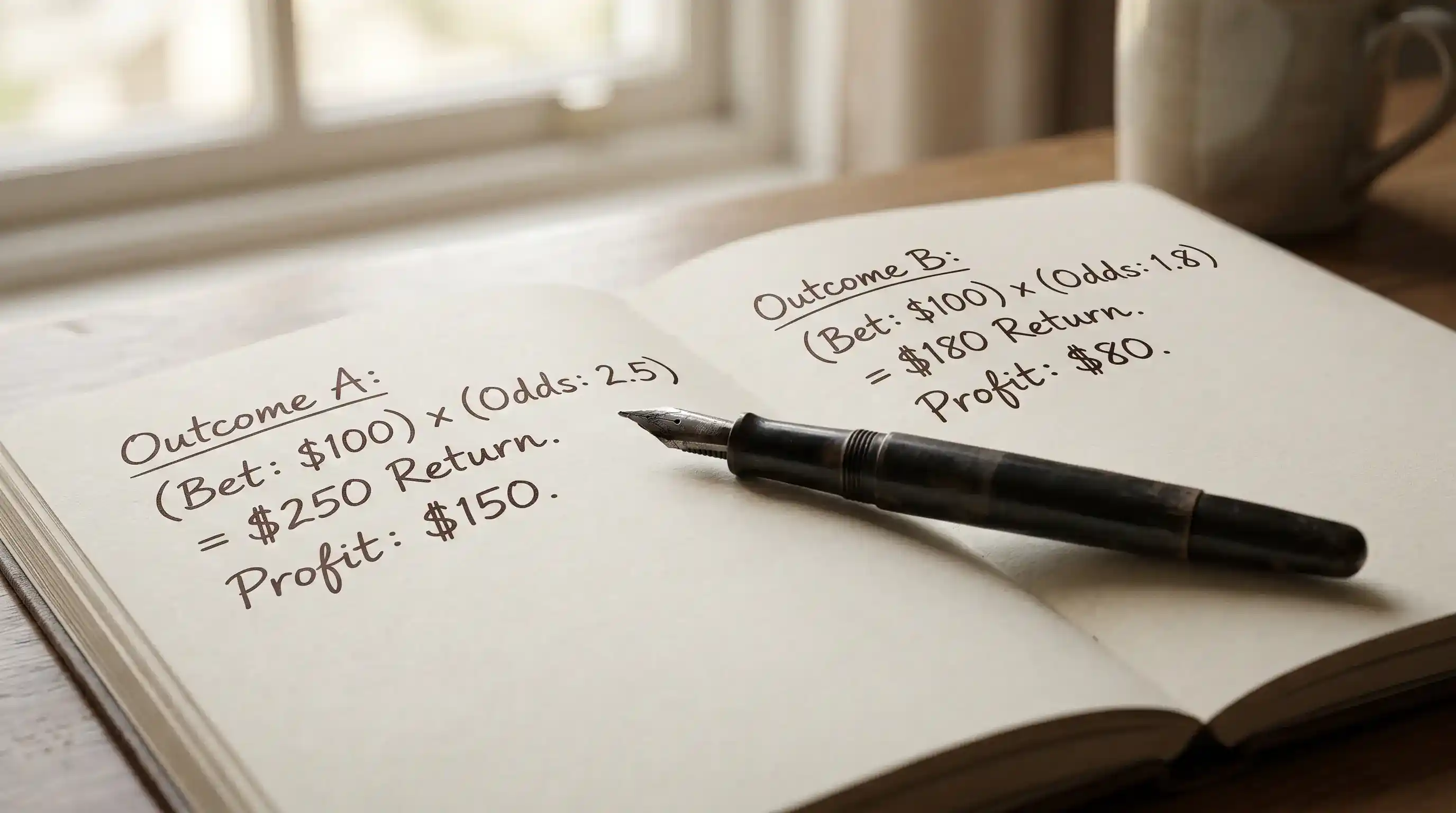
If Villa’s price had shortened instead, say to 9/4, BOG would have done nothing. I’d have kept my 11/4. That’s the asymmetry — BOG only ever pays in the punter’s favour. The cost to the operator is absorbed in a slightly tighter standard book on BOG-eligible markets, because they know they’re occasionally giving up the upside.
The compound effect across a season of outright betting is meaningful. A serious ante-post punter who exclusively backs early prices on BOG-eligible markets can pick up two to four percent of incremental return purely from drift, on top of whatever edge their selection process produces. Combine that with the related mechanic of odds boosts and enhanced prices at UK bookmakers and you start building a structural advantage that’s invisible on any single bet but compounds quickly.
When the small print is the whole product
BOG isn’t a gift. It’s a promotional commitment with structural conditions, and the operators who carry it know precisely what it costs them. Your job is to read those conditions before placing the stake, not after.
The questions I’d ask of any BOG offer before taking the price: which markets does it actually apply to, what is the defined cut-off price reference, what’s the maximum-stake cap, does it apply to free-bet funded stakes, and does the upgrade get paid in cash or as a free bet token? If a UK operator can’t answer those five clearly on its terms page, walk away. The product is built to be transparent. Operators who muddy the terms are the ones to avoid.
Does BOG apply to in-play football betting?
No. BOG is built around outright markets with a published reference price at a defined cut-off. In-play football moves continuously, so there"s no clean reference price for the upgrade to attach to. Every UK operator I work with restricts football BOG to outrights and certain ante-post markets.
Will my free-bet stake qualify for BOG?
Almost never. The vast majority of UK operators exclude free-bet funded stakes from BOG specifically because the upgrade would be paid in cash on a stake the operator never received as cash. Always read the qualifying-stake clause before assuming the offer applies to a token-funded bet.
What happens to BOG if the football match or outright market is voided?
Standard void rules apply and BOG goes with them. If your outright is voided — say, because of a competition disruption — your stake is returned and BOG never triggers. The upgrade is a settlement adjustment, not a separate product, so it inherits whatever the underlying market does.
This material was created by the Pitchledger team.
