

Why bookmaker streams have become the default lower-league window
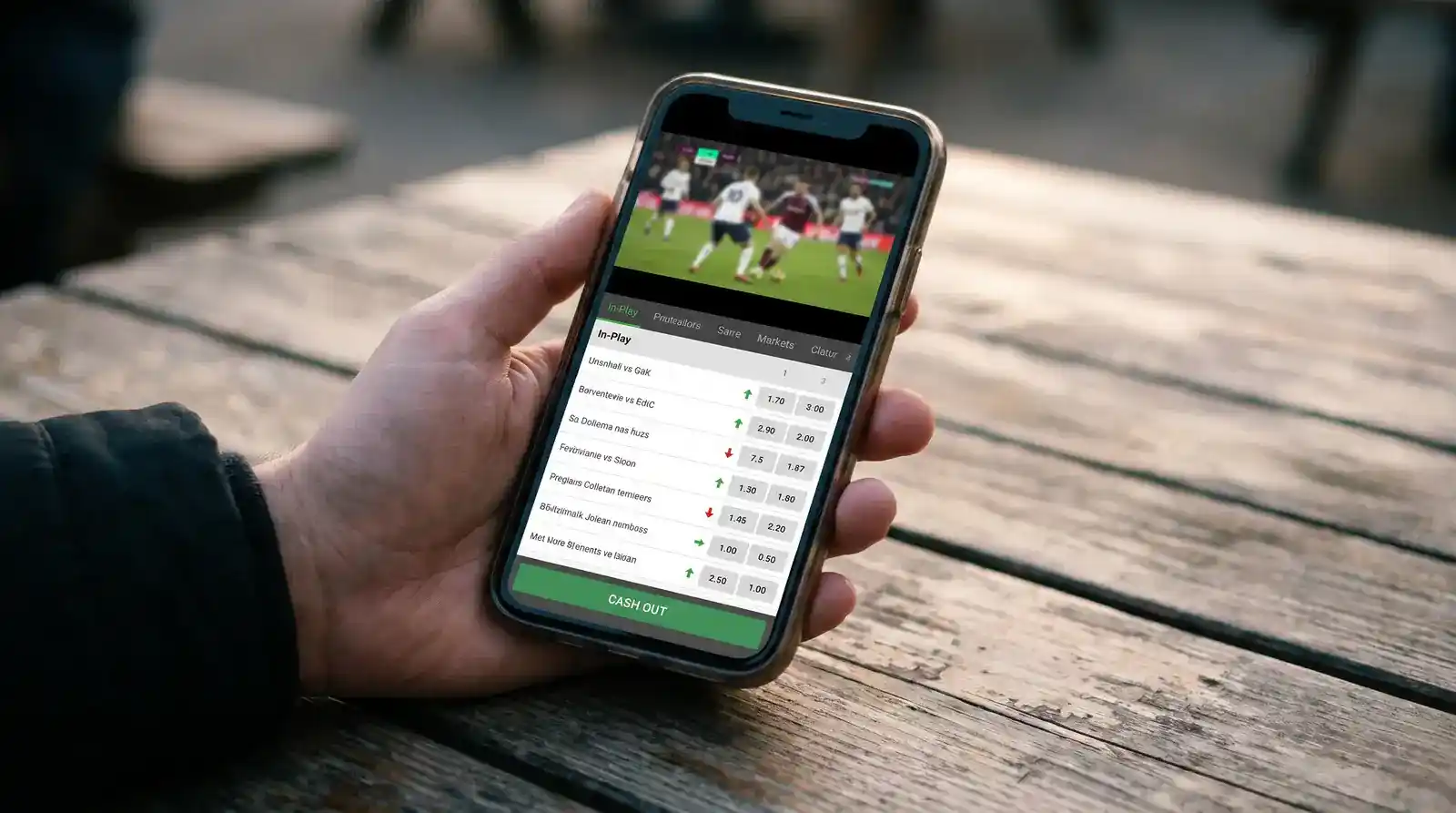
If you’d told me ten years ago that the most reliable way to watch a Tuesday-night League One match would be through a betting app, I’d have laughed. Today I genuinely don’t know any other way to do it. Sky and TNT carry the headline fixtures. EFL+ has its own subscription model. But for a Plymouth-Burton-on-Trent midweek game, the bookmaker stream is the path of least resistance for any UK football fan who isn’t physically at the ground.

That shift has consequences. Online gambling participation in Britain runs at 39% of all adults — 16% when you exclude pure-lottery players. A meaningful chunk of that engagement isn’t betting at all in any active sense. It’s punters keeping accounts open and partially funded specifically because the stream access is gated to it. The operator funds the rights deals because the engagement they buy with streaming far exceeds the direct revenue from streamed-match betting.
The rights landscape for streamed football in 2026
The UK football streaming landscape splits into roughly three tiers in 2026. Premier League streaming through bookmakers doesn’t really exist — those rights sit with Sky, TNT and Amazon’s later-stage broadcast windows, and the PL doesn’t sub-license live streaming to betting operators. Anything you see is highlight or stat-feed material, not live video.
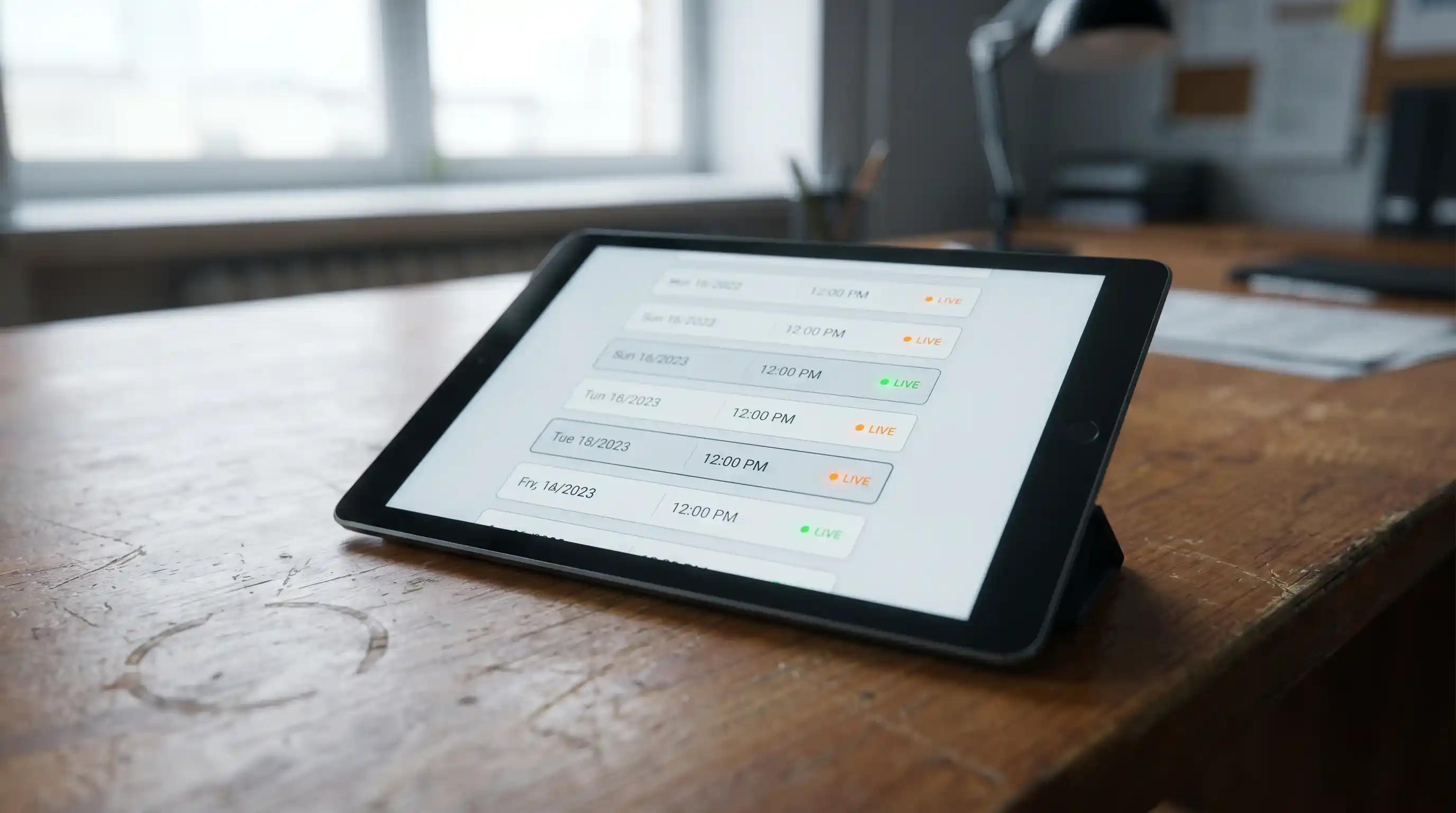
EFL coverage is where the bookmaker stream actually lives. The Championship, League One and League Two have an extensive streaming arrangement that allows licensed UK operators to carry live video of most non-broadcast fixtures. The big international operators carry the broadest coverage — five to ten matches on a typical Saturday afternoon, plus midweek rounds — while smaller domestic operators carry a slimmer slate.
The third tier is continental coverage. European mid-tier leagues (Eredivisie, Liga Portugal, Belgian Pro League, top divisions in Eastern Europe), South American football, MLS, J-League, K-League. Most international operators carry deep international coverage because the underlying rights aggregator handles the licensing once and distributes to multiple operator clients.
What’s largely absent from bookmaker streaming is women’s club football beyond top-flight WSL, lower-tier non-league English football, and grassroots cup competitions. Coverage in those segments depends on the operator’s discretion and the rights aggregator’s reach.
Access rules by operator — funded account versus qualifying stake
Every UK operator that carries football streaming gates access in one of three ways, and the rule matters because it determines what you’re actually paying to watch.
The funded-account rule is the most common. You need a positive balance in your account to watch a stream. Place no bet, just keep the account topped up, and the stream plays. This is genuinely the cheapest way to consume lower-league football live — a £20 balance kept across the season gives you access to most EFL midweek and Saturday non-broadcast fixtures at no playing cost beyond the float.
The qualifying-stake rule is more restrictive. You need to have placed a bet of at least £1 (sometimes £5) on the specific match within a defined window — typically 24 hours before kick-off — to unlock the stream. The bet doesn’t need to win, but it has to be active. This rule pushes the engagement-monetisation explicit. You can still watch lower-league football for under a fiver a match, but you’re committing capital each time.
The hybrid rule appears at a few operators — funded account for some fixtures, qualifying stake for others. The hybrid is usually correlated with the rights cost to the operator. Cheap rights (lower-league EFL, mid-tier continental) sit on funded-account; expensive rights (FA Cup later rounds, marquee continental) sit on qualifying-stake.
Latency versus broadcast TV and how to read it
Bookmaker streams are not real time. They’re not even broadcast-time. Most UK bookmaker football streams run 15 to 45 seconds behind the actual match — long enough to matter, short enough that punters often misjudge it.
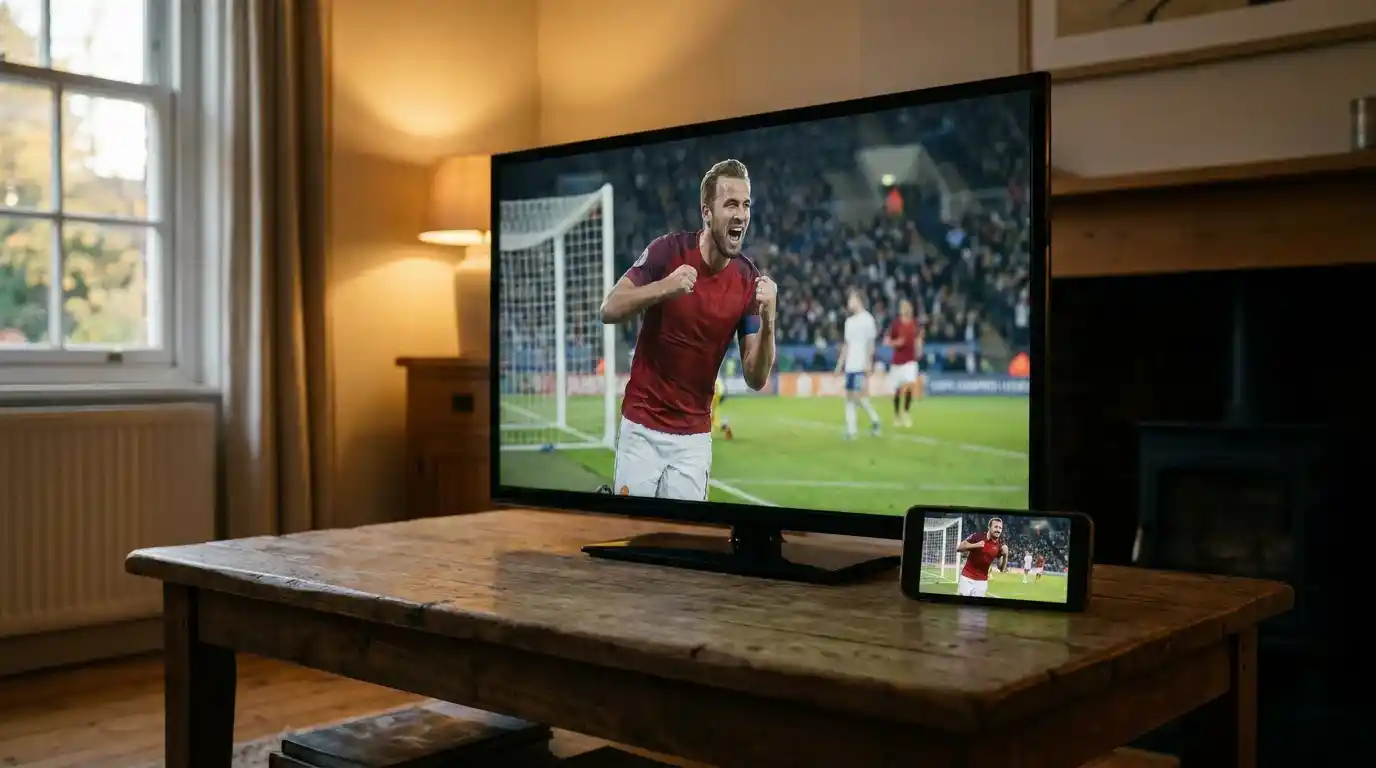
The delay sits in the encoding pipeline. Raw video is captured at the ground, encoded for delivery, distributed through a CDN, and decoded on your device. Each step adds latency. Mobile-app streams typically run faster than browser streams (15 to 25 seconds) because the app uses a lighter codec and better client-side caching. Browser streams sit closer to 30 to 45 seconds, especially over flaky home wifi.
The practical implication for in-play betting is that the live market on your operator’s platform is roughly synchronised to the encoded video you’re watching, not to the actual match. If you’re watching the stream and a goal goes in, the market suspends the moment the encoded video shows the goal — by which point the actual stadium has been celebrating for half a minute. Punters who watch on TV (which is broadcast-synchronised) and bet through the app routinely see markets suspend before the stream shows the trigger event, because the trader’s data feed is faster than the video.
If you’re using cash-out, this matters even more. The cash-out engine prices off live data, not your video feed. By the time you see something dramatic happen on the stream, the cash-out price has already moved against you.
Mobile app versus browser experience
The two streaming environments behave differently enough that the choice matters more than punters realise.
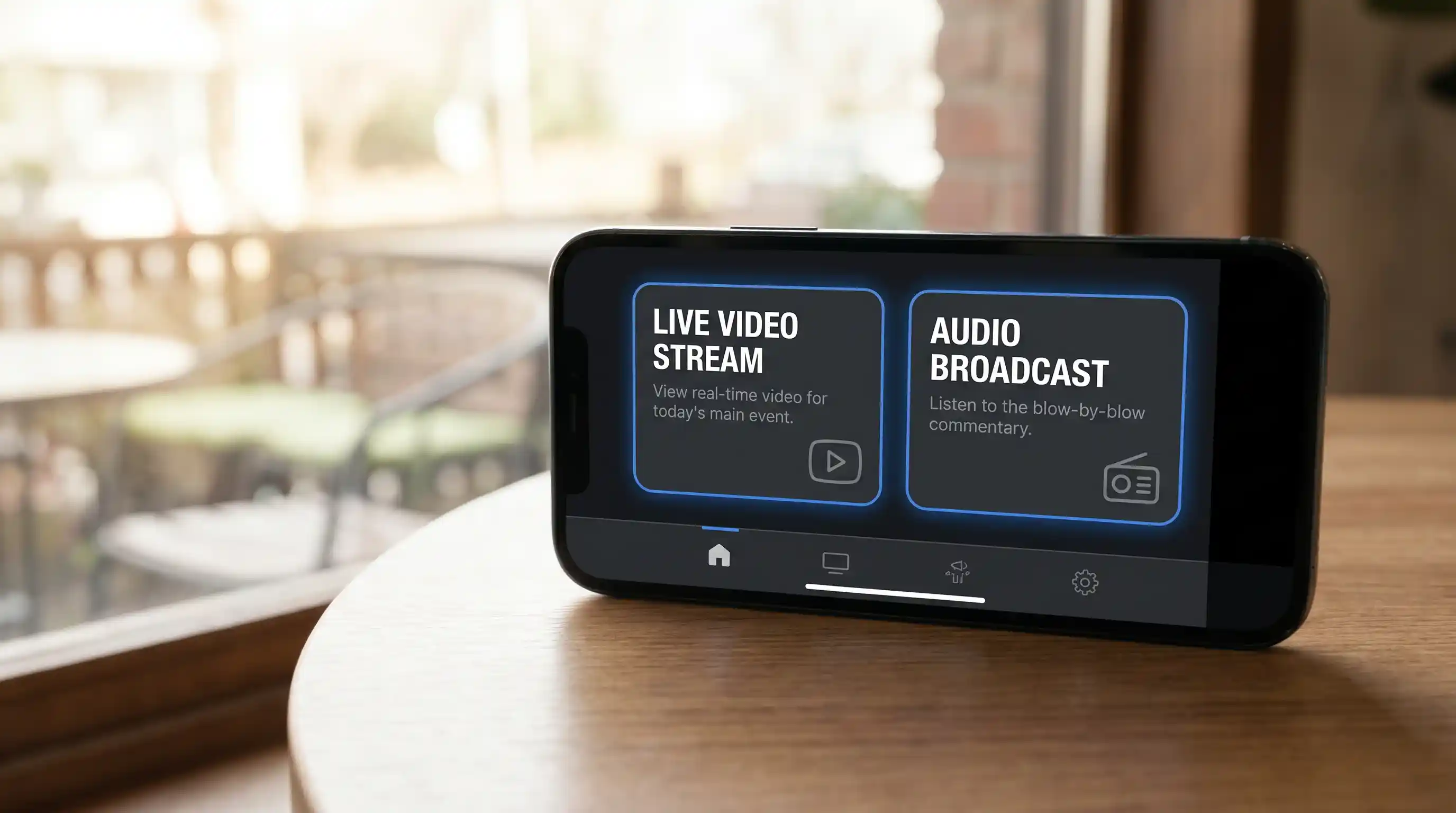
Mobile-app streams are typically lower-latency, more bandwidth-efficient, and integrate cleanly with the in-play betting UI. The match plays in a top tile, markets sit below, bet placement happens without losing the video. Most UK operators have invested significantly in this UX over the last three years because it drives engagement metrics.
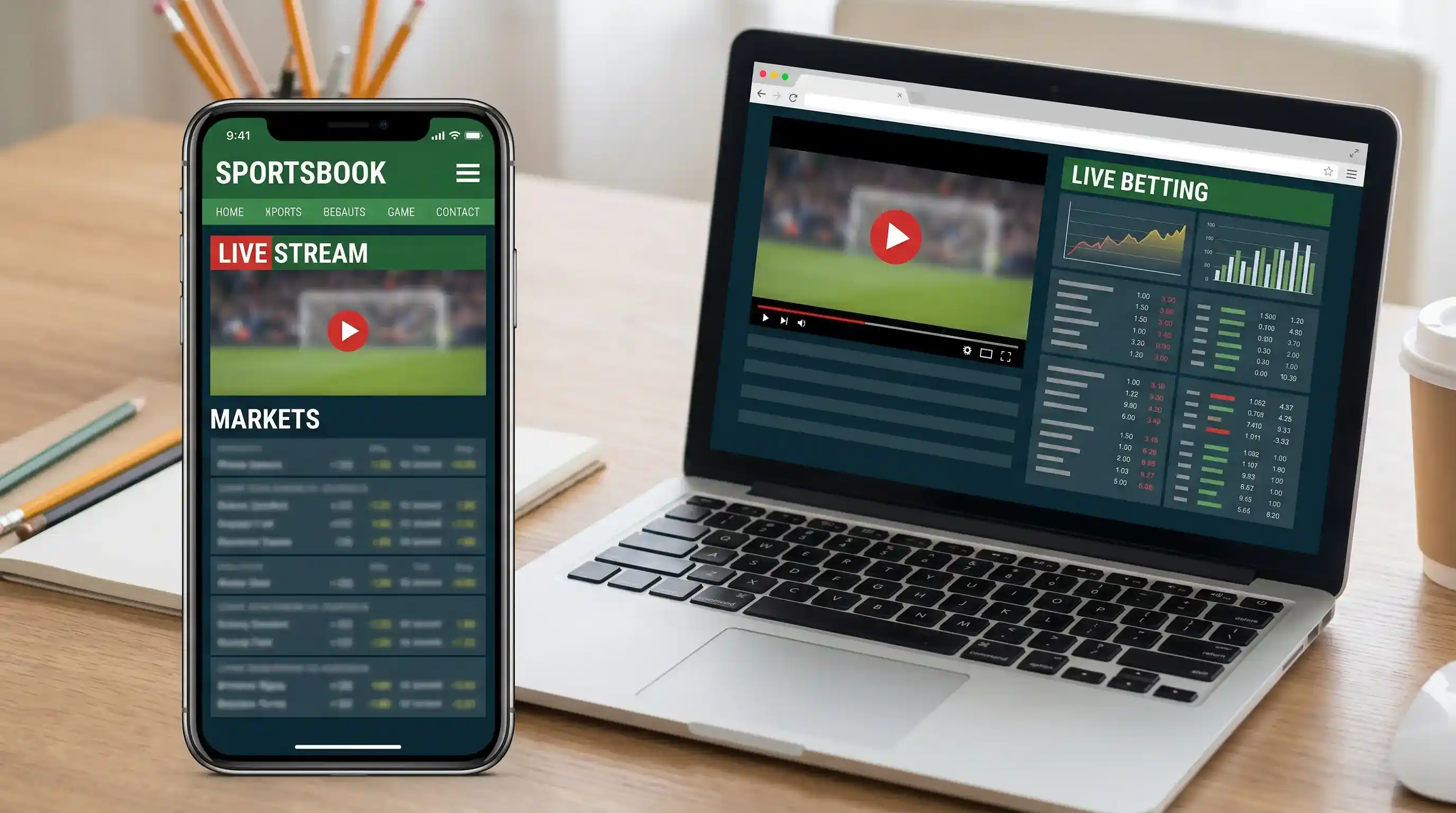
Browser streams are usually higher-latency, more bandwidth-heavy, and the integration with the betting UI is clunkier. The video player is often a smaller pop-out window that has to share screen real estate with the markets list. Browser streams also suffer from more aggressive ad-blocker interference, which can break the video player without obvious error messaging.
If you’re going to watch a bookmaker stream regularly, the mobile app is the right tool. The picture is comparable in quality at typical mobile resolutions, the experience is purpose-built, and the latency advantage is real. The browser version is a fallback for desktop use, not a primary product.
Legal and territorial restrictions for UK accounts
Bookmaker football streaming is geographically restricted. A UK-licensed operator’s stream is licensed for viewing inside the UK and a small number of other jurisdictions, depending on the underlying rights deal. If you try to watch from outside the UK, the stream will either fail to play or display a territorial-restriction error.
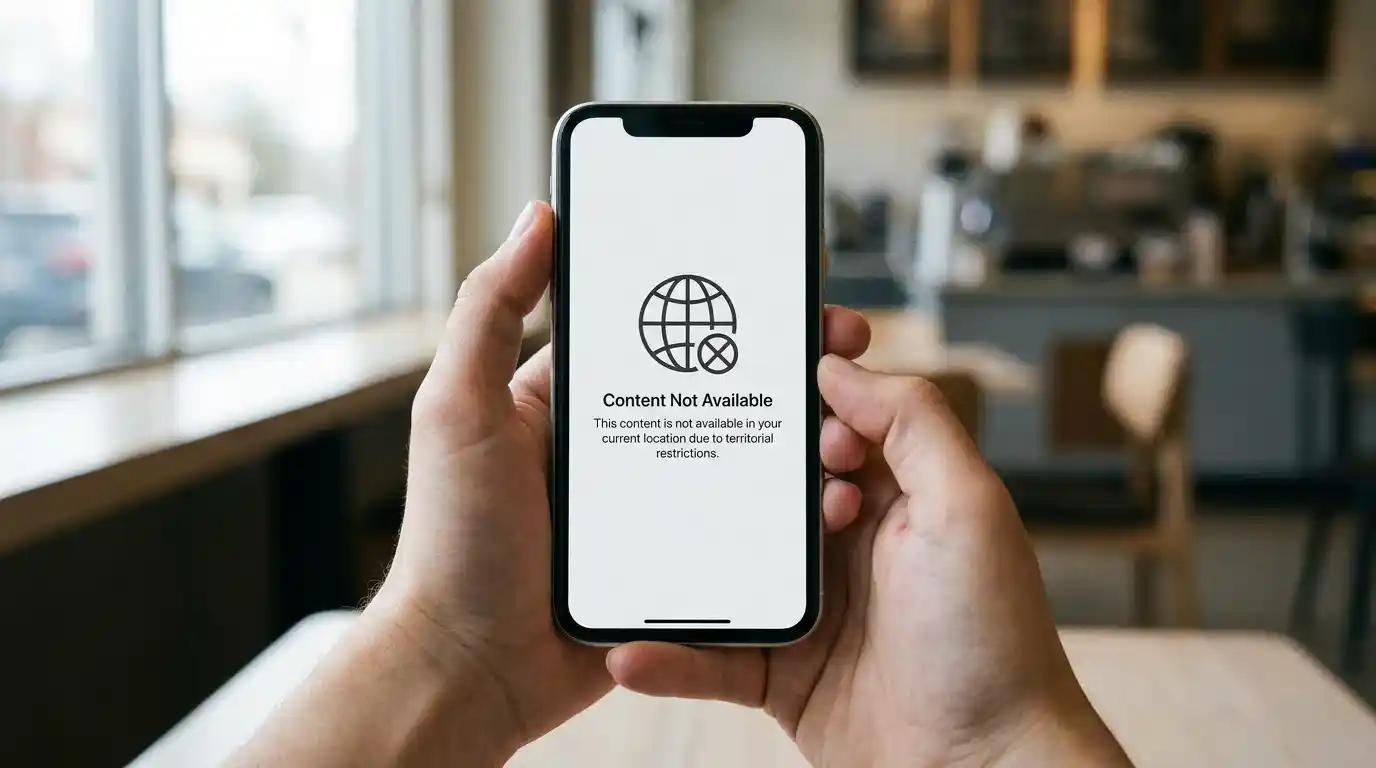
This trips up British punters travelling abroad more often than anything else. The account works for placing bets in most jurisdictions where the operator is licensed, but streaming follows separate rights rules. The fix is to wait until you’re back in the UK, not to chase a workaround.
VPN use to bypass territorial restrictions is a meaningful risk. The UK Gambling Commission position is unambiguous — operators are required to enforce geo-blocking under their licence conditions. Using a VPN to obtain access while travelling is a breach of operator terms and can trigger account suspension, including the freezing of any associated balances. The risk isn’t theoretical. I’ve spoken to punters whose accounts were locked after the operator detected VPN traffic from a non-licensed jurisdiction.
One related point sits in the safer-gambling space. Streaming creates engagement, engagement creates more time spent in the product, and more time spent correlates with higher loss risk for punters at the margin of problem play. As GamCare’s chief executive Victoria Corbishley framed the broader treatment picture in early 2026: “More people affected by gambling harms are choosing to start treatment. The National Gambling Helpline is a 24/7, confidential route to support, and our advisers rapidly connect people with free, specialist help across Great Britain. That first conversation remains the crucial turning point.” Streaming isn’t the cause of harm, but the operator’s incentive to keep you on the platform matters. If you’re using the stream as the primary reason to keep an account funded, the bet sizes need to be smaller than your engagement time implies.
The live in-play product that streaming pairs with is its own animal — same data feed, same trader’s-eye-view, but with bet placement rather than passive viewing. The mechanics of in-play football betting in the UK cover the market-suspension rules, latency dynamics and microbetting menu that live football streaming sits alongside.
The viewing window that pays for itself in fixture access
Bookmaker streaming is a genuinely useful product for UK football fans who care about lower-league and mid-tier continental fixtures. The picture quality is good, the coverage is broad, and the marginal cost (a small funded balance or occasional £1 qualifying stake) is meaningfully lower than any other route to the same matches.
The right way to use it is as a fixture-access service first and a betting trigger second. Open the account, fund it modestly, let the stream do the work it’s designed to do, and place bets only when you’d have placed them anyway. The product loses its value the moment you start treating the stream as a reason to engage with markets you don’t actually want to engage with. Operators know this dynamic intimately and design the UI accordingly. Your discipline is the only counterweight.
Can I open the stream without placing a bet?
Yes, at the majority of UK operators that carry football streaming. Most operate under a funded-account rule — you need a positive balance but no active bet on the streamed match. A small minority operate a qualifying-stake rule that requires a bet of £1 or more within the 24 hours before kick-off. Check the operator"s streaming-access terms before assuming.
Are EFL Championship matches always available on stream?
Most are, but not all. Selected Championship fixtures are broadcast on Sky Sports and aren"t available on bookmaker streams — the broadcast rights window blocks parallel streaming. The non-broadcast majority of Championship matches are widely streamed. Saturday 3 p.m. and midweek non-broadcast windows are the reliable streaming slots.
Does VPN use risk closure of my UKGC account?
Yes, real and significant risk. UKGC-licensed operators are required to enforce geo-blocking and detect VPN traffic. Detection can trigger account suspension and balance hold pending review. The risk doesn"t justify the convenience for travel viewing — wait until you"re back in the UK and use the account normally.
This material was created by the Pitchledger team.
