
Best UK Bookmakers for Football: A Data-Driven Guide for 2026
 Available in US
Data-driven football betting analysis for UK punters
How UK football betting actually works in 2026
I have spent twelve years modelling Premier League prices, tearing apart margin sheets and reading every UKGC consultation that landed on my desk. The thing nobody tells a new punter is that the modern UK football market does not look anything like the one I joined. The high-street bookie still exists, but the real action sits on phones, the real intelligence sits in trading rooms in Stoke and Gibraltar, and the real money sits in a £1.3 bn pot that the regulator now watches with a degree of attention that would have been unthinkable a decade ago.
This guide is the version I wish I had been handed when I started — not a glossy parade of welcome offers, but a working map of how the British football betting industry priced, sold and policed itself heading into 2026. The market produced £1.3 bn in football GGY across financial year 2024–25, William Hill currently holds 37.83% of UK PPC search share and bet365 sits on 16.2%, and the regulatory machinery has rewritten what a UK bookmaker is allowed to do.
About this guide
Written by a UK Football Betting Analyst with twelve years' experience in Premier League odds modelling, bookmaker margin analysis and UK gambling regulation, focused on UKGC compliance and value-betting frameworks. Where numbers appear they come from the Gambling Commission's own statistics, Sportradar's integrity reporting, GamCare's annual review or the Betting and Gaming Council.
Everything below assumes you are an adult in Great Britain holding an account with a UK Gambling Commission licensee. If that is not your situation, the regulatory and consumer-protection parts of this article do not apply.
The numbers behind UK football betting in one minute
- UK football generated £1.3 bn in remote GGY across financial year 2024–25 — the single largest sports vertical on UKGC-licensed sites.
- Eleven of the twenty 2025/26 Premier League clubs still wore a gambling brand on the front of their shirt; that ends with the 2026/27 season under a league-wide voluntary ban.
- Offshore, unlicensed operators handled an estimated £16.6 bn in UK stakes in 2025 — five times what they handled in 2019, and the single biggest threat to the regulated market.
- Financial Risk Assessments, the statutory levy and granular marketing opt-ins all switched on in 2025; if you punt online, every one of them touches you.
- Pick the bookmaker by margin, market depth and tooling, not by the size of the welcome offer.
Inside the £1.3 billion UK football betting market
The first time I saw the football line on a Gambling Commission GGY breakdown, I laughed out loud. Football alone — not all sport, not all betting, just football — accounts for more remote GGY than horse racing and every other discipline combined. £1.3 bn out of a £2.6 bn remote sports betting total in financial year 2024–25, with racing trailing at £766.7 m. Whatever Britain pretends to care about in pubs and pundit columns, the wallet has chosen its sport.

£1.3 bn
Football GGY, remote, FY 2024–25
3,086
Licensed gambling activities at 31 March 2025
13.5 m
Active monthly accounts at Q1 2025 across UK operators
11.4%
Forecast UK sports betting CAGR through 2030
The pot is also growing. Q4 of calendar 2025 saw the British gambling industry deliver £4.5 bn of GGY in a single quarter (£3.3 bn excluding the lottery), with Remote Casino, Betting and Bingo producing £2.12 bn. Forecasters expect the UK sports betting market to grow at a compound annual rate of 11.4% out to 2030, reaching $21.3 bn by the end of the decade.
Growth is concentrated in fewer operators than it used to be. The licensee count fell by 2.3% year on year, leaving 3,086 active gambling activities on the UKGC public register at the close of March 2025. Account-level data showed UK operators carrying 24.4 m active accounts and 34.0 m new registrations across the year, with new-account volume down 4.1% as Financial Risk Assessments bit into the easy sign-up funnel.
£1.3 bn
UK football betting GGY — more than racing, tennis and every other sport on UKGC-licensed sites combined.
What the headline number does not show is concentration. The big five operators behind Flutter, Entain, bet365, William Hill and the Sky Bet stable take the lion's share of that £1.3 bn; Flutter alone reported roughly $1.7 bn in UK and Irish sports betting revenue across 2024. The football market is large but it is not pluralistic.
What separates a good UK football bookmaker from a great one
A friend asked me last August which bookmaker I would recommend for his Saturday acca. I gave him a three-minute answer about overround, BOG terms and cash-out latency, and the look on his face told me he wanted the question answered, not lectured. The honest reply is that there is no single "best" bookmaker for football, because the criteria depend on how you bet. A weekend acca punter wants accumulator boosts and a forgiving acca insurance threshold. A live-betting devotee wants low latency and a fast cash-out engine. A Saturday outright player wants a tight overround and Best Odds Guaranteed extended to football. They are not the same shop.

The Gambling Commission's own research lays bare why this matters: 34% of British players admit that gambling advertising has influenced their behaviour and 16% say it has actively increased the frequency at which they bet. Picking a bookmaker on the back of a glossy TV slot or a £30 free-bet sticker is the most consistently expensive mistake I see new punters make. The shop that shouts loudest is, more often than not, the shop that quietly runs a heavier margin on the markets you actually play.
Five things to verify before you fund an account
- Confirm the licence on the UKGC public register — operator name and account number should match exactly.
- Read the overround on three markets you actually plan to play on a typical Premier League fixture.
- Check whether Best Odds Guaranteed extends to football or stops at horse racing.
- Set a deposit limit and a single-day loss limit before placing the first bet.
- Read the welcome offer's small print on minimum odds, exclusions and how the free-bet stake is returned.
Tim Miller, the UKGC's executive director of research and policy, put the regulator's view of the consumer relationship plainly in November 2025: "We have seen an increase in participation in gambling — 27 percent in 2024 compared to 30 percent in 2025." The good shops have caught up to the posture that the player is an account-holder with rights, not a marketing target. The marketing-led ones have not.
Do
- Compare overround across at least three markets, not just the headline 1X2 line.
- Configure deposit, loss and session limits on the first visit.
- Test the cash-out engine on a fixture you do not intend to bet.
- Save the licence number and the UKGC dispute pathway.
Avoid
- Sign up purely because the welcome offer is the headline number.
- Treat acca insurance as a substitute for staking discipline.
- Assume a UK-facing site is UKGC-licensed because it looks British.
- Opt in to every marketing channel on registration.
Bookmakers also vary on the things you cannot see from the home page: market suspension behaviour on goal alerts, cash-out withholdings on a Bet Builder, and how aggressively they reduce limits for winning accounts. Those traits emerge only with use.
The leading UK bookmakers for football
Search "best football betting sites" on any Saturday morning and you will find the same eight or nine names cycling through every affiliate list. That is not editorial conspiracy. The UK football market really is concentrated, and the operators below sit there because they hold UK Gambling Commission licences and turn up in every meaningful piece of operator-level data the Commission publishes. What this section is not, however, is a ranking. There is no "number one" UK football bookmaker, because the question is meaningless without a question about what kind of football betting you do.
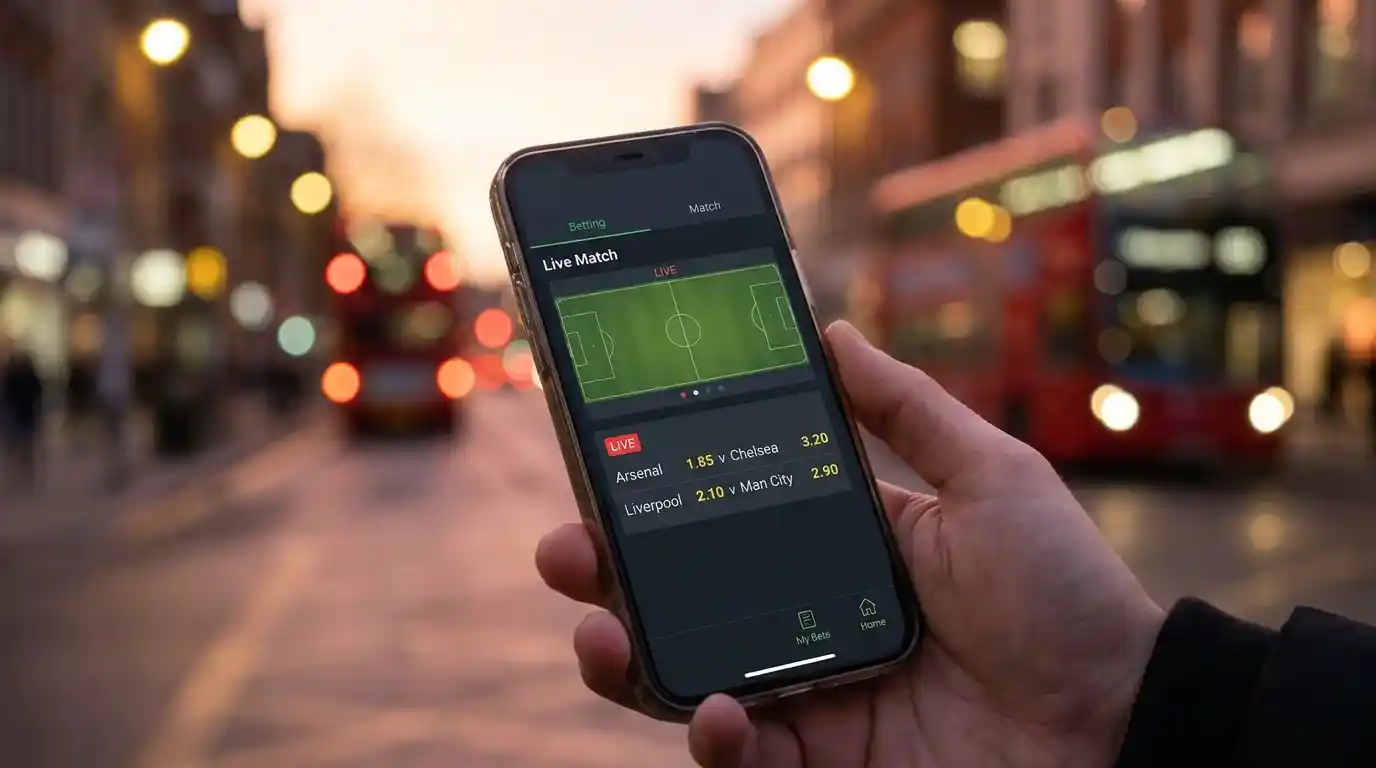
The Adthena PPC data for February 2026 tells you who is fighting hardest for the football click. William Hill captured 37.83% of share-of-clicks across UK gambling and gaming sports betting search, with bet365 on 16.2%. Behind them sit the Entain-owned brands (Ladbrokes, Coral), the Flutter-owned brands (Paddy Power, Betfair, Sky Bet) and a handful of standalone operators (Betfred, Bet Victor, Betway). Flutter alone posted roughly $1.7 bn of UK and Irish sports betting revenue for 2024.
The traditional incumbents
Bet365, William Hill, Ladbrokes, Coral, Betfred. Deep market coverage, large in-house trading teams. Competitive on Premier League; overround on lower leagues widens quickly.
The data-first operators
Sky Bet, Paddy Power, Betfair Sportsbook. Lean towards stat-driven UIs and request-a-bet markets. Stronger on Bet Builder coverage than the older incumbents.
The exchange model
Betfair Exchange. Peer-to-peer pricing rather than fixed odds. Premier League outright prices tend to lead the market, with commission rather than overround as the operator's take.
The app-first newcomers
UKGC-licensed sportsbooks launched in the last 24 months. Lead on mobile UI and notification design, but often have soft caps on stake limits and narrower lower-tier coverage.
What you should compare across these buckets is not the welcome offer. It is the four characteristics below — margin, BOG, app stability and streaming — because those affect your return over a full season, not a sign-up weekend.
| Characteristic | What good looks like | What average looks like | What to avoid |
|---|---|---|---|
| Premier League 1X2 overround | 104–105% | 106–107% | 108%+ |
| Best Odds Guaranteed on football | All UK outrights and major specials | Selected fixtures or opt-in tokens | Horse racing only |
| App stability under load | Confirmation under 1 second on a 3pm card | 1–3 second confirmation, occasional retry | Suspended slips at goal time |
| Live streaming coverage | EFL plus European football with funded account | EFL only, with qualifying stake | No football streaming |
If you bet predominantly on the top flight, the bigger question is how the Premier League trading desks differ in approach. I cover that in detail in the Premier League betting guide, which works through league-specific margin behaviour and the way sharp money moves the price across the week. Treat the present section as the landscape view.
How bookmakers price a football match
The first lesson my old trading mentor gave me was this: a bookmaker does not predict the future, a bookmaker prices it. The distinction sounds pedantic until you sit on the desk for a Premier League opening weekend and watch the price form. A model spits out a probability — say, Arsenal are 50% favourites at home — and the trader translates that into a price that pays an attractive number to the punter, takes a small margin for the operator, and stays competitive against the rest of the market.

To get from probability to price, you invert. A 50% probability becomes a decimal price of 2.00, also written as 1/1 (evens). Do the same for every outcome — home, draw, away — and add up the implied probabilities. In a fair world they would sum to exactly 100%. In a real market, they do not.
Overround — the percentage by which a bookmaker's implied probabilities across all outcomes in a market exceed 100%. The overround is where the operator's gross margin lives.
A worked example on a Premier League 1X2 market
Home: 5/2 fractional = 3.50 decimal = 28.6% implied probability.
Draw: 3/1 fractional = 4.00 decimal = 25.0% implied probability.
Away: 5/6 fractional = 1.83 decimal = 54.6% implied probability.
Implied probabilities sum to 108.2%. That 8.2% is the overround — the operator's theoretical margin if they balance the book perfectly.
Eight per cent is on the chunky side for a top-flight match. The leaner operators run Premier League 1X2 books at 104–105%, the marketing-heavy ones drift to 107–108%, and Conference North or Scottish lower-tier games can hit 110% and above. Across a season of acca punting, a one-percentage-point reduction in overround compounds harder than a one-off £30 free bet ever will.
Why margins widen on lower leagues
Model uncertainty and liquidity. There is far less data on a Forest Green Rovers home game than an Arsenal one, so the trader inflates the overround to protect against bad inputs; meanwhile the exchange price is thinner and sharp money slower to arrive. The punter pays for both.
Fractional odds are the legacy of British high-street betting; 5/2 means £5 profit per £2 staked. Decimal odds show total return on a £1 stake including the stake itself. The arithmetic is identical, the comprehension is not. I switch every account to decimal odds the day I open it; the format makes overround easier to see and Bet Builder pricing easier to sanity-check.
From match winner to bet builder: the markets that matter
Twenty years ago a UK football slip had three boxes on it: home, draw, away. That is now somewhere between 0.5% and 1% of the total markets on offer for a single Premier League fixture. The headline 1X2 still anchors every match page, but the bet that any modern app actively wants you to place is the Bet Builder — sometimes branded "build a bet" or "same game multi" — where you stack three, four or five legs from a single match and the operator prices the correlated outcome in-house.
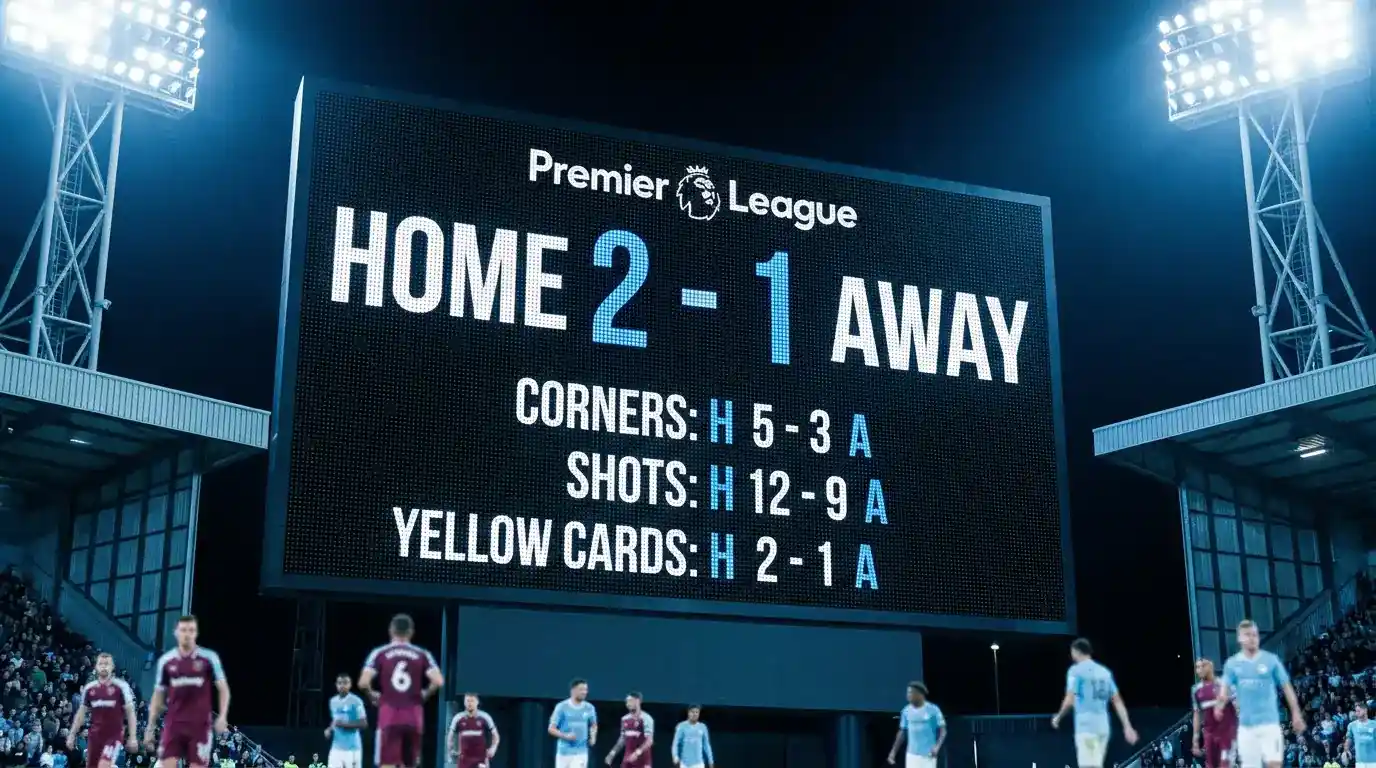
The markets break down into three rough families: outright (who wins what, eventually), match-level (what happens in this fixture) and in-play (what happens in the next few minutes). Each prices on a different model and carries a different margin.
Outright markets run from August to May, prices move slowly and the overround is usually wide because operators carry the liability for nine months. Match-level markets break down by fixture: 1X2, both teams to score, over/under goal lines, half-time/full-time double, correct score, first goalscorer. In-play sits on top of all of it: next goal, next corner, next card, race to a goal number.
Correlated selections
The Bet Builder works because legs from the same match are not independent. If Manchester City score 3+ goals, the chance Erling Haaland scores a goal rises sharply too. A naive multiplication of the two prices would give a payout the operator could not afford, so the engine reprices the combined slip downwards. This is not a rip-off; it is mathematically correct. But it does mean a Bet Builder almost always pays less than the simple product of its legs.
Accumulator (acca) — a bet combining selections from multiple matches, where every leg must win for the bet to settle as a winner. Returns multiply across legs.
Bet Builder — a bet combining multiple selections from the same match, repriced by the operator to account for correlation between outcomes.
The construction logic, correlation effects and operator-pricing differences need their own treatment. I work through the full mechanics — including a worked example on a typical Premier League slip — in the Bet Builder and same-game multi guide. For this section, the working rule is: the more legs you stack from a single fixture, the more correlation effects the engine prices against you.
Modern UK football markets are not fully convergent across operators. Two UKGC-licensed bookmakers can quote the same Premier League fixture at meaningfully different odds, especially on lower-volume markets like half-time/full-time or first goalscorer. A side-by-side check on the markets you actually play, rather than the headline 1X2, is where the real price discovery happens — and where the seasonal margin between a winning and a losing bankroll usually sits.
Reading welcome offers without the marketing fog
A free bet is not free. I have said that to enough new punters over the years that it has become a kind of catchphrase, but the structure of the offer rewards repetition. The typical UK football welcome bonus reads something like "bet £10, get £30 in free bets." What that actually means is: you wager £10 of your own money at minimum odds (usually 1/2 or 4/5 fractional), and if that bet settles, you receive £30 in free-bet tokens with a use-by date, often restricted to certain minimum odds, with the stake not returned when the free bet wins.

Roughly one in three British players admits gambling advertising has influenced their behaviour. The welcome offer is the front line of that advertising. Read it as a contract, not as a gift.
The arithmetic on a typical £30 free-bet token tells the story. If the bookmaker requires you to use it at minimum odds of evens (2.00 decimal) and only returns winnings, then a winning free bet at evens returns £30 of usable funds. A bet at 1.5 decimal returns £15. The expected value of a £30 free-bet token, assuming you use it at a fair price of 2.00, sits in the £14–£20 range depending on your hit rate. Real value, but not £30.
The small print that actually matters
Three lines determine whether a UK football welcome offer is worth claiming. First, the qualifying bet's minimum odds — anything tighter than 1.5 decimal makes the offer harder to clear. Second, whether the free-bet stake is returned (most are not). Third, the time limit on the free-bet tokens — anything under seven days forces rushed selections.
Boost-style products run alongside. Some genuinely shift expected value in the punter's favour, particularly super-boosts used as loss leaders on big-fixture days. Most do not. Andrew Rhodes, the Commission's chief executive, warned operators in November 2025 that "there will be no more warnings for those actors" who tip across the line into illegal market behaviour, and the boost-token economy is squarely in the regulator's field of view.
The full mechanics — qualifying-bet maths, free-bet stake returns, wagering rollover and the January 2025 opt-in rule for marketing emails — sit in the football betting offers guide. For this overview the working rule is: if the offer reads "free bet" and you cannot summarise its terms in two sentences, walk away.
Live betting and in-play streaming on UK platforms
The first time I saw a live football market suspend at exactly the wrong moment — a deflected shot, a goal that everyone in the country had seen on the TV three seconds before it appeared in the operator's data feed — I understood why in-play betting is its own discipline. Live football is now the largest in-play vertical on every UK operator's book. The latest Gambling Survey for Great Britain puts live football betting at 5% of all adults and 9% of men in the four weeks preceding the survey, comfortably ahead of live horse racing (3% and 5%).

9%
British men placing a live football bet in the past four weeks — the largest single live-betting cohort in the UK.
The gender skew in football betting is striking. Wave 3 of the GSGB recorded 16% of men against 4% of women betting in the past four weeks, and 39% of all adults gambling online in some form (16% if you strip out lottery-only players). Live football is the engine of that male skew.
In-play pricing differs fundamentally from pre-match. The trading desk no longer has a week to model the fixture; it has fifteen seconds to reprice after every event. A goal moves the next-goal market dramatically, but so does a yellow card on a key defender, a substitution that signals a tactical shift, or a managerial intervention. The bookmaker's edge in-play comes from having a faster data feed than the average punter, not from a smarter model.
The latency problem
The operator's data feed usually leads the TV signal by one to five seconds, depending on the broadcast chain. That is why markets suspend at goalmouth incidents: the operator knows what is about to happen on screen before the punter does. Live streams provided by the bookmaker are typically a couple of seconds behind both, which is the entire point of providing them.
Live streaming has become a standard feature on every major UK app. Streams cover the bulk of the EFL Championship, EFL One, EFL Two and a meaningful portion of European football. Access is usually conditional on a funded account or a qualifying stake. The big operators have invested in stream quality and overlay design; the smaller new entrants tend to compete on coverage more than on price.
None of this changes the fundamental risk profile. The next-goal market is one of the highest-margin products in the UK football catalogue because the operator prices for latency on every event. I work through suspension rules, market types, microbetting products and risk-control considerations in the in-play football betting guide. For most casual punters my recommendation is to size live stakes substantially smaller than pre-match stakes.
What 2025's regulatory overhaul means for football punters
The most consequential year for UK gambling regulation since 2005 was 2025. By the time the December debates wrapped up in Parliament, three pieces of machinery were live: granular marketing opt-ins (January), Financial Risk Assessments at the £150 monthly net deposit threshold (February), and the statutory gambling levy (April). Each touches every football punter on a UKGC-licensed site, whether they noticed or not.

The statutory levy is expected to raise around £100 million a year for research, education and treatment, replacing the voluntary contributions that defined the previous fifteen years.
The opt-in change was the first to bite. From 17 January 2025, every remote operator had to offer granular consent for direct marketing — by product type and by channel. Punters who had ticked one master "send me promotions" box on a 2018 registration form found themselves prompted to choose specifically what they wanted, and most chose less than they had been receiving by default.
Financial Risk Assessments arrived in late February 2025 and have proven the more controversial reform. The threshold is £150 in net deposits across a thirty-day rolling window; once a player crosses it, the operator must complete an affordability check that the UKGC has insisted should be "frictionless" for the customer. The Commission estimates that under 3% of active accounts cross the FRA threshold in any given month.
Grainne Hurst, who runs the Betting and Gaming Council, has pushed back hard on the practical implementation: "The choice for policymakers is clear. If the regulated sector becomes harder to use or less competitive, customers will not stop betting, they will simply go elsewhere. That is why financial risk assessments must either be genuinely 'frictionless' or not introduced at all." The friction-versus-protection argument is the defining tension of the 2025 reforms.
The third reform is the statutory levy itself. Introduced on 6 April 2025 with first bills issued on 1 September, the levy applies to all UKGC-licensed operators on a percentage-of-GGY basis. Tim Miller's view from inside the Commission was characteristically measured: "With everything that's in the White Paper, we will need to properly evaluate the impact." The treasury take is around £100 m a year on present projections.
The 2026/27 shirt sponsorship reset
I have lost count of how many times a journalist has asked me whether the Premier League's voluntary front-of-shirt sponsorship ban "really matters." The honest answer is that it matters less to punters than it does to clubs. Of the twenty Premier League sides in 2025/26, eleven still wear a gambling brand on the front of their shirt. That cohort is closing the door at the end of the current season under a league-wide voluntary agreement taking effect from the start of 2026/27.

£80 m
Estimated annual shortfall for Premier League clubs once gambling front-of-shirt sponsorships end in 2026/27 — roughly 38% of typical deal value on average.
Sean Connell of The Sponsor summarised the modelling behind the gap: "EPL clubs with gambling sponsors stand to lose, on average, 38% of their front-of-shirt value if forced to replace these deals with non-gambling brands." That maps to roughly £80 m a year of foregone revenue across the affected clubs. Premier League commercial revenue hit £2.37 bn in 2024/25 — up 10% year on year — so the gap is not catastrophic for the league as a whole, but it is concentrated on the smaller clubs who relied most heavily on gambling sponsorship.
The ban does not extend to sleeve sponsorship, stadium signage or perimeter advertising. The EFL's title-sponsorship deal with Sky Bet runs until 2029. The reform is targeted at the front of the shirt and nothing else.
For the punter, the only direct effect is cosmetic — shirts will look different at kick-off in August 2026, and a generation of children will grow up seeing fewer gambling logos on the team they support. Pricing on matches will not change, the bookmakers will not vanish, and operators are already rerouting the sponsorship spend into perimeter signage and stadium activations that fall outside the ban's scope.
Integrity, match-fixing and the £16.6 bn shadow market
The number that woke me up one Tuesday morning in May was £16.6 bn. That is the H2 Gambling Capital estimate for the stakes laid on offshore, unlicensed gambling sites by British residents in 2025. The figure was £5 bn in 2019. In six years the black market has tripled. Grainne Hurst at the BGC put it bluntly: "Illegal operators are becoming more sophisticated, more visible and more aggressive in how they reach UK customers. That should concern anyone who cares about consumer protection."

The legal market's share of total UK gambling activity has fallen from 97% in 2019 to 92% in 2025, with offshore GGY rising from £200 m to £685 m. Frontier Economics put 1.5 million British residents into the offshore betting population staking roughly £4.3 bn a year. The UKGC has not been idle: across April 2024 to October 2025 the Commission referred 447,778 URLs of unlicensed sites to search engines, of which 287,961 were taken down.
Every protection in this article — Financial Risk Assessments, dispute resolution through ADR, the statutory levy that funds the National Gambling Helpline — applies only to UK Gambling Commission licensees. Bet with an offshore site and you have given up all of it.
| Feature | UKGC-licensed bookmaker | Offshore operator |
|---|---|---|
| Dispute resolution | Mandatory ADR provider, with UKGC oversight | None enforceable in UK law |
| Self-exclusion | GamStop covers all UKGC sites at once | No GamStop coverage |
| Financial Risk Assessments | Required above £150 net deposits / 30 days | None applied |
| RET levy contribution | Funds NHS gambling clinics and helpline | None |
| Withdrawal protection | Operator-balance segregation, FCA-style protections | Operator discretion; payment freezes common |
The other side of the integrity question is match-fixing — and here the news is, surprisingly, better than it used to be. Sportradar's 2025 integrity report covered more than 1 million events across 70 sports and identified 1,116 suspicious matches across the year, down 1% on 2024. Football's share fell from 65% to 55% of suspicious-match volume, dropping from 730 flagged football matches in 2024 to 618 in 2025. Sportradar's universal fraud-detection AI alone flagged 56% more suspicious matches than the previous year, which means the volume reduction is real rather than the product of softer detection.
Andreas Krannich at Sportradar framed it with appropriate caution: "The relative stabilisation of suspicious match numbers in 2025 is encouraging, yet it reinforces the importance of continued vigilance. Match-fixing remains an evolving threat." For a UK punter on a top-flight account, the practical implication is small but worth knowing: the Premier League and the Championship are the most heavily surveilled football competitions in Europe, and the suspicious-match rate in the English pyramid is materially below the global average.
Tools, limits and the new statutory levy
A producer at a Saturday morning football show once asked me, on air, what the single most useful thing a casual punter could do was. I said: set a deposit limit, before placing the first bet, that is half of what feels comfortable. He laughed; the audience did not. The Gambling Survey for Great Britain estimates that 2.7% of British adults — roughly 1.4 million people — score 8 or above on the Problem Gambling Severity Index, the clinical threshold for disordered gambling. The number is not abstract.
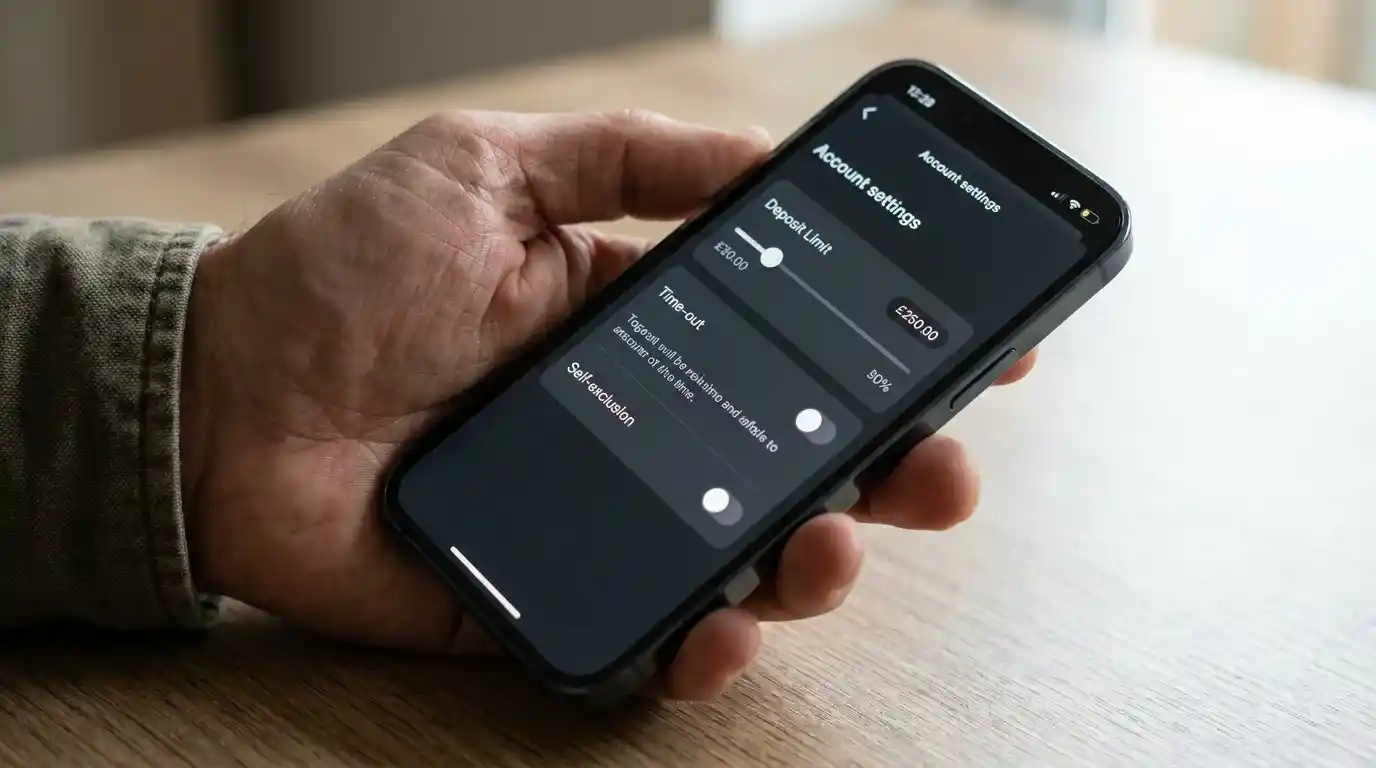
The statutory tools every UKGC-licensed bookmaker now offers
Deposit limits (daily, weekly, monthly). Loss limits. Session-time limits. Reality-check pop-ups. Voluntary time-outs from 24 hours to six weeks. Self-exclusion through GamStop, which covers every UKGC-licensed site at once. Account-closure on request, with no obligation to reactivate. Every one of these is a legal entitlement, not a customer-service favour.
The National Gambling Helpline, run by GamCare under contract from the new statutory levy, handled 105,765 calls and contacts across 2025. The trend is sharper than the headline number: 996 referrals into treatment services in January 2026 against 674 in January 2025, a year-on-year increase of 48%. Eighty-four point five per cent of helpline contacts in the 2024–25 financial year were answered within thirty seconds, with the average time from first contact to treatment commencement falling from 2.1 days to 1.3 days.
Victoria Corbishley, GamCare's chief executive, framed the change in volume in measured terms: "More people affected by gambling harms are choosing to start treatment. The National Gambling Helpline is a 24/7, confidential route to support, and our advisers rapidly connect people with free, specialist help across Great Britain. That first conversation remains the crucial turning point." The helpline number is 0808 8020 133 and the service is free, confidential and available around the clock.
The scale of the broader harm picture is sobering. Public Health England's estimate is that 400 or more suicides a year in the UK are linked to gambling-related harm. The National Institute of Economic and Social Research has modelled the cost to the state of a single patient with serious gambling problems at roughly £3,700 in additional annual public-sector spend. These numbers are what the statutory levy was built to address.
Configure your account controls in the first session, not the first crisis. Deposit limits, loss limits and reality checks are designed to be set when you have a clear head, not after you have chased a losing weekend. The default settings on every UKGC-licensed app are intentionally permissive; the safer settings are one tap away.
For the full toolkit — including the practical mechanics of GamStop self-exclusion, how to dispute an FRA decision, and a personal pre-bet protocol that survives a busy fixture weekend — the UKGC and safer football betting guide works through each tool in detail. The summary version: the protections exist because the harm exists, the tools work when you use them, and the helpline is one phone call away.
Putting the data, the law and the punt together
The Saturday morning ritual has not changed much in twelve years. Coffee, fixture list, app open by 11:15. What has changed is everything sitting behind that ritual. The bookmaker on the other end of the slip is now a UKGC licensee held to statutory affordability checks, a granular marketing-consent regime and a £100 m levy that funds NHS gambling clinics. The trading desk is faster, the data feeds are sharper, the markets are deeper. And the shadow market — the £16.6 bn pool of offshore stakes that operates outside every protection in this guide — has grown into the single biggest threat to that whole regulated structure.
If you take three habits from this entire article, take these. Verify the licence on the UKGC public register before you fund the account. Compare overround across at least three operators before placing anything other than a small recreational stake. Configure your deposit and loss limits in the first session, when the head is clear.
The best UK football bookmaker for you is the one whose pricing on the markets you actually play is sharpest, whose tooling fits your style of betting, and whose responsible-gambling controls you have configured before the first wager. Welcome offers come and go. The four characteristics — margin, market depth, app stability, safer-gambling tools — survive the season.
The Premier League will keep selling out, the Champions League will keep producing midweek shocks, and the bookmakers will keep refining the markets they offer. None of that absolves the punter from doing the work. The discipline that separates a profitable football betting habit from an expensive one is small and undramatic: read the overround, read the terms, set the limits, and bet within them.
If anything in this article has prompted concern about your own gambling, the National Gambling Helpline is open 24 hours a day on 0808 8020 133. Self-exclusion across every UKGC-licensed site is available through GamStop. The conversation that matters has always been the first one.
Frequently asked questions about UK football bookmakers
What makes a bookmaker "the best" for UK football betting?
There is no universal answer, and anyone selling you one is usually selling you a sign-up offer instead. The honest framework runs across four characteristics. First, overround — the lower the 1X2 margin on the leagues you actually play, the more your stake compounds across a season. Second, market depth — whether the operator carries the Bet Builder legs, in-play markets and outright specials you want. Third, the tooling — app stability under load, cash-out latency, the availability of Best Odds Guaranteed on football. Fourth, the safer-gambling controls. Pick by those four, in that order, and the welcome offer becomes a tiebreaker rather than the deciding factor.
How do UK bookmakers actually set football odds?
They start with a probability model, fed by historical match data, current form, lineup news and increasingly by xG-based inputs. The model produces a fair probability for each outcome — say 50% home, 25% draw, 25% away. The trader inverts each probability to a decimal price (1/0.50 = 2.00, 1/0.25 = 4.00), then shaves a percentage point or two off each price to produce the overround. Combined implied probabilities on a typical Premier League 1X2 market come out between 104% and 108% across UK operators. That excess over 100% is the gross margin. Across the week, sharp money pushes the price, and by kick-off the operator has usually converged to within a couple of pence of consensus.
Why does a UK Gambling Commission licence matter when I pick a football bookmaker?
Because it is the only thing standing between you and an operator with no obligation to honour your withdrawal. A UKGC licence brings mandatory Alternative Dispute Resolution if you and the operator fall out, statutory contributions to the gambling levy that funds the National Gambling Helpline, granular marketing controls, Financial Risk Assessments above £150 in monthly net deposits, and the GamStop scheme that lets you self-exclude across every licensee at once. Offshore sites carry none of this. Verify the licence on the public register at gamblingcommission.gov.uk; if the operator's name and account number do not match exactly, you are on a copy site.
Are free bets and football welcome offers really "free"?
No, and the structure rewards reading the small print carefully. A typical "bet £10, get £30 in free bets" offer requires you to wager £10 of your own money at minimum odds first, after which the free-bet tokens are issued with a use-by date, restricted to certain minimum odds, and — crucially — without stake return. A winning free-bet token at evens (2.00 decimal) returns you £30, not £60. The expected value of a £30 token used at sensible odds usually sits in the £14–£20 range. Time-limited tokens, qualifying-bet restrictions and minimum-odds requirements all reduce the headline figure further.
What is a Bet Builder and how does it differ from an accumulator?
An accumulator combines selections from different matches; every leg must win for the bet to settle. A Bet Builder combines selections from a single match. The difference matters because outcomes within the same match are correlated — if a team scores three goals, the probability of their striker scoring also rises, and the operator's Bet Builder engine reprices the combined slip to account for that correlation. A naive multiplication of the leg prices would produce a payout the operator could not afford. The practical implication is that a Bet Builder almost always pays less than the simple product of its legs, while an accumulator across separate matches pays the full multiplied price.
Which responsible-gambling tools must every UK football bookmaker offer?
Every UKGC-licensed bookmaker is legally required to offer deposit limits (daily, weekly and monthly), loss limits, session-time limits, reality-check pop-ups, voluntary time-outs from 24 hours to six weeks, and self-exclusion through GamStop, which covers every licensed UK gambling site simultaneously. Account closure on request must be available with no marketing follow-up. Above the £150 net-deposit threshold over a thirty-day rolling period, the operator must complete a Financial Risk Assessment. The National Gambling Helpline on 0808 8020 133 is funded by the statutory levy; the service is free, confidential and available 24 hours a day.
