


The two formats every UK football bookmaker now offers
A friend of mine still reads odds the way his father did — 5/2, 11/4, 7/1 — and refuses to look at decimals. He’s not wrong, exactly. Fractional odds were the UK high-street language for the better part of a century. But when he asked me last season to help him work out the return on a five-fold acca priced at 7/4, 11/8, 6/4, 5/2 and 8/11, we sat at the kitchen table with a pen and a piece of paper for ten minutes before we got there.
The same five-fold in decimals — 2.75, 2.375, 2.50, 3.50, 1.727 — is one keystroke on a calculator. That contrast is essentially the entire story of these two formats in 2026. Both are correct. Both produce identical payouts. One is much easier to work with the moment you stop betting on single matches.

Fractional odds and the UK high-street tradition
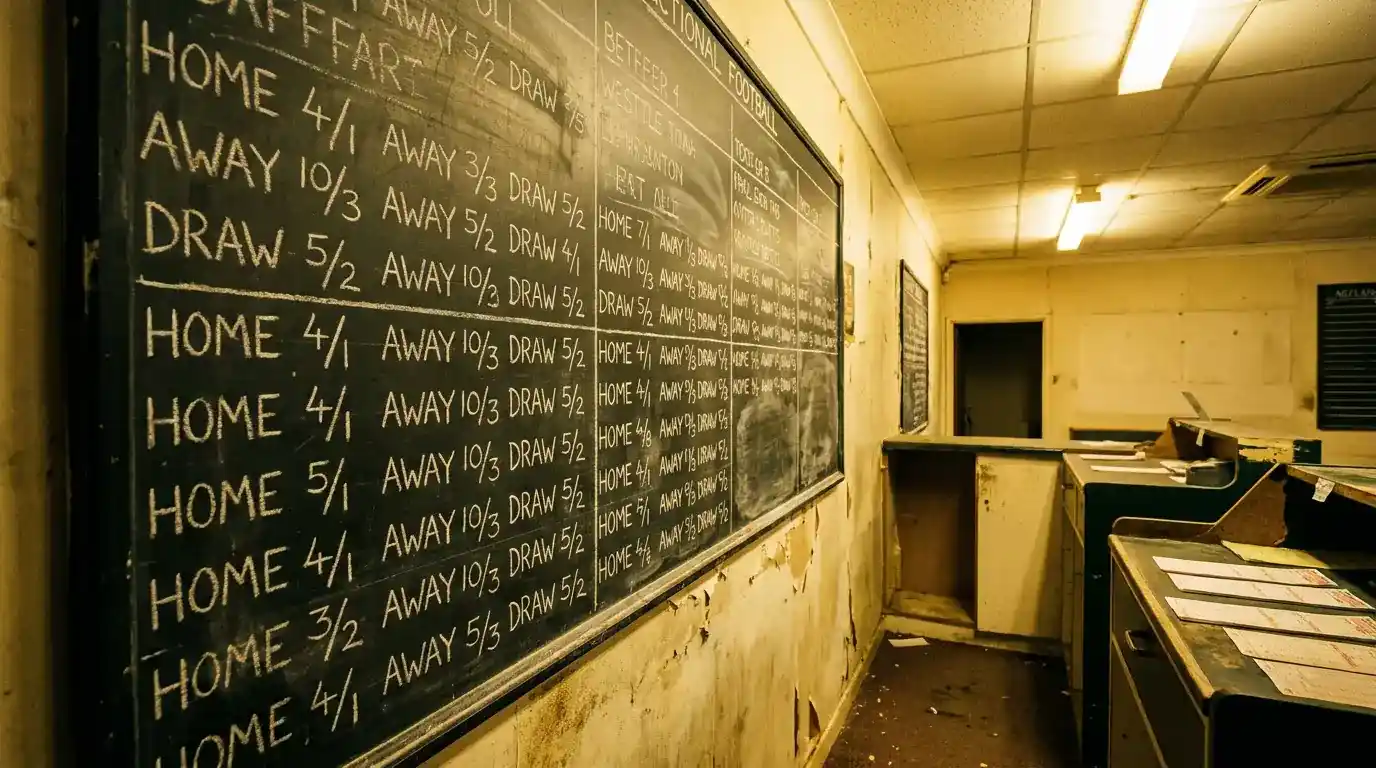
Fractional odds tell you one thing — your profit per unit staked. A 5/2 price means £5 of profit for every £2 of stake. That’s clean and it maps onto the way bookies historically called prices on the rails at the racecourse, where the language was about how much you’d win, not how much you’d get back in total.
The format carries some quirks that catch newer punters out. 11/10 is a tiny step above evens (1/1). 9/4 is meaningfully better than 2/1 but worse than 5/2. And a price like 4/9 means you’re paying £9 to win £4 — money-on, in the old language. The mental arithmetic isn’t hard once you’ve done it for a few seasons, but it never quite becomes intuitive.
Every major UK bookmaker still offers fractional as a display option. Some, like the older high-street brands, default to it on their apps. There’s a cultural reason for that — the punter who’s used to seeing 6/4 on Tottenham will be unsettled by 2.50 on Tottenham, even though they describe the same price. UK gambling generated £1.3 bn in football GGY last year, and a meaningful chunk of that came from punters who’ve been reading prices in fractions since they were twelve. Operators know better than to force a format change on them.
Decimal odds — total return in one number
Decimal odds tell you total return per unit staked, including your stake back. 2.50 means £2.50 returned for every £1 in. That’s £1.50 of profit plus your £1 back. The difference from fractional is that the stake is included in the number, which is why decimals are always greater than 1.00.
This sounds like a trivial change but it transforms the maths. Multi-leg acca payouts? Multiply the decimal prices together and that’s your return per pound. A 2.50 × 2.00 × 1.50 acca returns £7.50 per pound. Try doing the same calculation with 6/4, evens, and 1/2 and you’ll see why decimals took over inside trading rooms decades before they took over on consumer apps.
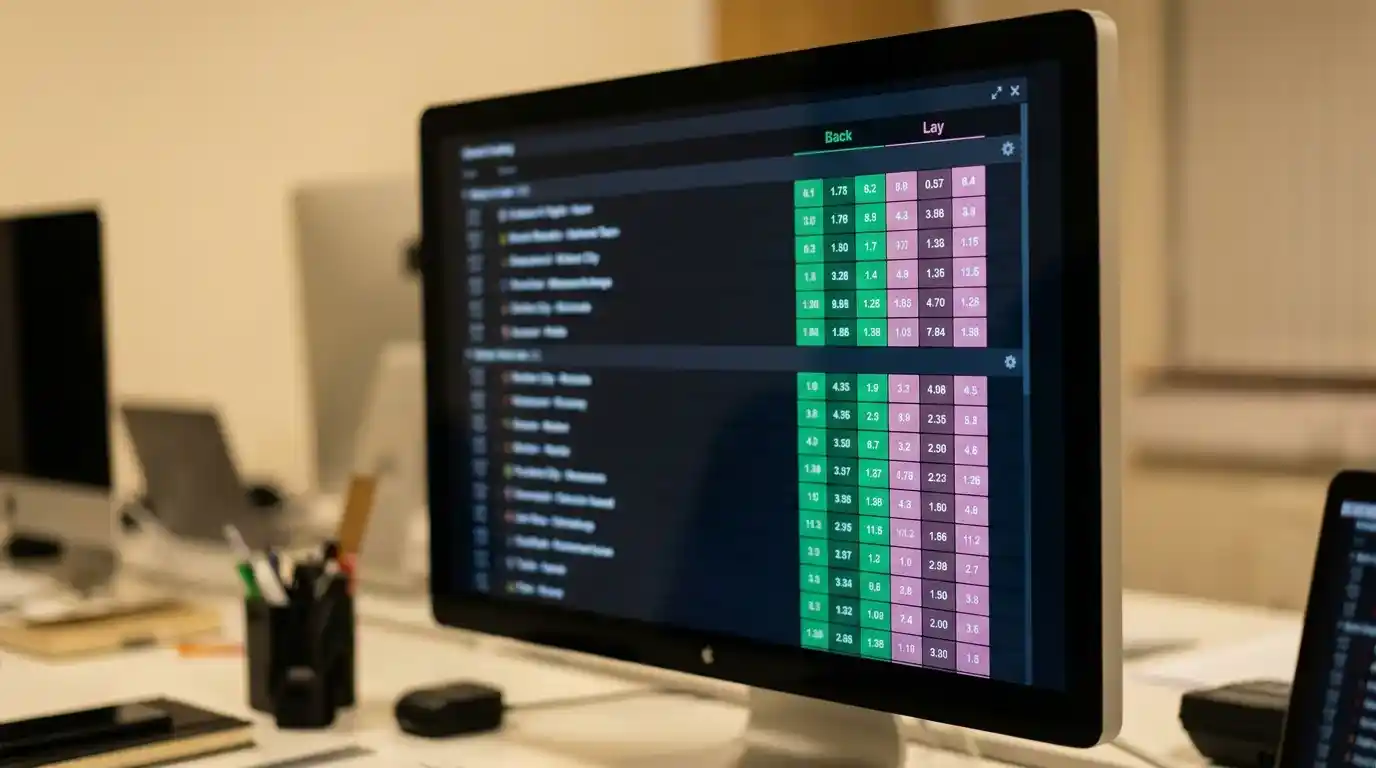
Exchanges defaulted to decimal from day one because the format makes laying a price as easy as backing it. If you lay 4.00, you know your liability is 3× your stake. In fractional, that’s “lay 3/1”, which is technically correct but harder to scan at speed.
A quick conversion table for football prices
I keep a small list of conversions in my head for the prices that come up most often on a Premier League card. It’s not a long list because football overrounds cluster the prices into a narrow band.
Evens is 1/1 fractional, which converts to 2.00 decimal. 11/10 is 2.10. 6/5 is 2.20. 5/4 is 2.25. 11/8 is 2.375. 6/4 is 2.50. 13/8 is 2.625. 7/4 is 2.75. 15/8 is 2.875. 2/1 is 3.00. 9/4 is 3.25. 5/2 is 3.50. 11/4 is 3.75. 3/1 is 4.00. 7/2 is 4.50. 4/1 is 5.00. 9/2 is 5.50. 5/1 is 6.00. The pattern is mechanical — add one to the fractional value and you have the decimal. 7/4 plus 1 equals 2.75. 5/2 plus 1 equals 3.50. Always.
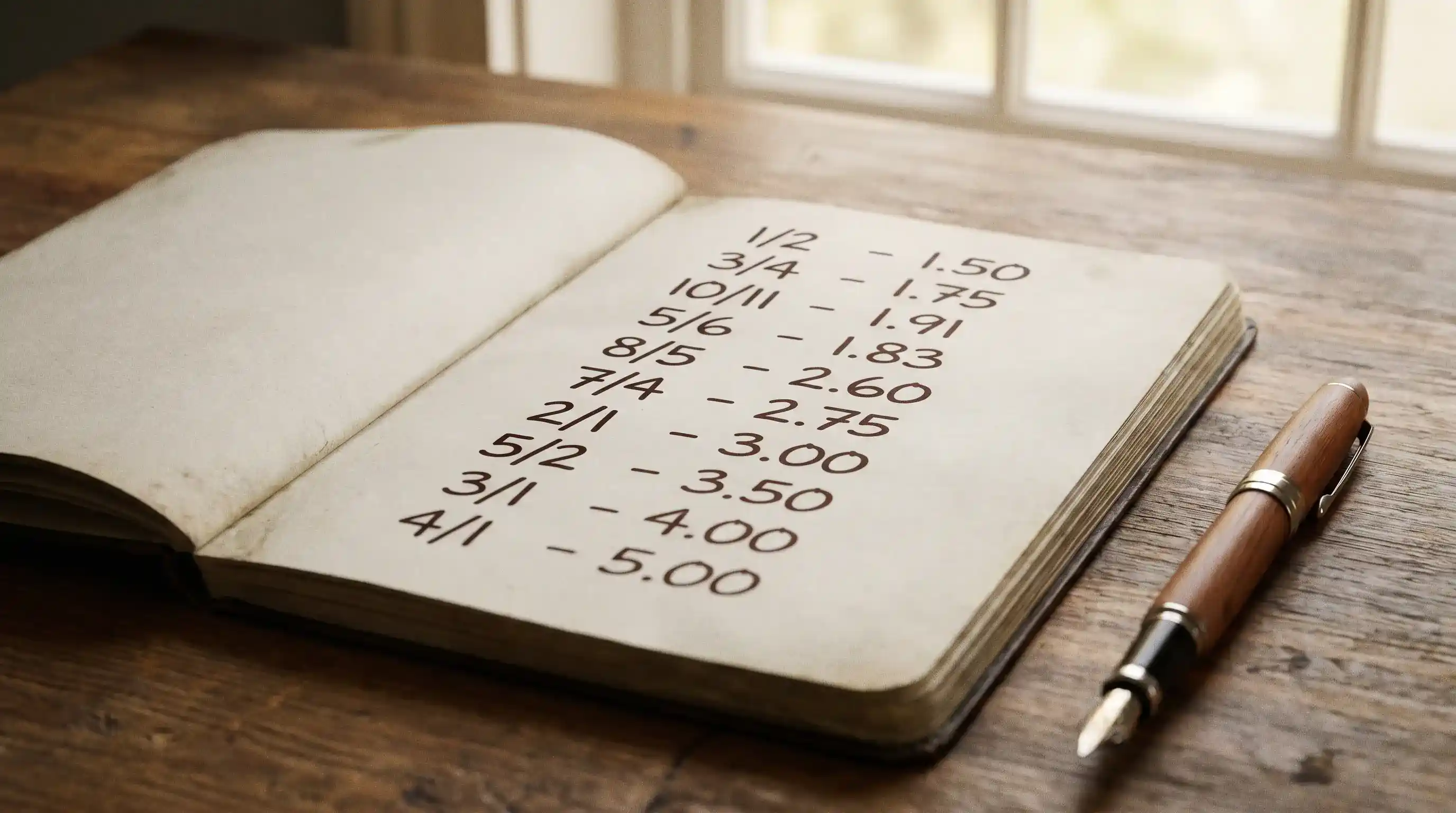
Money-on prices reverse the logic. 4/9 fractional means £9 stake returns £4 profit. The decimal is 4/9 plus 1 = 1.444. 4/11 is 1.364. 1/2 is 1.50. 4/7 is 1.571. 8/13 is 1.615. 4/6 is 1.667. 8/11 is 1.727. 4/5 is 1.80. 5/6 is 1.833. 10/11 is 1.909. These short prices are where decimal genuinely helps — quoting 1.444 next to 1.50 makes the difference obvious in a way that 4/9 next to 1/2 doesn’t.
Turning either format into implied probability
The most useful conversion of all is from price to implied probability, because that’s what tells you what the bookmaker actually thinks. Decimal makes it trivial. Divide 1 by the decimal price and you have the implied probability. 1 ÷ 2.50 = 0.40, or 40%. 1 ÷ 1.50 = 0.667, or 66.7%.
Fractional needs an extra step. Take the denominator, divide by the sum of numerator and denominator, and there’s your probability. 5/2 becomes 2 ÷ 7 = 28.6%. 4/1 becomes 1 ÷ 5 = 20%. Once you’ve done it three times it’s automatic, but it’s three steps where decimal is one.
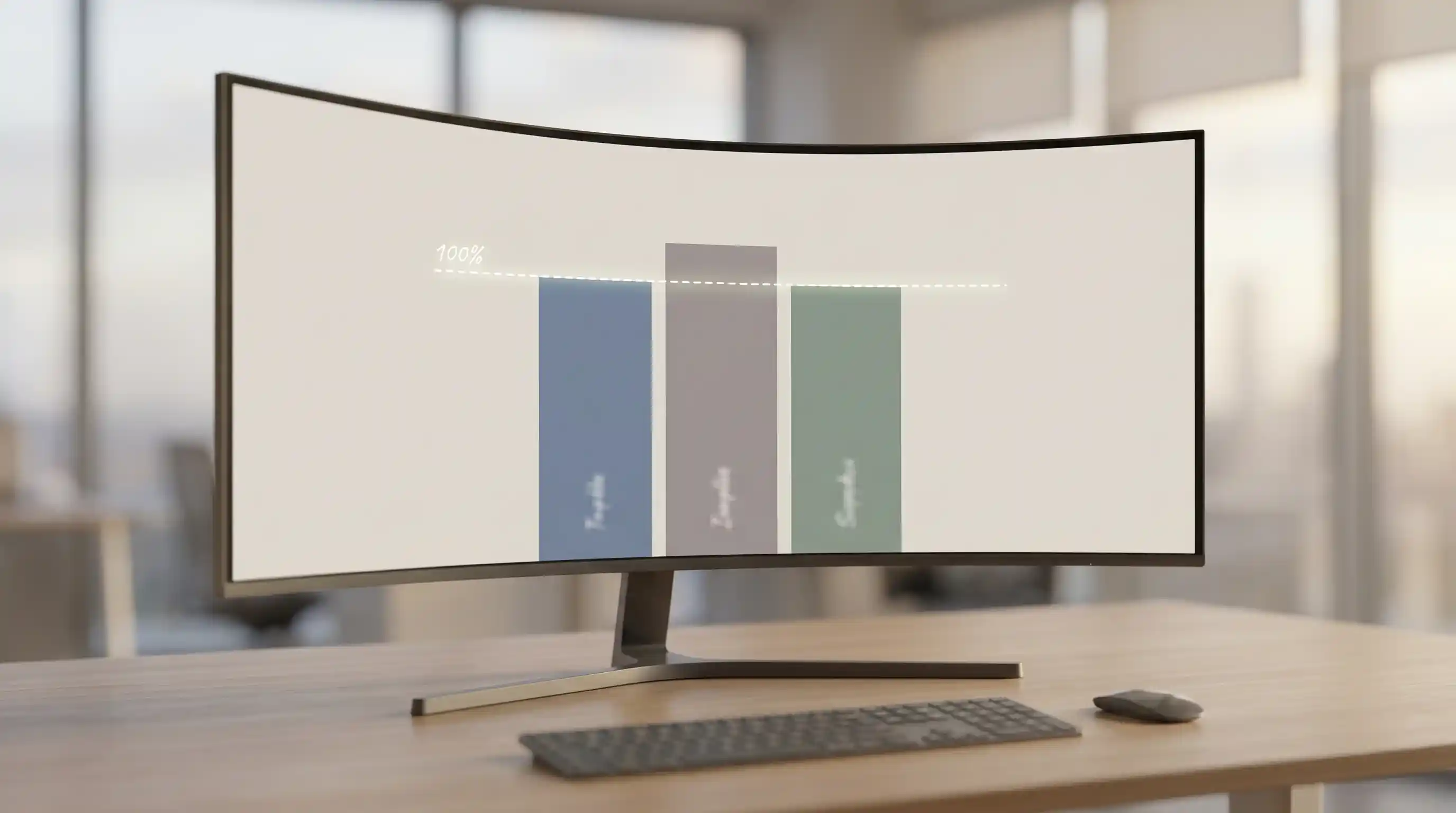
Implied probability is where overround becomes visible. Add the implied probabilities across the three outcomes of a Premier League 1X2 market and you’ll see them sum to something between 103% and 106% at top-tier UK operators. The excess is the bookmaker’s stated margin. William Hill held 37.83% of UK sports betting PPC click-through in February 2026, Bet365 16.2% — and the way both operators sustain that scale of business is by holding consistent overround across millions of priced events.
Why decimals make overround easier to see
This is the practical reason I push every UK punter towards decimal as soon as they’re comfortable. Decimals expose the margin. Fractionals hide it.
Picture a Premier League 1X2 priced 8/13, 14/5, 9/2. Most punters would struggle to tell you at a glance whether that’s a tight book or a fat one. Now picture the same three outcomes in decimal: 1.615, 3.80, 5.50. Implied probabilities 61.92%, 26.32%, 18.18%. Sum 106.42%. That’s a 6.42% overround, which is wider than I’d want on a top-flight 1X2. Decimal made that visible in fifteen seconds. Fractional would have hidden it behind two minutes of conversion work.

Once you’re price-shopping across operators, decimal becomes essential rather than helpful. You can’t sensibly compare 5/4 at one operator with 11/9 at another without converting both anyway. You might as well start in decimal and stay there.
For a deeper look at how those overround numbers are constructed in the first place, the breakdown of how UK bookmakers turn probabilities into prices covers the trader side of the process from probability model to displayed quote.
The format that survives habit and the format that survives maths
I’ll keep using fractional when I’m chatting about a price with my friend across the kitchen table, because it’s the language that conversation belongs to. I’ll keep using decimal everywhere else, because it’s the language that maths belongs to. Both formats describe exactly the same price. Neither is wrong. They’re just optimised for different uses.
If you’re serious about football betting in 2026, switch your default display to decimal on every UK app you hold an account with. It takes one tap in settings. You’ll start to see overround the moment it appears. You’ll start to spot price-shopping opportunities the moment they open. And you’ll never again have to do fractional acca arithmetic at a kitchen table.
Why does my UK bookmaker default to fractional but my exchange to decimal?
Sportsbooks default to fractional because their average customer expects it — that"s the high-street habit. Exchanges default to decimal because their average customer is closer to a trader and needs the format that makes laying as readable as backing. Every UK operator lets you switch the default in settings.
Does the odds format affect the actual payout?
No. 5/2 and 3.50 are the same price expressed two ways, and a winning £10 bet pays out the same £25 either way. The format only changes the display, not the maths underneath. If two operators offered apparently different prices in different formats, convert both to decimal and compare side by side.
Should I switch to decimals before computing a Bet Builder?
Yes. Bet Builder pricing involves multiplying probabilities, and decimal makes that visible. You also need decimal to compare the displayed Bet Builder price against the implied multiplied price of the legs — which is where you can spot how much correlation discount the operator has baked into the quote.
This material was created by the Pitchledger team.
