


The afternoon a friend’s account got frozen mid-bet
A friend rang me last year. He’d been betting modest stakes on Premier League weekends for years and had just had his account frozen mid-deposit. The operator wanted documentation — bank statements, payslips, source-of-funds evidence. He hadn’t done anything wrong. He’d just crossed a £150 threshold in net deposits over a 30-day window and triggered the operator’s Financial Risk Assessment process.
That was the moment the post-White-Paper regulatory environment became real for him. The UK has been the most actively regulated gambling market in the world for a few years now, and the rules that govern football betting have been reshaped systematically since the Gambling Act Review White Paper landed in April 2023. The 2026 punter operates in an environment that looks very different from the one their 2020 counterpart did.
What the UKGC licence actually guarantees
Every operator legally accepting football bets from UK residents holds a licence from the UK Gambling Commission (UKGC). That licence isn’t a formality — it’s a continuously-enforced set of operational requirements covering customer protection, anti-money-laundering compliance, advertising standards, and dispute resolution. The Commission ran approximately 3,086 licensed gambling-related activities as of March 2025, with that number trending slightly downward year-on-year as smaller operators consolidate.

The practical guarantees a UKGC licence gives the punter: segregated customer funds (your deposit is held separately from operator working capital), mandatory dispute resolution via an Alternative Dispute Resolution service if you can’t agree with the operator, mandatory responsible-gambling tools (deposit limits, time-outs, self-exclusion), and audited identity verification before withdrawal.
Andrew Rhodes, who runs the Commission, has been increasingly direct in recent regulatory communication about which operators are still aligned with the licensing standards and which aren’t. His position in late 2025, summarised in regulatory commentary, was that operators flagged for repeated failures would face escalated enforcement without further warnings — a signal that the Commission’s tolerance for marginal compliance has shrunk over the post-White-Paper period.
The statutory gambling levy and where the money goes
The statutory gambling levy came into force on 6 April 2025, with the first operator bills issued on 1 September 2025. The levy replaces the previous voluntary contribution model — operators now pay a percentage of their gross gambling yield directly into a regulator-managed fund dedicated to research, education, and treatment (RET) of gambling-related harm.

The expected annual collection runs to approximately £100m. Roughly half flows to NHS gambling treatment services, with the remainder split across research projects and public-education programmes. For the punter, the levy is invisible — it doesn’t appear on betting slips and doesn’t directly affect prices. But it’s part of why UK gambling sits at a higher cost base than offshore alternatives, and indirectly why UK operators can’t compete on margin alone with unlicensed competitors.
The levy debate continues. Industry voices argue that operators are already funding RET work through the levy and that additional voluntary contributions shouldn’t be expected on top. Public-health advocates argue that the levy collection should be larger and the disbursement priorities should weight clinical treatment more heavily. Both positions have substance; the levy structure as it stands in 2026 represents a political compromise between them.
Financial Risk Assessments and the £150 threshold
Since 28 February 2025, UK operators have been required to run a Financial Risk Assessment (FRA) on customers crossing £150 in net deposits over a rolling 30-day window. The FRA is intended to be frictionless — drawing on credit reference data and operator-held information rather than asking the customer to upload documents.

In practice, the rollout has been mixed. Some operators have implemented FRAs as a soft background check that the customer never sees. Others have implemented them as account-pausing manual reviews requiring the customer to provide proof of income. The Commission’s estimate is that fewer than 3% of active accounts will trigger an FRA in a given year — meaning the structure is designed to catch outlier behaviour, not regulate routine betting.
If you’re betting regularly across Premier League weekends and your monthly net deposits sit between £100 and £140, you’ll never see an FRA. If you deposit £200 over a weekend to chase a losing run, you might. The threshold matters more for behaviour-pattern reasons than for headline frequency reasons — it pushes customers to think about whether their deposit pattern is sustainable, which is the regulatory intent.
Affordability checks and the dispute path
Disputing an FRA outcome involves the operator first and the UKGC Alternative Dispute Resolution route second. If an operator restricts your account based on an FRA you disagree with, the first step is the operator’s internal review. If that doesn’t resolve the issue, the Commission’s ADR providers handle escalated disputes.
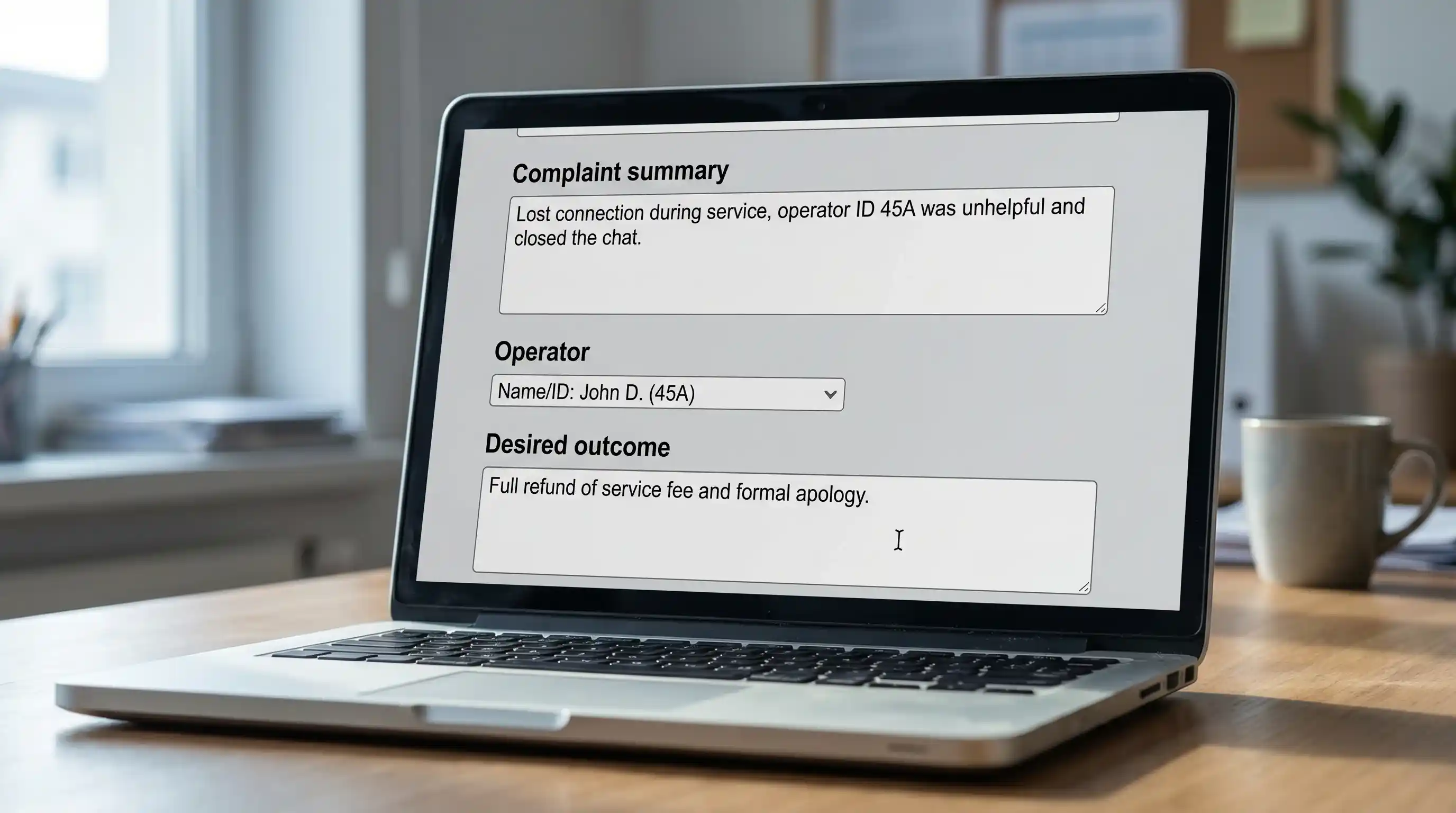
The ADR system has been criticised as slow and inconsistent across providers, but it remains the only enforced dispute path for UK punters. Offshore alternatives don’t offer equivalent protection — disputes with unlicensed operators are practically unenforceable. That gap is one of the structural reasons why the licensed UK market continues to hold the majority of UK gambling spend despite the more aggressive promotional terms available offshore.
The 2025 levy and FRA structure together represents the most significant regulatory shift UK football betting has seen since the original Gambling Act in 2005. The punter’s experience of these changes ranges from “totally invisible” for casual bettors to “occasionally disruptive” for higher-volume customers. The intent across both is harm prevention rather than market suppression, though the line between those two outcomes is debated continuously among regulators, operators, and consumer advocates.
Marketing restrictions and the January 2025 opt-in
Since 17 January 2025, UK operators have been required to obtain granular opt-in consent from customers for direct marketing — broken down by product type (sports, casino, bingo, lottery) and by channel (email, SMS, push notification, in-app). The blanket “you’ve agreed to receive marketing” sign-up model is no longer permitted.

The opt-in change has reshaped how operators reach existing customers. Promotional emails are less frequent but more targeted. Push notifications during football fixtures have been scaled back. The “you placed three bets last week, here’s a bonus” automated outreach that defined the pre-2025 market has been replaced with permission-based marketing that customers can revoke channel by channel.
For the punter, the change is broadly positive. Less promotional noise means easier signal — when an operator does reach out, the offer tends to be more meaningful. But the change has also reduced the operator’s ability to remind dormant accounts about promotions, which means punters who don’t actively check their accounts miss offers they would have seen historically.
The 2026/27 Premier League shirt sponsorship reset
The single most visible regulatory change of the 2026/27 season is the Premier League’s voluntary ban on front-of-shirt gambling sponsorship. Eleven of twenty Premier League clubs had a gambling brand on their shirt in the 2025/26 season. From August 2026, none will.

The financial impact on clubs is substantial — sponsorship valuations have been reported around £80m in aggregate annual loss across the league, with individual clubs facing 30-40% gaps relative to the gambling-sponsored deals they previously held. The English Football League retains its title-sponsorship deal with Sky Bet until 2029, which means the Championship continues to operate under a different sponsorship structure than the Premier League above it.
The cultural argument for the ban centred on child exposure to gambling branding during family-friendly broadcast windows. The financial argument against was the immediate revenue impact on clubs already managing tight wage-to-revenue ratios. Carolyn Harris, the MP who has campaigned most visibly for the change, has consistently framed it as a question of whether gambling brands normalise behaviours among children in ways the licensed market shouldn’t accept — a position that won the political argument even as the commercial argument continued to be debated by clubs.
The illegal-market gap and where regulation succeeds
Offshore gambling operators continue to target UK customers despite the regulatory pressure. Research commissioned through the Betting and Gaming Council estimates that approximately 1.5m UK adults bet annually with unlicensed operators, with total turnover at offshore sites reaching £16.6bn in 2025 against £5bn in 2019.

The offshore-market growth is the structural counterweight to the UK’s regulatory tightening. Punters frustrated with FRAs, deposit limits, and frictional verification processes sometimes migrate to operators outside UKGC jurisdiction. The Commission’s enforcement response — disrupting unlicensed-site URLs through search engines, processing 447,778 such URLs between April 2024 and October 2025 — addresses the supply side but doesn’t directly address customer demand.
For the licensed market, the offshore alternative is the constant pressure that shapes regulatory negotiation. Operators argue, with some justification, that overly restrictive rules push customers offshore where harm protection doesn’t exist. Regulators counter, also with some justification, that lighter rules don’t keep customers onshore — they just expand the size of the regulated market while harm continues. The balance point between these positions is the ongoing political question of UK gambling policy in 2026.
What every UK football punter should know in 2026
Three things. First, confirm your operator is UKGC-licensed before depositing — the licence number sits in the footer of every legitimate operator’s website and can be checked against the public register at the Commission. Second, set deposit limits at account creation rather than waiting until they feel necessary — the limits are easier to set early and harder to relax later, by regulatory design. Third, read the operator’s FRA policy before depositing above the £150 threshold so you know what to expect if your account triggers a review.
The structural protections that come with the UK regulatory framework are real and they cost something in promotional terms versus offshore alternatives. The UK promotional environment in 2026 is more conservative than it was five years ago precisely because the regulatory backdrop has tightened. That’s a trade-off, and it’s a trade-off most UK punters would make if they understood what they were trading. The licensing structure is the difference between betting with consumer protection and betting without it. Worth paying a small promotional premium for.
£150 in net deposits over a rolling 30-day window, since 28 February 2025. The threshold is per-operator, so depositing £100 each at two different licensed operators won"t trigger an FRA at either. The Commission estimates that fewer than 3% of active accounts will trigger an FRA in any given year — meaning the threshold catches outlier behaviour, not routine betting. No, the voluntary ban applies only to front-of-shirt sponsorship. Sleeve and back-of-shirt gambling sponsorship remains permitted, as does in-stadium signage and broadcast partnership. Some clubs are expected to shift gambling deals to sleeve positions, which has a lower commercial value but maintains some sponsorship revenue from gambling partners. Check the licence number in the operator"s website footer against the Gambling Commission"s public register. Genuine UKGC-licensed operators display their licence number, the Commission"s logo, and a direct link to their listing on the Commission"s register. Operators that obscure or fail to display this information should be assumed to be unlicensed and avoided.At what deposit level will my UK account trigger a Financial Risk Assessment?
Does the 2026/27 Premier League shirt sponsorship ban apply to sleeve sponsorship?
How do I verify a UK bookmaker is genuinely UKGC-licensed?
This material was created by the Pitchledger team.
