


What a UKGC licence actually guarantees a football punter
I spent the first three years of my career on a UK trading desk thinking the Gambling Commission was a logo in the footer of the operator’s homepage. It took until I moved into the regulatory side of bookmaker margin analysis to understand what the licence actually does, and what it means for a punter who never reads a regulatory bulletin in their life. The licence is not decoration. It is a working framework of rules that shape every product feature on every UK football app, from the price of a Premier League single to the wording of the dispute resolution clause buried in the help section.
The Gambling Commission, the statutory regulator established under the Gambling Act 2005, licenses every legitimate UK-facing online sportsbook. The Commission’s industry data shows that as of 31 March 2025, there were 3,086 licensed gambling activities in Britain — a 2.3 percent decrease compared to a year earlier. That number is smaller than it sounds, because each activity is a discrete product permission rather than a separate operator, and the decline reflects regulatory tightening rather than market collapse. The point that matters: the operators legitimately serving the UK market sit inside a finite, named list, and that list is publicly searchable.
What follows is a working guide to what the licence actually delivers, what changed in 2025 with the introduction of the statutory levy and the Financial Risk Assessment threshold, and what the practical safer-betting tools every UK football punter should configure look like in 2026. I am writing as a market analyst, not as a public-health worker — but the public-health framing is central to how the regulation is being structured, and I will not pretend it is not.
If you take only one thing from this piece, take this. The UKGC licence is the most consequential piece of consumer protection in UK football betting, and the most underused. The protections exist whether you read about them or not. The tools work whether you configure them or not. But they work much better when you have read them and configured them deliberately, and the time investment to do that is smaller than the time investment to research the next Saturday’s Premier League card.
The UKGC licence: scope, conditions and dispute paths
A UK Gambling Commission licence is not a single object. It is a stack of permissions, each covering a specific gambling activity, layered on top of a set of conditions that apply to every licensee in the British market. When a UK football operator says it is “UKGC licensed”, what it is actually saying is that it holds a remote operating licence covering general betting, alongside personal management licences for the individuals responsible for compliance, and that it operates under the full set of Licence Conditions and Codes of Practice — the LCCP — that the Commission publishes and updates.
The conditions cover everything: anti-money-laundering procedures, customer due diligence, marketing standards, age verification, identity verification at withdrawal, payment processing, complaints handling, dispute resolution, advertising content, social responsibility code, technical standards on game and product fairness. Each condition is enforceable, and breaches result in sanctions ranging from financial penalties through to licence suspension and revocation. The Commission published 447,778 URLs of unlicensed sites to search engines between April 2024 and October 2025, with 287,961 removed — those numbers are the visible edge of the enforcement work, and the activity behind the scenes against licensed operators is more granular but no less real.
The dispute resolution path is the part of the licence framework that matters most directly to a punter who never has occasion to think about regulation at all. Every UKGC-licensed operator must be a member of an approved alternative dispute resolution scheme — the most commonly used is IBAS, the Independent Betting Adjudication Service — and a punter who has an unresolved dispute with their operator can escalate it to ADR after exhausting the operator’s internal complaints process. The ADR decision is binding on the operator. This is the most consequential structural protection in UK football betting, and almost nobody knows it exists until they need it.
Andrew Rhodes, the Commission’s chief executive, made the enforcement stance unambiguous in late 2025: there will be no more warnings for operators servicing the illegal market, he said — and the framing extends to the broader regulatory posture toward the licensed sector. The Commission has moved, over the last three years, from a posture of negotiation to a posture of enforcement, and the visible effect for the punter is that the rules are applied more consistently than they were a decade ago. The licensed operators know it, and the regulatory risk pricing inside the operator decision-making has changed accordingly.
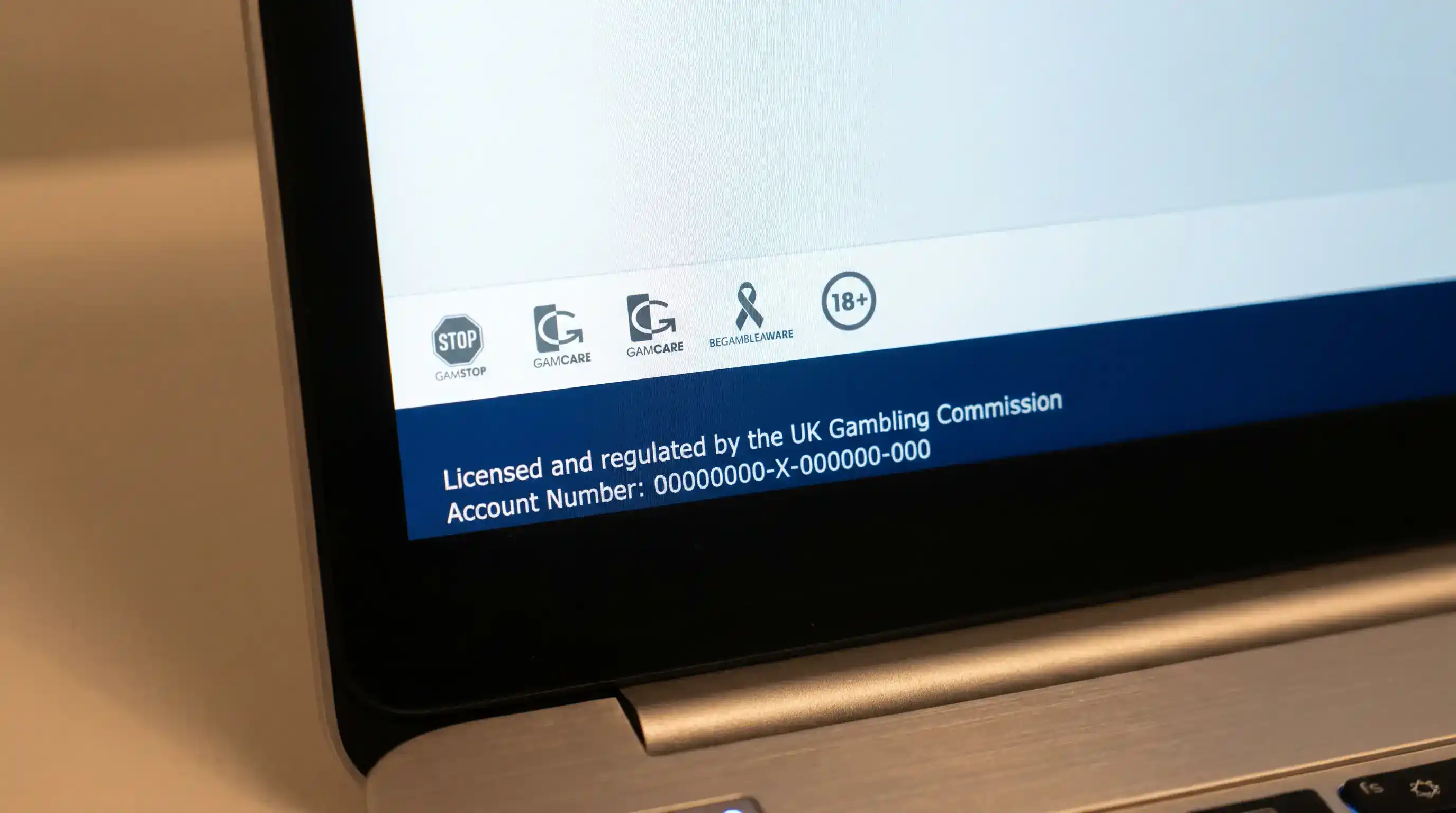
The verification process for a UKGC licence on a specific operator is fast. The Commission maintains a public register, searchable by operator name or by licence number, and every licensed operator must display its licence number in the footer of its website. Cross-checking the displayed number against the register takes thirty seconds. The operators that pass that test are inside the regulated UK market. The operators that fail it — for whatever reason — are not, and the consumer protections that follow do not apply.
The statutory gambling levy: who pays and where the money goes
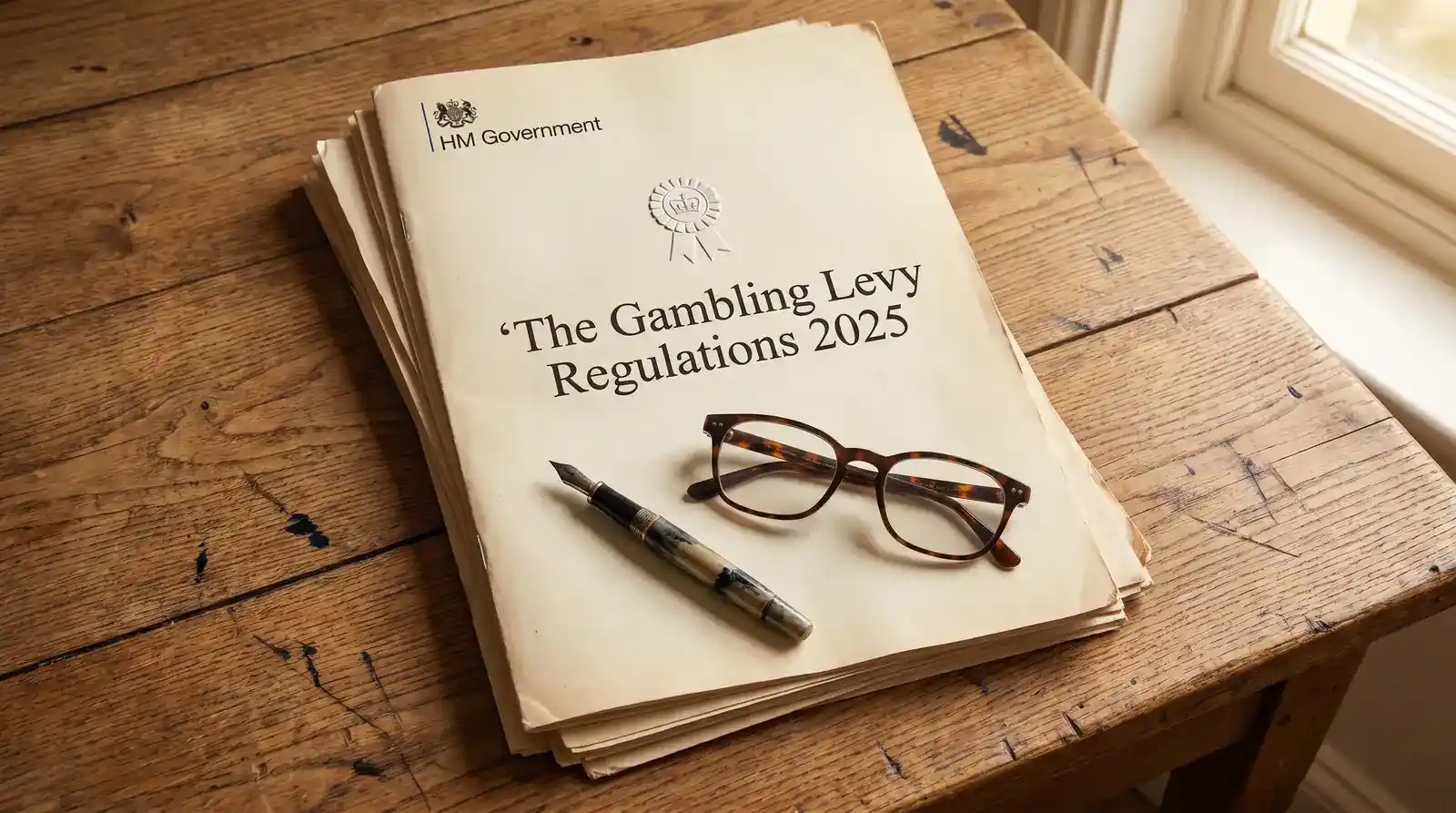
The statutory gambling levy that came into effect on 6 April 2025 was the single largest regulatory change to the UK gambling industry’s funding structure in a generation, and it has implications for the football betting market that are subtler than the headline number suggests. The mechanism replaced a voluntary contribution regime — under which operators paid into research, education and treatment programmes on a discretionary basis — with a mandatory levy calculated as a percentage of operator gross gambling yield.
The levy’s expected annual collection is around £100 million, and the first invoices were issued on 1 September 2025. The money is ring-fenced for research, education and treatment — the so-called RET pillar — and is distributed to providers through a structured framework that the Department for Health and Social Care has visibility over. The shift from voluntary to statutory funding was supposed to do three things: stabilise the funding base for treatment services, reduce the discretion individual operators had over where the money went, and align the UK with international best practice on gambling-harm funding.
From a UK football punter’s perspective, the levy is invisible at the point of placing a bet. It does not show up as a line item on the betting slip, does not affect the price of a Premier League single in any observable way, and does not change the operator’s product features. Indirectly, the levy raises the operator’s cost of doing business, and over time some portion of that cost may flow through into marginally wider operator margins or marginally less generous welcome offers. The effects are real but small at the level of an individual transaction.
What the levy funds is more interesting. Research grants for academic work on gambling-harm prevalence and treatment outcomes; education programmes for young people and for at-risk populations; treatment services delivered through NHS gambling clinics and through approved third-sector providers. The National Institute of Economic and Social Research has estimated that a patient with serious gambling problems costs the UK state around £3,700 per year in additional public expenditure, which gives some sense of the scale of cost the levy is partly designed to offset.
The treatment side of the picture has expanded materially over the last two years. The number of NHS gambling clinics across England has grown, the waiting times for treatment have come down, and the integration between the National Gambling Helpline operated by GamCare and the regional clinic network has improved. The levy is the funding mechanism that underwrites that expansion, and the relationship between operator contribution and public-health outcome is now structural rather than discretionary.
Financial Risk Assessments: the £150 threshold in practice
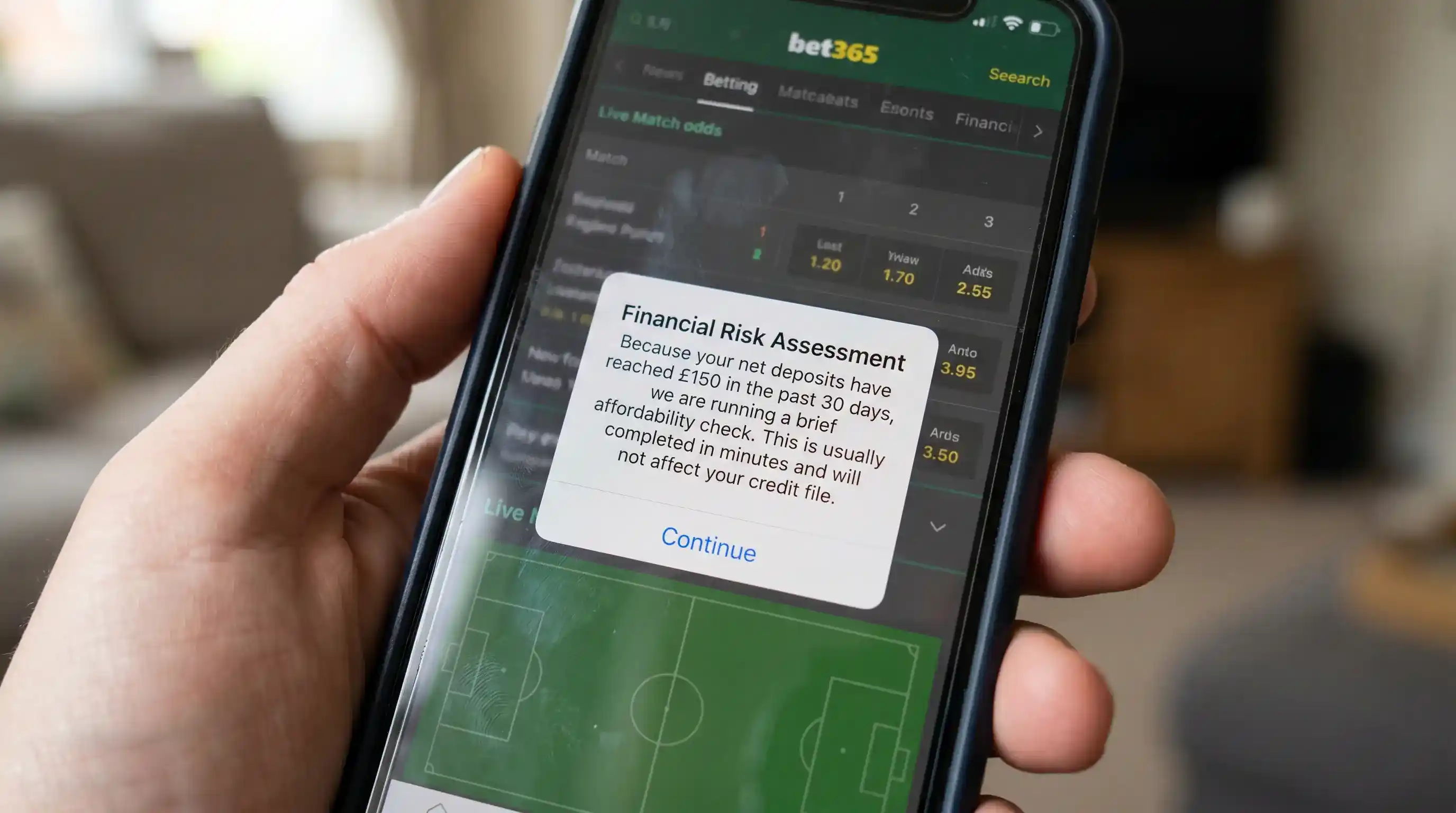
The Financial Risk Assessment threshold that came into effect on 28 February 2025 is the change that most directly affects how a UK football punter interacts with their operator on a routine basis, and the implementation has been less disruptive in practice than the pre-introduction debate suggested it would be. The mechanism is worth understanding in detail, because it touches every customer whose deposits cross a specific monetary line.
The threshold is £150 in net deposits over a rolling 30-day window. Net deposits means deposits minus withdrawals — so a customer who deposits £200 and withdraws £100 over thirty days has net deposits of £100 and sits below the threshold. A customer who deposits £300 and withdraws nothing has net deposits of £300 and sits above the threshold. When a customer’s net deposits cross the threshold, the operator must conduct a Financial Risk Assessment before allowing further deposits to continue.
The Commission estimates that less than three percent of active accounts will be affected by the FRA process at this threshold. The figure is consistent with what trading floors observed in the first six months after implementation: the threshold has been calibrated specifically to catch high-deposit accounts, not the median punter. For the punter who deposits £20 here, £30 there, across a season, the FRA process never engages. For the punter who deposits £400 in a single weekend across two operators, it engages on both.
The detailed mechanics of the FRA itself, including the soft-versus-hard data pull distinction and the dispute path if the operator decides to restrict the account, are unpacked in the Commission’s Financial Risk Assessment guidance covering the £150 threshold for UK football bettors. The short version: most FRAs are conducted via a “frictionless” data pull from credit reference agencies, do not appear on the customer’s credit file, and resolve within minutes. A minority of cases require a more detailed review, and a small minority result in deposit restrictions being applied.
Tim Miller, the Commission’s executive director, has been explicit on the data-protection framing of the FRA process: any data collected through this, he has said, can only be used for the purposes of helping to protect consumers, cannot be used for commercial purposes, and if operators were to do so, they would find themselves on the sharp end of regulation from the Commission and from the Information Commissioner. The structural separation between the FRA data and the operator’s commercial use of customer data is the part of the regime that has been most heavily scrutinised, and the early operational evidence supports the framing.
The most consequential thing the FRA does, in operational terms, is force a moment of pause in the customer’s relationship with the operator at the point where deposits start to grow significantly. The pause is brief — usually a few minutes — and the substantive outcome is rarely a restriction. But the moment of pause is itself the design intent: a structural friction that interrupts an escalating pattern of deposit, without preventing the customer from continuing if their financial circumstances support it.
Deposit limits, time-outs, self-exclusion and GamStop
The safer-gambling toolset that every UKGC-licensed operator must provide breaks down into four layers, each operating at a different time scale and with a different degree of commitment. Understanding which tool fits which need is the difference between the tools being useful in practice and the tools being a regulatory checkbox the punter never engages with.
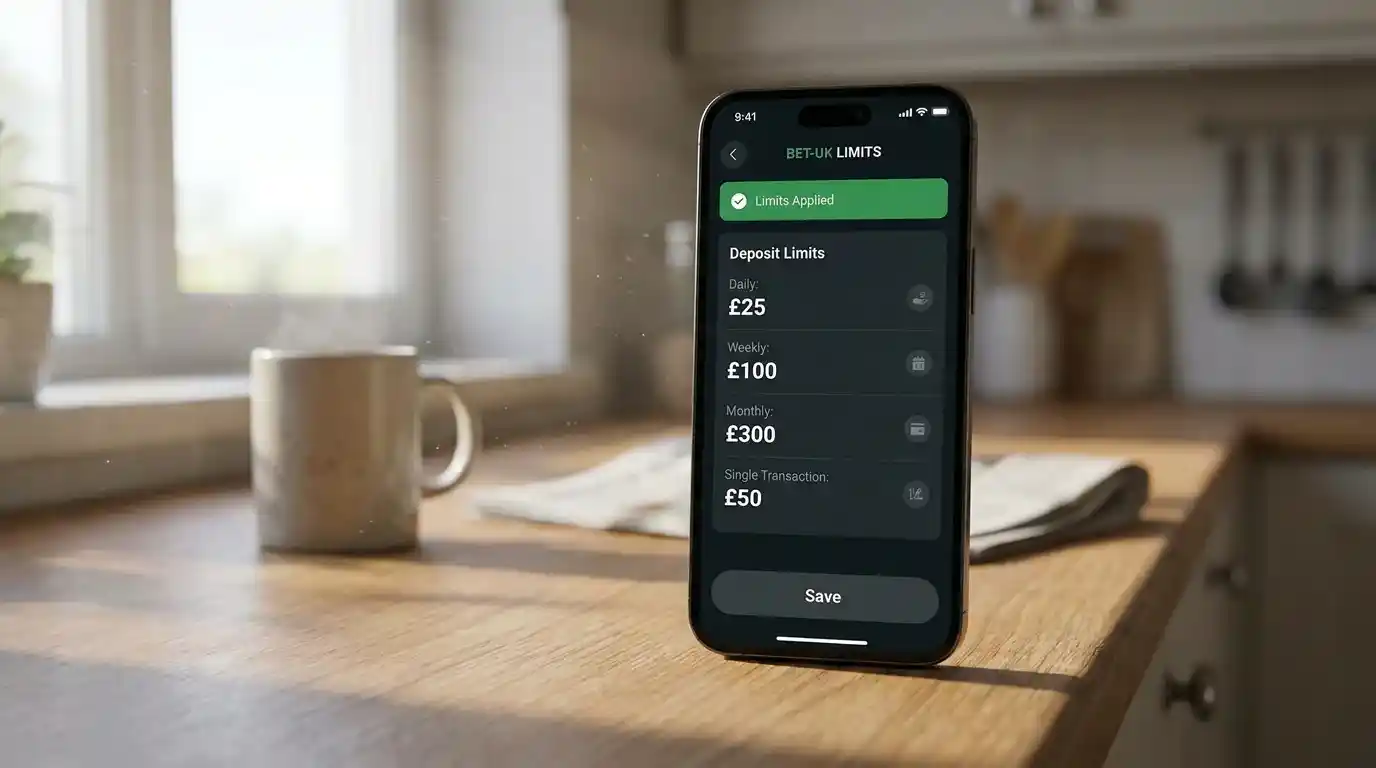
Deposit limits are the daily, weekly and monthly caps you set on the amount you can deposit into the account. Every UK operator must offer all three time scales, and the limits must be applied immediately when reduced and only after a 24-hour cooling-off period when increased. The 24-hour delay on increases is the structural protection: a customer who is tempted to raise their limit in the middle of a losing run cannot do it instantly, which interrupts the escalation pattern the limit is designed to prevent. Set the limit at registration. Set it deliberately. Treat it as the default protection, not as a feature you enable when something starts to go wrong.
Time-out is the short-term cooling period: anything from 24 hours to six weeks. The account is locked for the duration, no deposits can be made, no bets can be placed, and the lock cannot be reversed early by the customer. Time-outs are the tool for a punter who recognises a pattern in their own behaviour over a particular week or month and wants a structural interruption. The 24-hour version is the most-used; the longer versions are increasingly used by punters during high-stakes football periods like the end of a Premier League season or a major international tournament.
Self-exclusion is the medium-to-long-term commitment: six months to five years, depending on the customer’s choice, applied to a specific operator. The self-excluded customer cannot reopen their account during the exclusion period without going through a deliberate reactivation process at the end of the period, and the operator is required to prevent the customer from opening any account or receiving any marketing throughout the exclusion. Self-exclusion is the tool for a punter who has identified that their relationship with a specific operator is causing harm and needs to be terminated structurally.
GamStop is the national multi-operator self-exclusion scheme, and the most consequential single tool in the entire toolset. A single registration with GamStop excludes the customer from every UKGC-licensed online gambling operator simultaneously, for a period of six months, one year or five years. The exclusion is enforced by the operators on receipt of the GamStop list, which is updated frequently. GamStop is the tool for a punter who has decided that the entire UK regulated market is currently causing them harm, and the breadth of the exclusion is the protection’s defining feature.
The Gambling Survey for Great Britain estimates that 2.7 percent of British adults score eight or more on the Problem Gambling Severity Index — the clinical threshold for disordered gambling — which works out at approximately 1.4 million people. Many more sit at lower PGSI scores indicating some level of gambling-related risk. The toolset I have just described exists for that entire population, not only for the clinical threshold cases. The tools work best when configured before the situation deteriorates rather than after, and the deposit limit set at registration is, in my experience, the single most useful piece of safer-gambling protection a UK football punter can put in place.
Helpline, treatment and a 24/7 path out
The treatment and helpline infrastructure that sits behind the UKGC framework has expanded faster over the last two years than at any point in the previous decade. The expansion is partly funded by the statutory levy and partly by the longer-running NHS investment in gambling clinics, and the practical experience for someone seeking help is materially different in 2026 than it was in 2022.
The National Gambling Helpline, operated by GamCare, received 105,765 contacts during 2025. In January 2026 alone, the helpline made 996 referrals into treatment services — a 48 percent increase on the 674 referrals in January 2025. The growth reflects both an increase in awareness of the helpline and an increase in the throughput speed of the underlying referral infrastructure: 84.5 percent of helpline contacts in 2024-25 were answered in less than 30 seconds, and the average time from first contact to start of treatment was 1.3 days, down from 2.1 days the previous year.
Victoria Corbishley, the chief executive of GamCare, has framed the picture clearly: more people affected by gambling harms are choosing to start treatment; the National Gambling Helpline is a 24/7, confidential route to support; the advisers rapidly connect people with free, specialist help across Great Britain; and that first conversation, she says, remains the crucial turning point. The framing matches what the throughput data shows. The infrastructure exists, it is used heavily, and the bottleneck has shifted from the helpline-to-treatment step into the wider question of how many people present themselves for the first contact at all.
The independent quality assessment of the underlying treatment service infrastructure has been positive. Corbishley has described the Care Quality Commission’s assessment as important assurance for commissioners, partners, and above all for the people who rely on the services. That framing matters because the treatment services are not run by the same organisations that run the helpline, and the connective tissue between the two — the referral process, the data handoff, the continuity of contact through the first appointment — has historically been the weak point of UK gambling treatment. The current evidence is that that weak point has tightened materially over the last two years.
The wider public-health context is harder. Public Health England has previously estimated that around 400 or more suicides per year in the UK are associated with gambling harms — a figure that sits in the regulatory and treatment conversation as the most serious measure of the cost of inadequate intervention. The treatment expansion is partly a response to that figure, and the framing of the entire UK regulatory direction over the past three years has been shaped by the recognition that gambling harm at its severe end is a question of life and death.
The practical step for any punter reading this who recognises some of the patterns in their own betting is the same step the helpline data suggests works: the first call. The infrastructure is responsive, the routing is fast, and the referral pathway is short. The decision is the part that is harder.

How to tell a UKGC-licensed football site from an offshore copy
Offshore sites — those licensed in jurisdictions like Curaçao or Anjouan that target UK customers without UKGC permission — are often indistinguishable at first glance from a UKGC-licensed UK operator. The verification steps are simple, but they are not the same steps most punters instinctively take.
The first verification is the licence footer. Every UKGC-licensed operator must display its licence number prominently in the footer, in a format that includes the words “Licensed and regulated by the UK Gambling Commission” alongside the operator’s account number. An offshore site cannot legitimately display this language; it may display other licence references — Curaçao eGaming, Anjouan Gaming — but those do not confer UK consumer protections.
The second verification is the cross-check against the Commission’s public register. Take the licence number from the footer, navigate to the Commission’s online register, and confirm that the number matches the operator’s trading name. A mismatch between footer and register is a serious warning sign.
The third verification is payment processing. UKGC-licensed operators must process customer payments through UK-recognised providers and may not accept credit-card deposits at all under the rules introduced in 2020. If a site offering UK football markets accepts credit cards, or routes payments through unfamiliar processors based in offshore jurisdictions, the site is operating outside the UK regulatory framework — regardless of what the homepage says.
The Commission’s enforcement activity is substantial but not exhaustive. With 447,778 URLs of unlicensed sites referred to search engines between April 2024 and October 2025, the volume of attempted reach into the UK market is large, and the enforcement response is constant but reactive. The protection for the punter is, in the first instance, self-verification rather than reliance on enforcement to have already removed every problematic site from search.
What you lose on an offshore site is everything. The dispute resolution path does not exist. The ADR scheme membership does not apply. The deposit-limit and self-exclusion tools may exist nominally but are not enforced by any regulator with jurisdiction over UK customers. The customer is, in every practical sense, alone with the operator.

A personal pre-bet protocol that survives a busy fixture weekend
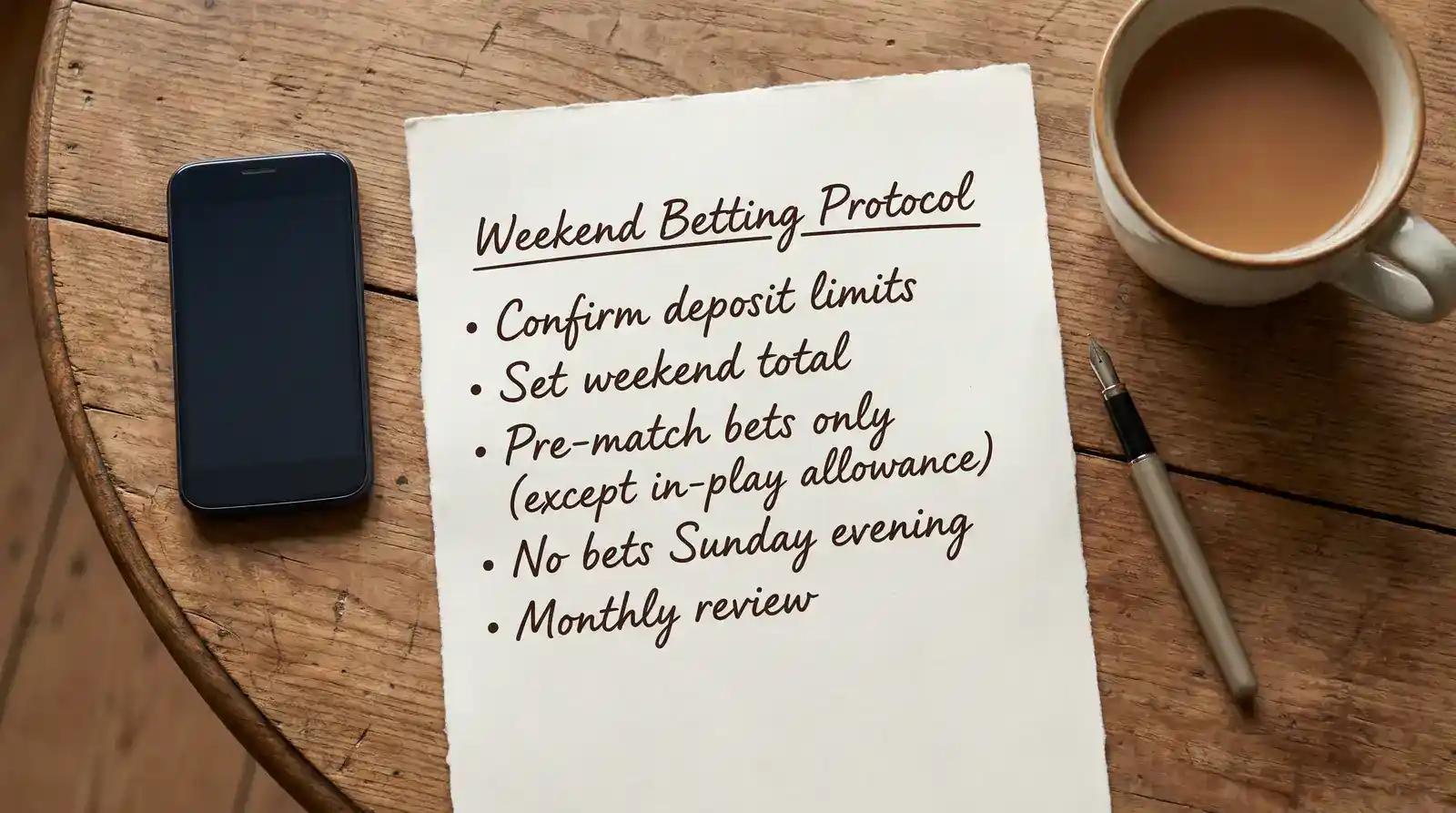
The personal protocol I run on my own football betting, refined over twelve years and adjusted again every time the regulatory framework shifts, is short enough to fit on a sticky note. It is not designed for the analytical punter who already has a structured approach. It is designed for the operational reality of a Saturday three o’clock card with five fixtures going on simultaneously, plus the Sunday late kick-off, plus the midweek European fixtures, plus the rolling in-play product the operator surfaces in between. Most personal protocols fail at the operational layer rather than at the design layer, and the design has to be robust to the operational reality.
Step one: confirm at the start of each calendar month that my deposit limits are set at the level I want them at. Limits drift only upward over time without intervention — through promotional pushes, through the cumulative effect of small upward adjustments — and the monthly check resets the drift. This is a two-minute task once a month. It is the most consequential single piece of personal safer-gambling configuration I run.
Step two: at the start of each fixture weekend, write down the total stake I am prepared to risk across the weekend on a piece of paper next to the keyboard. The paper is not the operator’s app. The paper does not refresh. The paper is a commitment device that survives an in-play product designed to extend the betting session beyond the original intention. When the paper number is exhausted, the weekend is over for betting purposes.
Step three: place every bet from the pre-match menu before any kick-off has happened, with one explicit exception for in-play stakes I have decided in advance to allow myself. The in-play allocation is a fraction of the weekend total, never more than a quarter, and once it is gone it does not regenerate. The discipline here is in advance, not in the moment.
Step four: take Sunday evening, after the late kick-off has finished, as a deliberate decompression window. No bets are placed between the final whistle of the late kick-off and Monday morning, regardless of how many midweek fixtures the European calendar has loaded for the following days. The protocol gap is the point: a structural pause inside the weekly betting cycle that resets the relationship with the product before the next cycle begins.
Step five: review losses and wins together at the end of each calendar month, in a single sitting, with full numbers. The review is about identifying patterns of behaviour that escaped the protocol during the month. If the protocol broke down on a particular weekend, the review surfaces it. If it held, the review confirms it. Either outcome is information.
The protocol is not optimised for maximum betting enjoyment. It is optimised for the long-term sustainability of betting as a hobby that does not damage anything else. The trade-off is real, and the protocol prioritises sustainability — which is the framing twelve years on this market has taught me works.
The regulator, the punter, and the space between them
The UKGC framework is the most consequential piece of consumer protection in UK football betting. The licence enforces it, the statutory levy funds it, the Financial Risk Assessment tightens it, the safer-gambling toolset operationalises it, the helpline and treatment infrastructure deliver it at the moment of need.
None of that machinery removes the responsibility from the punter to use the product carefully. The regulator can require the tools to exist; the regulator cannot configure them on the customer’s behalf. The space between the regulator’s framework and the customer’s daily practice is where the real safer-gambling work happens, and the work is small, repetitive, and almost entirely about configuration.
Twelve years on this market has taught me that the punters who sustain betting as a long-term hobby are the punters who spend ten minutes on configuration at the start of every quarter. The ones who do not configure eventually find themselves making decisions about their betting at the worst possible moments — in the middle of a losing run, late on a Sunday, with the in-play product pushing them toward one more stake. The configuration is the protection, the protection is real, and the work to put it in place is genuinely small.
Frequently asked questions
How does the UKGC handle a complaint I cannot resolve with my football bookmaker?
Every UKGC-licensed operator must be a member of an approved alternative dispute resolution scheme — IBAS, the Independent Betting Adjudication Service, is the most commonly used. The escalation path runs as follows: first you complete the operator"s internal complaints process, which the operator is required to handle within eight weeks. If the dispute remains unresolved at that point, you submit the case to the ADR scheme along with the operator"s final response. The ADR adjudicator reviews the evidence from both sides and issues a binding decision on the operator. The Gambling Commission itself does not adjudicate individual complaints — that is the ADR function — but the Commission monitors operator behaviour through the dispute data and uses it as one input into its enforcement work.
At what level does a UK football bookmaker have to run a Financial Risk Assessment?
A Financial Risk Assessment is triggered when a customer"s net deposits — deposits minus withdrawals — cross £150 over a rolling 30-day window. The threshold has been in effect since 28 February 2025. The Commission has estimated that less than three percent of active accounts are affected. Most assessments are conducted as "frictionless" data pulls from credit reference agencies, do not appear on the customer"s credit file, and resolve within minutes without the customer needing to take action. A minority of cases require a more detailed review, and a small minority result in restrictions on further deposits until the customer"s affordability picture has been clarified.
Does a GamStop self-exclusion cover live in-play football products?
Yes, completely. A GamStop self-exclusion applies to the entire customer relationship with every UKGC-licensed online operator for the duration of the exclusion period — six months, one year, or five years depending on the customer"s choice. The exclusion covers pre-match betting, in-play products, casino products, bingo, and every other licensed online gambling vertical. The operator is required to prevent the excluded customer from opening any new account, from logging into any existing account, and from receiving any marketing communications throughout the exclusion period. The protection is the breadth of the exclusion: a single GamStop registration cuts off the entire UK regulated market simultaneously, including every in-play football product on every UKGC-licensed app.
This material was created by the Pitchledger team.
