


The mistake I made twice and the one I see every weekend
I once doubled the stake on a Premier League favourite after losing the same wager the previous weekend. Same team, same opponent type, same logic — just bigger to “get it back”. The bet lost again. Two weeks later, I caught myself reaching for the same pattern with a different fixture and stopped just in time. The “doubling up after a loss” trap is so common in retail football betting that operators routinely structure their reload-offer cycles around precisely that psychological window.
Every weekend on Premier League fixtures, I watch punters in betting shops and on app screens make the same handful of mistakes. They’re not technical errors — they’re behavioural patterns that cost real money across a season. None of them are exotic. Most of them are visible the moment you know what to look for. And every single one of them is fixable with a small amount of deliberate practice.
Betting your team and the loyalty premium
The single most common UK football betting mistake is putting money on your own team. Not occasionally for entertainment — habitually, as a default. Fans of every Premier League club systematically overestimate their team’s chances in fixtures across the season, and the bookmaker model knows it.

The price reflects the bias. A mid-table side priced 5/2 to win against a top-six side at home might be reasonably priced for neutrals — but the fans of that mid-table side are betting at 5/2 on what feels to them like an 80% probability. The implied gap between fan-perceived and market-implied probability is large enough that fan-betting on your own team is, on average, the worst-EV consistent decision a UK punter can make.
The fix is structural. Identify which teams you support and refuse to bet on their fixtures. Pick teams you have no emotional connection to and learn to analyse their matches dispassionately. UK gambling reported 24.4M active accounts across the licensed market last year. The accounts that consistently lose are heavily weighted towards fans betting on their own clubs. The accounts that consistently profit are weighted towards analytical bettors on neutral fixtures.
Chasing losses with bigger stakes
The mathematical structure of variance guarantees that every UK punter will hit losing streaks of 8-12 consecutive losses across a season. The emotional response to a losing streak is to increase stake sizes to win the loss back faster. The arithmetic of that response is catastrophic.

A £20 unit bettor who loses six bets in a row is down £120. Doubling to £40 stakes to “win it back” means a single loss now costs the equivalent of two previous bets. A further losing streak at the higher stake destroys the bankroll faster than disciplined sizing would have. The pattern doesn’t just risk more money — it risks more money during the exact moment when emotional decision-making is at its worst.
The structural fix is pre-committed stake sizing that doesn’t adjust based on recent results. If your unit is 1% of bankroll, it stays at 1% of bankroll regardless of whether you’ve won or lost the previous seven bets. Disciplined bankroll management exists precisely to remove stake-sizing as a variable during emotional states.
Treating accumulators as serious betting
Five-fold accumulators at long combined odds feel like serious betting. They have specific market selections, defined stakes, and substantial potential payouts. Punters treat them with the same care as single-match selections.

The mathematics says they shouldn’t. A typical five-fold acca with each leg at 4/5 has combined decimal odds of about 6.0, which means a 16.7% implied break-even probability. The actual joint probability of five independent 4/5 outcomes all winning is 18.5% before considering overround stacking. The acca has roughly 5% positive expected value before the bookmaker margin is applied, and a typical 5-leg acca runs at 8-10% combined overround, which puts net expected value at -3% to -5%.
That’s worse than most individual football market bets. Accas are entertainment products that operators love because the variance is enormous and the margin is heavy. The punter who bets accas as their primary football product systematically loses faster than the punter who bets equivalent capital on single-match value selections.
Ignoring closing line value
Most retail punters track their bets by outcome — did this bet win or lose. The disciplined metric is closing line value: did I take a price longer than where the market eventually settled at kickoff. CLV is the single best predictor of long-run profit, and it’s the metric retail punters most commonly ignore.

Without CLV tracking, the punter can’t distinguish good selection from good outcome. A bet that won on a 10% favourite settling correctly looks the same on the betting history as a bet that won on a 50% mis-priced underdog. Without CLV, both are “winning bets” — but they represent completely different selection quality.
The discipline isn’t hard. Note the price you took. Note the closing price at kickoff. Calculate the difference. Maintain a running average across all bets. A positive CLV trend across hundreds of bets is the strongest validation that your selection process is generating genuine edge. A negative trend is the strongest warning that your wins to date have been variance, not skill.
Buying every promotional offer
UK operators run constant promotional campaigns: enhanced odds, price boosts, acca insurance, free bets, reload bonuses. The behaviour pattern that costs punters the most money is treating every promotion as positive expected value because “it’s a promotion”.

Most promotions are mathematically neutral or slightly positive once you account for the betting commitment they require. The actual cash value of UK free bets and welcome offers sits well below the headline numbers, and the wagering requirements often consume most of the apparent value through expected betting losses during the turnover period.
The fix is treating promotions as a portfolio decision rather than a series of one-off engagements. Read the terms. Calculate the genuine expected value after wagering. Take only the offers with positive expected value, and pass on the rest. The Betting and Gaming Council’s industry standards have pushed UK operators towards clearer disclosure of promotional terms — Grainne Hurst, who runs the council, has emphasised that responsible operators set themselves apart by what they disclose to customers rather than what they promise in headlines. That clarity is in the customer’s favour, but only for customers who actually read the disclosures.
Betting too many fixtures
The Premier League plays 10 matches per weekend during peak periods. The Championship plays 12. Add European football, FA Cup rounds, and international windows, and a weekend can offer 30-40 fixtures across the UK markets. The instinct is to bet across all of them.
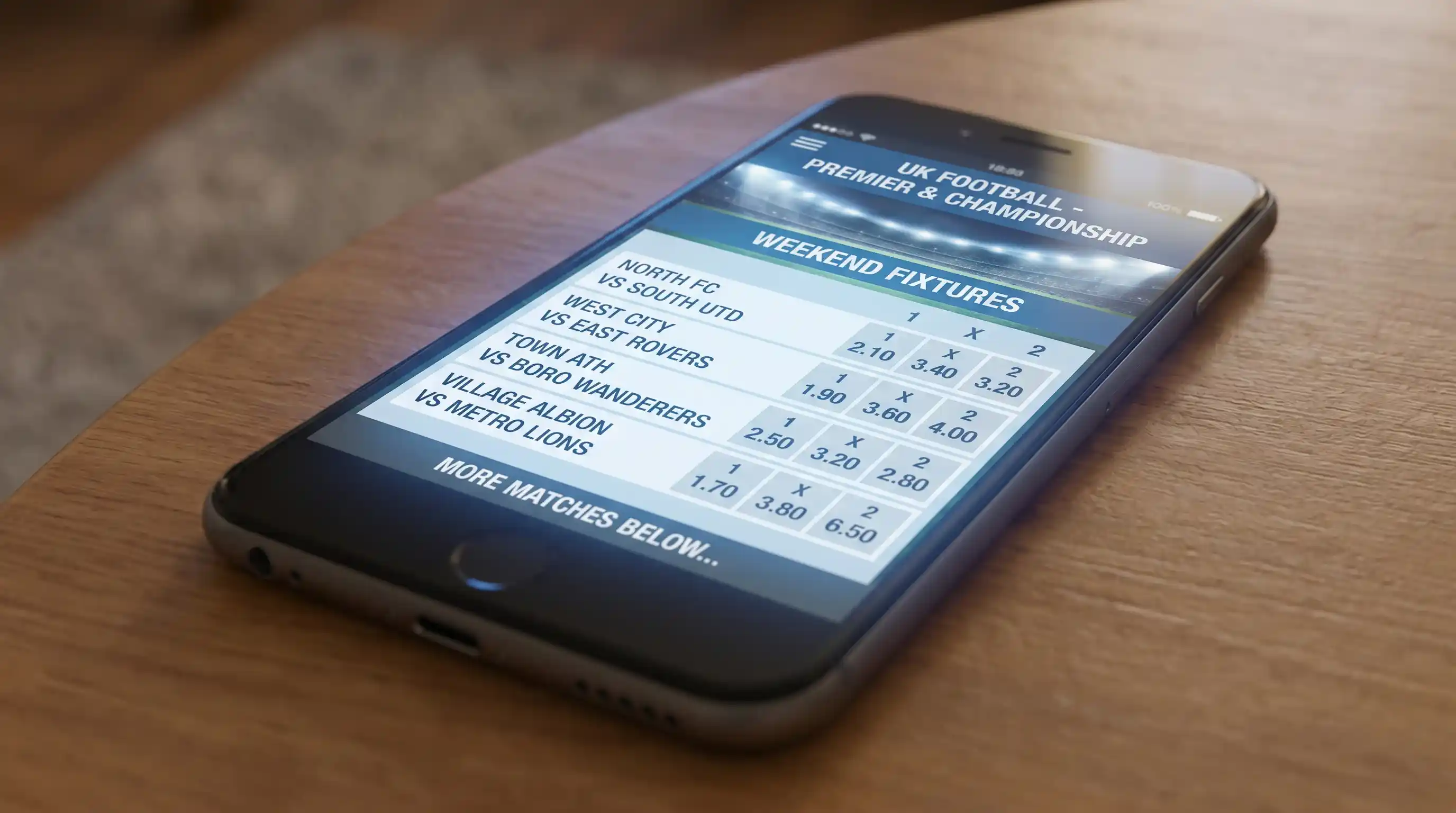
That’s wrong. Edge in football betting comes from specific selection — fixtures where you have a probability estimate meaningfully different from the market’s. Across 30 weekend fixtures, you might have a genuine edge on 3-5 of them. Betting all 30 dilutes the edge from your strong selections by mixing them with neutral and negative-EV bets on fixtures where you have no real read.
Disciplined punters bet narrow and deep rather than broad and shallow. Pick the fixtures where your analytical work suggests real edge. Pass on the rest. The temptation to bet “just for entertainment” on the other 25 fixtures is the operator’s preferred customer behaviour — and it’s exactly what undermines the disciplined punter’s strategy.
Confusing analytical confidence with outcome certainty
A 65% probability estimate means you expect to lose this bet 35% of the time. Even bets with substantial positive expected value lose more often than retail intuition suggests. Punters who internalise that fact stay disciplined through losses. Punters who don’t internalise it treat each loss as evidence that their analysis is wrong.

The result is constant strategy churn — selection processes that get abandoned after small-sample losing streaks, replaced with new processes that get abandoned after the next streak. The punter never builds enough data on any approach to know whether it works. Process improvement gets sacrificed to emotional reaction to variance.
The fix is internalising the difference between probability and certainty. A 65% estimate is a strong view, not a sure thing. Losing 35% of these bets isn’t a sign your view was wrong — it’s the expected pattern. The view’s validity is tested across hundreds of bets, not three weekends. The value-betting framework only realises its expected returns over large samples; small samples are dominated by variance.
Underestimating the offshore-market temptation
Frustration with UK regulatory friction — verification checks, Financial Risk Assessments, deposit limits — pushes some punters towards offshore operators. Offshore sites offer more generous welcome offers, fewer affordability checks, and looser betting limits. They also offer no consumer protection, no dispute resolution, and no legal recourse if things go wrong.
The Betting and Gaming Council estimates approximately 1.5m UK adults bet annually with unlicensed operators, with total offshore turnover reaching £16.6bn in 2025. The Gambling Commission has been actively disrupting unlicensed-operator access — processing 447,778 unlicensed-site URLs through search engines between April 2024 and October 2025 — but offshore operators continue to target UK customers because the demand exists.
The mistake is treating offshore operators as equivalent to licensed UK ones with better terms. They aren’t. The protection structure that UK punters benefit from — segregated funds, mandatory dispute resolution, identity verification, audited compliance — doesn’t exist offshore. The promotional generosity comes at the cost of customer protection, and the cost is invisible until the customer needs to invoke protection that doesn’t exist.
The mistake almost no one talks about: betting when distressed
Football betting decisions made during emotional distress — after a bad day, during a financial squeeze, late at night — produce systematically worse selections than the same punter would make during disciplined conditions.
The Gambling Commission’s responsible-gambling framework recognises this pattern through tools like time-outs and session reminders. Operators are required to offer these tools, and they exist because the data clearly shows that distressed betting produces both worse outcomes and higher harm rates. Setting deposit limits and using time-out tools isn’t only for problem gamblers — it’s a discipline that protects all punters from their own worst decision-making windows.
The fix is structural. Identify your worst decision-making conditions and put friction between yourself and the betting account during those windows. Deposit limits set at slightly above your routine betting budget create real protection against impulse deposits. Time-outs activated during periods of higher emotional pressure create cooldown periods that prevent the pattern from escalating. These tools work for analytical bettors as much as for recreational ones — disciplined betting requires protecting yourself from your own outliers.
What the disciplined punter actually does differently
The disciplined UK football punter does fewer things, more carefully, with better records. They bet fewer fixtures. They size stakes consistently. They track CLV. They take only promotional offers with verified positive expected value. They never bet their own teams. They never chase losses. They use responsible-gambling tools as protective infrastructure rather than as last-resort interventions.
None of those habits is glamorous. They’re not the marketing copy in any operator’s promotional campaign. UK gambling generated £1.3bn in football GGY last year, and almost none of that came from disciplined punters operating this way. The disciplined punters extract small positive expected value year over year while the recreational majority fund the operator margin and the small minority of consistently profitable punters.
Which side of that structure you sit on is determined by which set of habits you build into your weekend football routine. The mistakes are predictable. The fixes are documented. The discipline is available to anyone willing to do the unromantic work. Most won’t. The ones who will are the ones who eventually realise that football betting can be a small positive contribution to their annual finances rather than the steady drain it is for nearly everyone else.
Yes, structurally. Fans systematically overestimate their team"s probability across the season, and bookmaker prices reflect that bias. The realised expected value on fan-bets across a Premier League season averages substantially worse than equivalent neutral-fixture betting. The simplest improvement most retail punters can make is refusing to bet their own team"s fixtures. As a primary betting product, yes. Five-fold accas combine heavy overrounds with enormous variance and produce systematically negative expected value across a season. The exception is small entertainment-stake accas where you"ve consciously accepted the negative EV as the price of fun. Don"t confuse those with serious betting, and don"t size them above what you"d spend on equivalent entertainment elsewhere. Constantly. Deposit limits set slightly above routine betting protect against impulse deposits during emotional windows. Time-outs activated during high-stress periods prevent distressed-betting patterns from escalating. These tools are infrastructure for disciplined betting, not last-resort interventions for harm. Setting them at account creation, before they feel necessary, is the most reliable way to lock in good betting habits.Is betting on my own team really that costly long-term?
Should I avoid accumulators completely?
When are responsible-gambling tools worth using if I"m not a problem gambler?
This material was created by the Pitchledger team.
