


Why the Europa and Conference League price differently from the UCL
A Thursday night in November isn’t a Tuesday night in November. That seems obvious, but the way UK operators price the Europa League and the Conference League reflects a much more specific operational fact — these competitions feature rotation, second-string line-ups, lower-information environments and softer market liquidity than their midweek elder brother in the Champions League.
The pricing implications are real and worth tracking. UK remote sports betting produced £2.6 bn of GGY in the year to March 2025, with football contributing £1.3 bn of that. Within football, the secondary European competitions account for a small but persistent share — small enough that operators don’t sharpen the books to UCL standards, but large enough that the products carry the full menu of markets every week.
Rotation risk on a Thursday-night card
The single most important factor distorting Europa and Conference League prices is rotation. Clubs in these competitions are almost always also competing in domestic leagues, and the manager’s incentive structure varies enormously week to week. A mid-table Premier League side three days before a key league fixture will rotate heavily in the Europa League. A Sunday cup tie three days after an away leg in Belgium creates a similar squeeze.
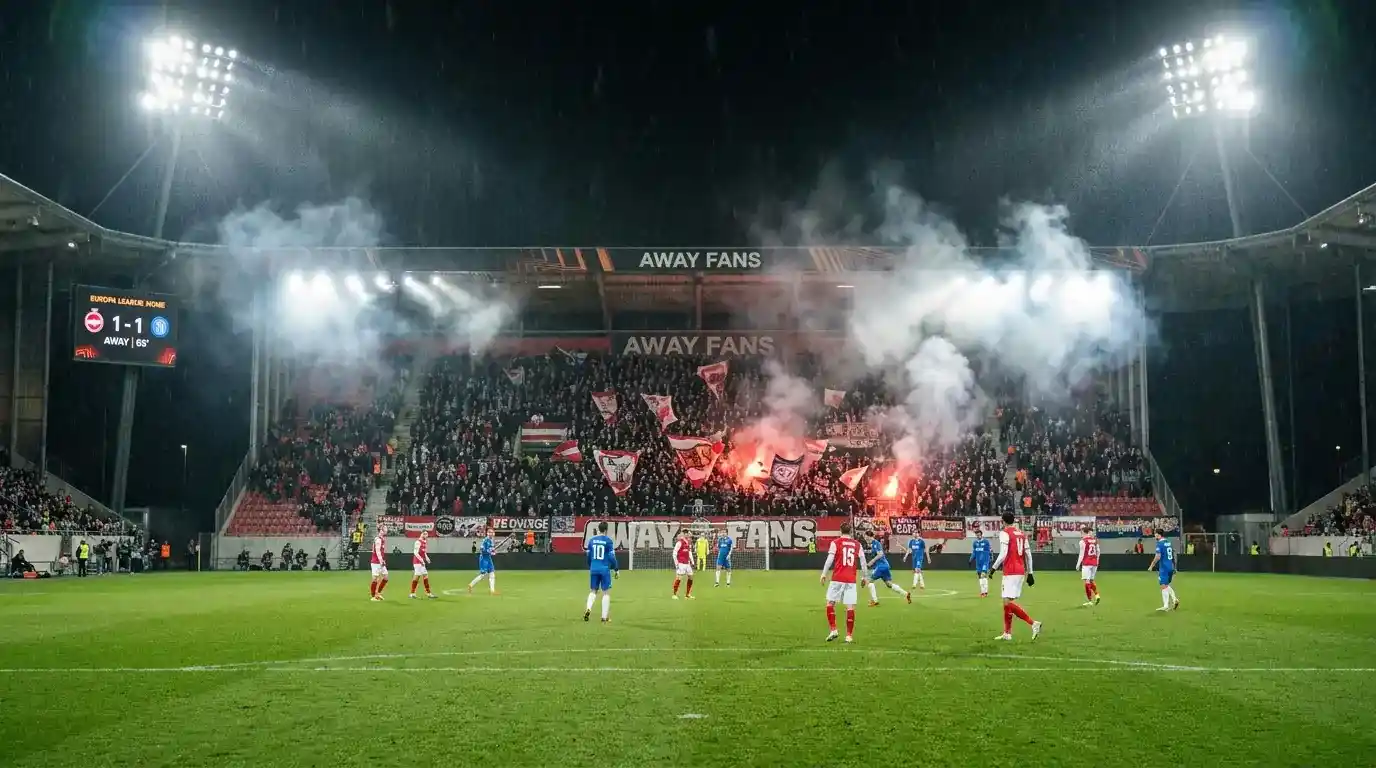
The operator’s pricing model has to anticipate the line-up before kick-off, and it does so imperfectly. Confirmed XIs typically arrive 60 minutes before kick-off, and the price moves observable in the 60–30 minute window before a Europa League match are larger than for almost any other product. Pre-line-up prices are essentially trader’s-best-guess at rotation; post-line-up prices are real prices.

The actionable implication is that the genuinely sharp prices in these competitions are the late ones, not the early ones. If you’re price-shopping a Thursday-night Europa League leg, the 30-minute window before kick-off is where the soft prices live — but you’re working against the line-up confirmation, which is also when the sharp money lands. Backing pre-line-up prices on assumption is structurally a losing strategy across a season.
Outright structure and outright timing
The Europa League outright winner market opens in mid-August once the league-phase draw is made. Initial prices favour the clubs dropping in from the Champions League playoff, plus the larger continental clubs that didn’t qualify for the UCL. The prices are wider than UCL outrights — typically 115% overround across the field — because the operator is taking less turnover on it.

The Conference League outright is the widest of the three European competition books. The field is broader, the field strength is more variable, and operator turnover is lowest. Outright overrounds can run 120% to 125%. The market is essentially a casino product wrapped as football — backing the favourite usually pays around 11/4 or 3/1 from a field of 36, with the operator’s margin doing most of the work.
Top-eight finish markets in the Europa League work the same way as in the UCL — clean binary, decent volatility through the league phase, and tighter overrounds than the outright winner. I’d treat the top-eight market as the more efficient Europa product if you’re going to take an ante-post position. The same applies to the Conference League top-eight.
Knockout play-off pricing and value pockets
The knockout play-off rounds are the structural feature where Europa and Conference League pricing diverges most sharply from the UCL. These are two-legged ties between clubs that finished 9th to 24th in the league phase, played against each other for round-of-16 places. The fixture mix produces some genuinely odd pricing pockets.
A mid-tier German club playing a top-tier Greek club, for instance, often sees price spreads between operators of 20% or more. The trader’s models struggle to compare league strength accurately across competitions, and the result is meaningful inter-operator variance.
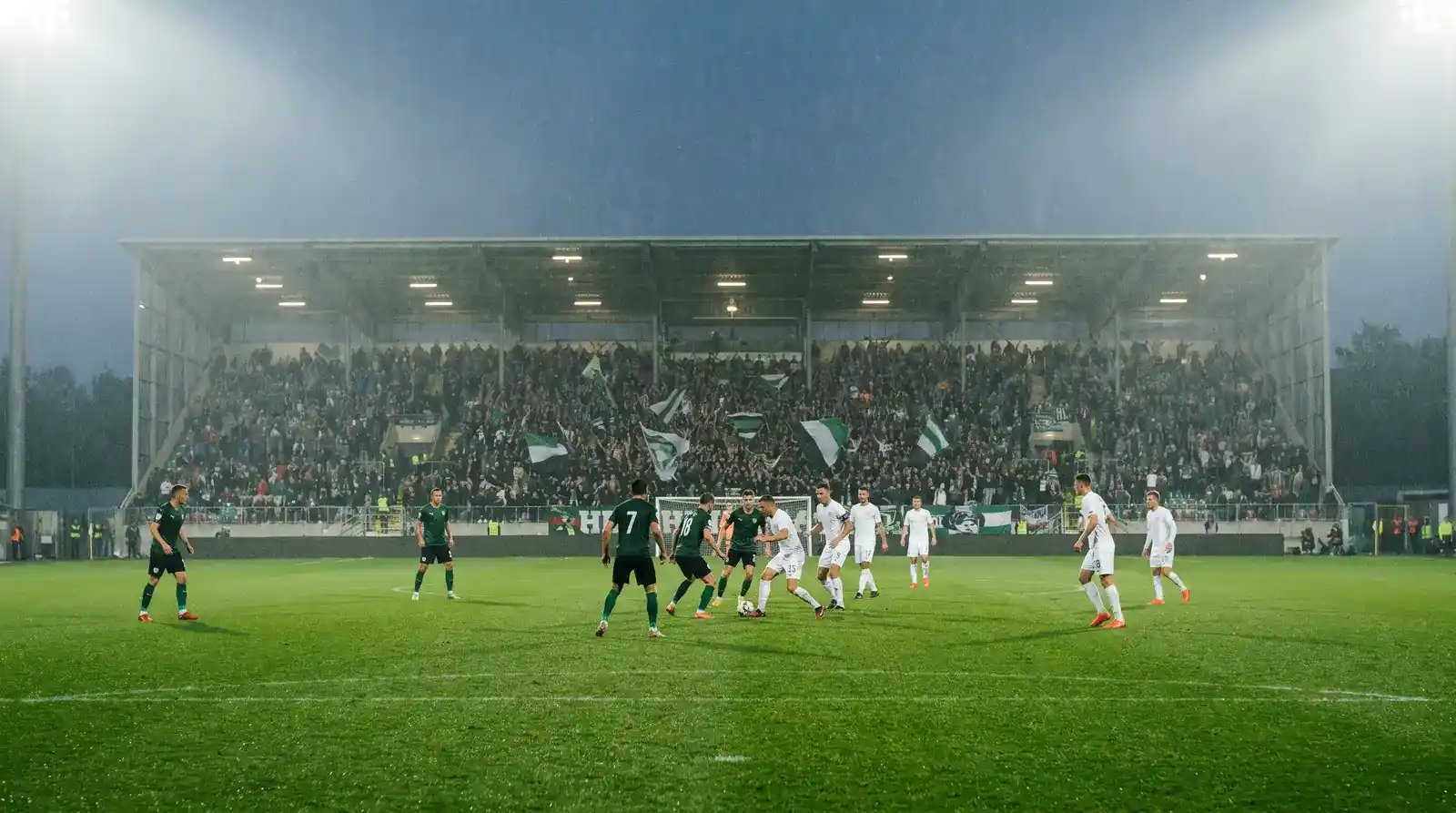
The genuine value windows in knockout play-offs sit in three places. First, the underdog at home in the second leg — frequently overpriced because the operator assumes the first-leg score will dictate the second-leg outcome. Second, BTTS no in dead-rubber-leaning ties — pairs where one side has already effectively progressed often produce low-scoring games. Third, Asian handicap on the favourite away in the first leg — operators tend to over-handicap the away favourite in these ties because the rotation risk gets double-counted.
British clubs across the secondary European competitions
British clubs in the Europa and Conference League follow a familiar pattern — Premier League clubs that finished 5th to 7th, lower-table Championship FA Cup winners, and the occasional Scottish, Welsh or Northern Irish participant. UK punter flow on British clubs at the Europa League level is high but not as concentrated as in the UCL.
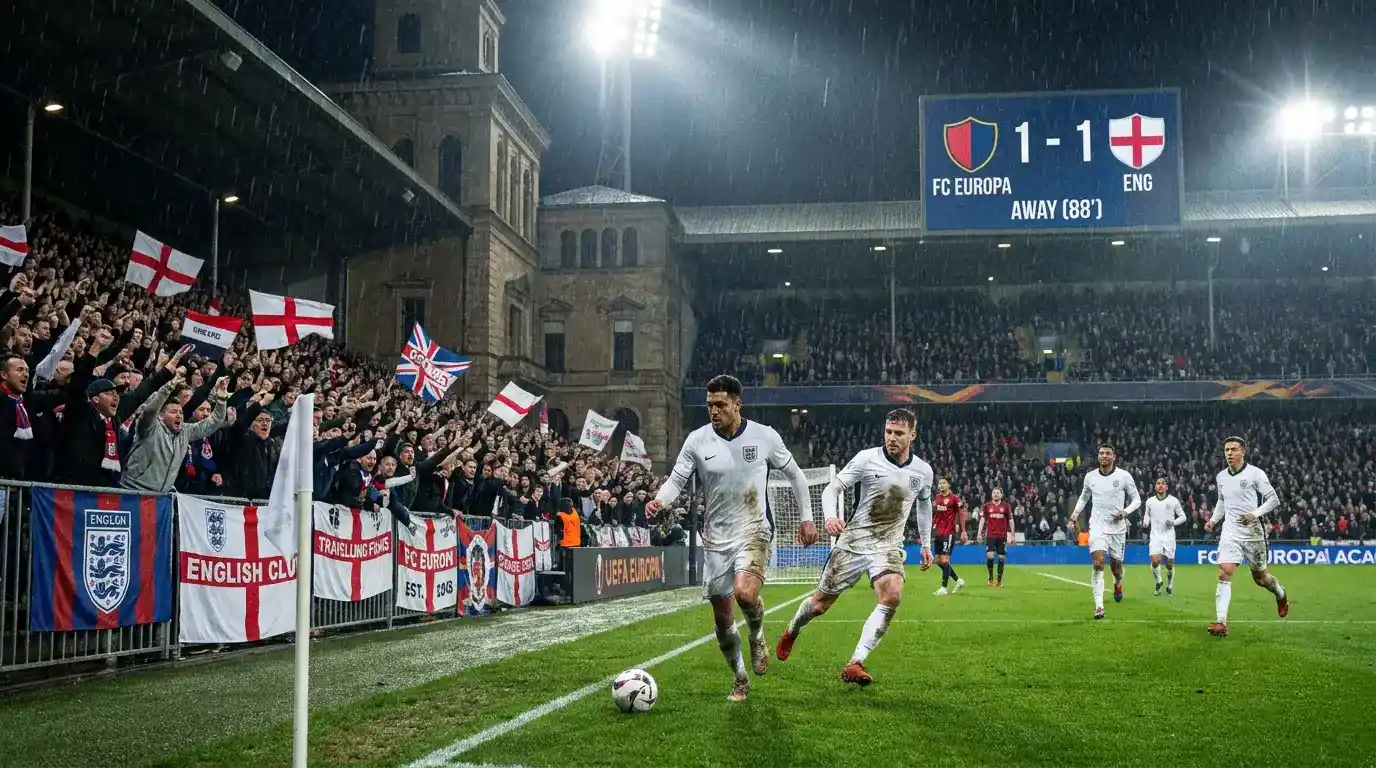
The patriot-flow distortion exists but is smaller. A Premier League side at the Europa League level might be priced 5–10% shorter at UK operators than at international books, against 5–15% in the UCL. The reason is partly that the absolute price levels are different — a Premier League club at 1.85 in the UCL has the patriot weight applied more visibly than the same club at 1.50 in the Europa League against a weaker opponent.
Scottish clubs in particular sit in an interesting price zone. Celtic and Rangers at the Europa or Conference League level get UK money but not the same scale as English Premier League clubs. The operator’s overround allocation is correspondingly different. If you’re price-shopping Scottish clubs in European competition, the variance between operators is usually larger than for English clubs, because no single operator captures dominant Scottish flow.
Coverage and streaming notes by operator
Coverage of Europa and Conference League markets at UK operators is consistent — every UKGC-licensed bookmaker carries deep market menus on both competitions, including outrights, top-eight finishes, individual match 1X2, Asian handicap, goals markets, Bet Builder, and player props for the better-known clubs.
Streaming is where the picture gets more interesting. Europa League streaming through bookmakers exists for selected fixtures, depending on the rights aggregation. Conference League streaming is broader because the broadcast rights are less aggressively defended — UK operators carry live video of most non-broadcast Conference League matches under the funded-account model.

The shift to operator-streamed coverage of mid-tier European football connects to a broader pattern the regulator has been tracking. As Tim Miller, the UK Gambling Commission’s executive director of research and policy, put it in late 2025: “Each year this report further strengthens understanding of the relationship between young people and gambling. We have seen an increase in participation in gambling — 27 percent in 2024 compared to 30 percent in 2025.” Streaming integration is part of the engagement infrastructure that drives those participation numbers, and the operator’s incentive to keep audiences inside the platform is well understood. The implication for the punter is that the convenience of integrated streaming is genuine, but the engagement loop it creates is structural and worth being conscious of.
For the parallel structure of how the Champions League is priced at UK bookmakers, including the patriot-flow distortion on British clubs and the dead-rubber problem in knockout rounds, my breakdown of Champions League betting at UK bookmakers covers the comparison points directly.
The midweek extension that still rewards close reading
The Europa and Conference League aren’t the marquee European product but they’re the most consistently mispriced. The rotation risk, the line-up uncertainty, the cross-league strength comparison difficulty — all of these create genuine value pockets for the patient punter who’s willing to wait for line-up confirmation and price-shop across operators.
The wrong way to bet these competitions is to treat them like the UCL — backing British clubs at the front of the card and hoping the prices reflect form. The right way is to focus on the structural inefficiencies, accept that the outright markets are too wide to be useful, and concentrate on the late-priced individual matches where the operator’s information disadvantage is most exposed.
The Conference League runs lower turnover than the Europa League, which means operator overrounds across the 1X2 are wider. Draw prices specifically run wider because draw outcomes in Conference League matches are slightly less predictable than UEL — squad rotation and form variance make the mid-probability outcome harder to price. Expect 5–10% wider overround on draws. Yes at a handful of UK operators, though BOG coverage on Conference League outrights is less universal than on UCL or UEL. Always check the operator"s specific BOG terms for which European competition outrights qualify. Free-bet funded stakes typically don"t qualify. Coverage exists but is narrower than EFL streaming. Selected UEL fixtures are available under the operator"s funded-account or qualifying-stake model. Marquee broadcast UEL fixtures (typically the headline Thursday-night windows) aren"t carried because the broadcast rights window blocks parallel streaming. Check the operator"s match-page before assuming.Why are Conference League draw prices wider than UEL?
Can I find a Best Odds Guaranteed offer on UECL outrights?
Are UEL matches usually covered by live streams at UK bookmakers?
This material was created by the Pitchledger team.
