


The corner I bet for the wrong reason and the lesson that stuck
Newcastle versus Liverpool, a few seasons back. Total corners line was 11.5 with the over at 5/6. I bet the over because I’d watched both sides play wide football all season, getting plenty of crosses in, drawing plenty of defensive interceptions. Match ended 13 corners. The bet won. The logic was wrong.
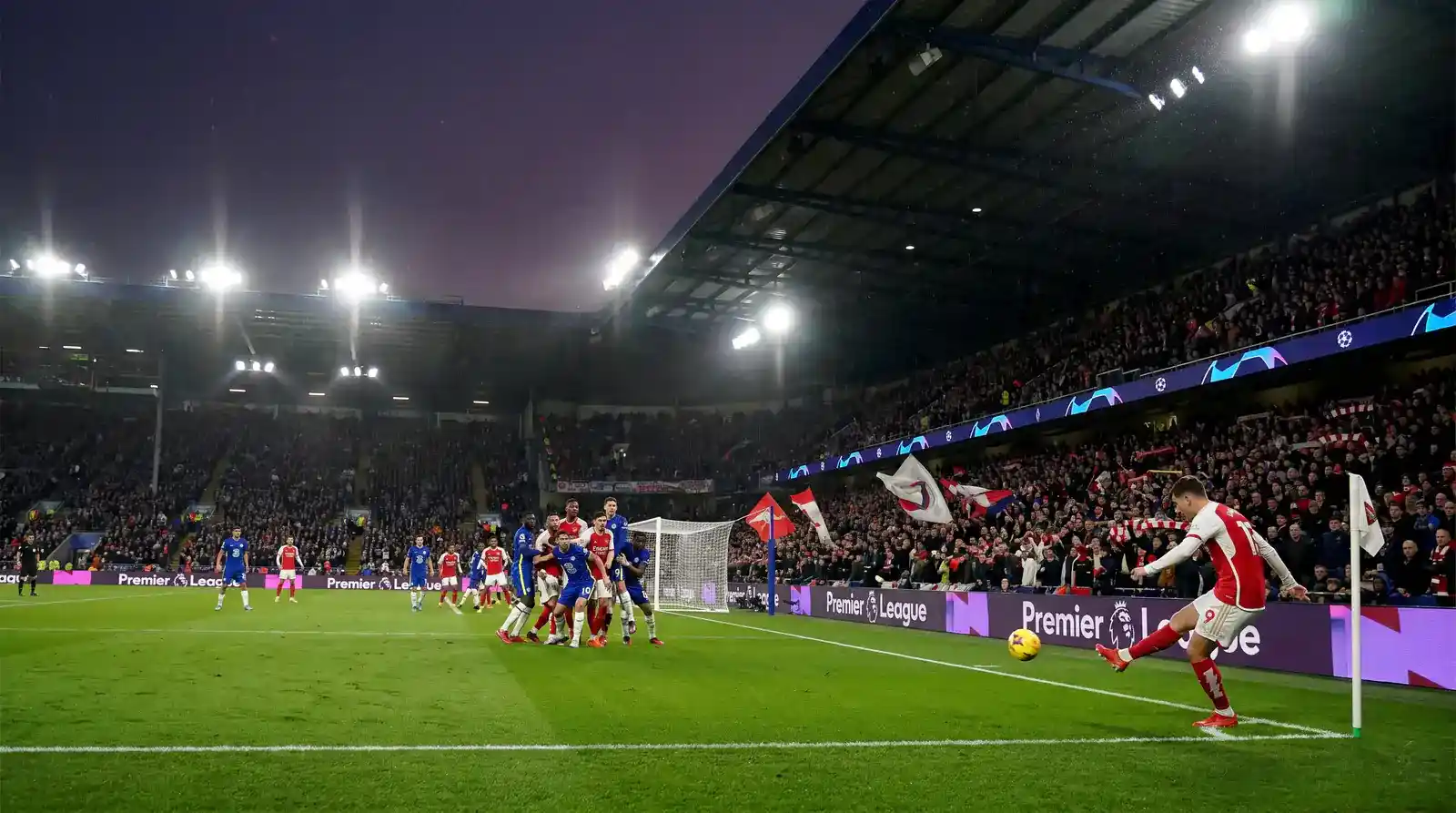
What actually happened was Newcastle sat deep for 70 minutes, conceded 11 corners trying to keep Liverpool out, and then chased the game in the last 20 minutes for the other two. The “both sides play wide” view was incidental. The actual driver was the tactical setup forcing one team to defend deep against attacking pressure. Corners markets reward that specific kind of analysis — and punters who think they’re betting “open football” usually end up backing the wrong tactical setup.
How corners get generated and how the line gets built
Corners come from three main sources: defensive interceptions of crosses, defensive blocks of attacking moves into the box, and direct attacking touches where the ball goes out off a defender. The first source dominates — about 60% of Premier League corners come from cross interceptions and box-edge clearances.
That source distribution tells you the underlying driver. Corners aren’t a function of “attacking football” in general — they’re a function of one team attacking enough to force the other team into defensive clearances. A 1-0 match where the favourite holds possession for 70% of the match and grinds out chances will often produce 12-14 corners. A 4-2 match with both teams attacking will sometimes produce only 8-9 corners because so many attacks finish with shots that go in or wide rather than getting cleared.
The bookmaker line for total corners typically sits between 10.5 and 11.5 on most Premier League fixtures, with European matches usually 0.5-1.0 lower because the tactical setups are tighter and possession is more measured. Both lines usually price evens or near-evens on each side, with overrounds around 105-107%.
Race-to-X corners and the first-15-minute distribution
Race-to-10 corners or race-to-3 corners are the in-play extension of the total corners market, paying out on whichever team reaches the threshold first. The pricing is driven by which team is expected to attack more aggressively from the start.
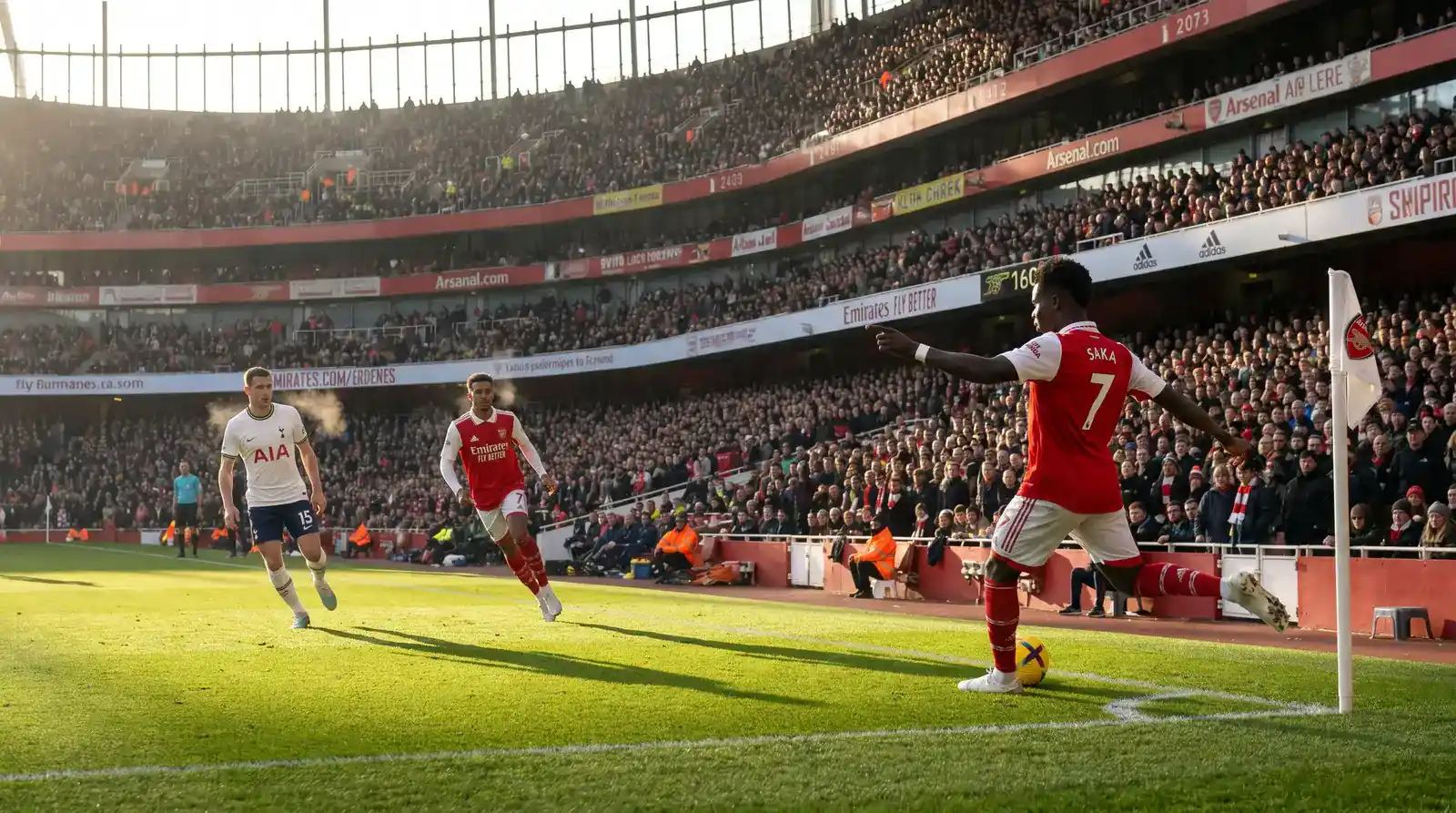
The first-15-minute corner distribution is heavily skewed in the Premier League. About 28-32% of all match corners come in the first 30 minutes, with the first 15 minutes alone producing roughly 18% of total corners. That early concentration matters because it makes the race-to-3 market essentially a bet on who starts more aggressively, not who plays better across the full match.
That distinction creates value pockets. A favoured team that’s known to start slowly — typically a top-six side coming off European football midweek — might be 4/6 to win the match outright but 5/4 to win the race-to-3 corners. That race-to-3 price implies they win the early-corner race only about 44% of the time, when the underlying probability often sits closer to 38-42%. The slight under-pricing reflects retail flow concentrating on the match favourite to win every sub-market.
Asian corner handicaps and the under-priced underdog
Corner handicaps work the same as match handicaps: the favourite gives a number of corners to the underdog, the underdog receives them, and the bet settles based on whether the favourite’s corner count exceeds the underdog’s by the handicap amount.

A Premier League favourite at home might give -2.5 corners on the handicap, priced at 10/11. That implies they need to win the corner count by 3 or more. Common fixture results: favourite wins 9-3 corners (handicap covers), favourite wins 7-5 (handicap loses), favourite wins 11-2 (handicap covers comfortably).
The structural feature of corner handicaps is that they price tighter than match handicaps because the underlying volatility is lower. A team that’s modelled to win 7-4 in corners will usually deliver something between 5-3 and 9-5 — narrower variance than match-result outcomes. That tighter variance lets bookmakers offer 95-99% overrounds on Asian corner handicaps, which is unusual in UK football betting.
Where I find value is on the underdog’s corner line. A team modelled to receive 4 corners on average might be priced at over 3.5 corners at 11/10, which implies 47.6% probability. The actual probability over 3.5 corners for a team with expected 4 corners is closer to 55-58% (the Poisson distribution at lambda=4 gives 56.7% for at least 4 corners, before adjustment). Operators don’t always tune the underdog corner line as precisely as the favourite’s, because retail flow concentrates on favourites.
First corner markets and the kickoff-to-event distribution
“First team to win a corner” is a niche market that prices most fixtures at evens or 10/11 with a small bias toward the favourite. The actual first-corner distribution in the Premier League favours the home team about 53% of the time, with the favourite scoring about 56% regardless of home/away.
The market is structurally efficient at this price point — there’s not much wiggle room for the bookmaker to mis-price and not much edge for the punter. Where the market gets interesting is on the time-to-first-corner side bet. Some operators offer “first corner before/after 5 minutes” as a discrete proposition. The actual rate of first corners within five minutes of kickoff is roughly 35-40% across the Premier League. Pricing at 13/8 against (implying 38%) is essentially fair. Pricing at 6/4 against (implying 40%) is slight value. Pricing at 7/4 against (implying 36%) is slight value the other way.
Team-specific corner lines and the trap of high-press teams
“Team A corners under/over 5.5” is the discrete version of the total market for a single side. These lines vary widely by team profile. A high-pressing team like a Liverpool or Manchester City often projects at 7-8 corners per match at home, 5-6 away. A counter-attacking team might project at 4-5 home, 3-4 away.

The trap is that high-pressing teams’ corner counts are heavily fixture-dependent. They generate corners against teams that sit deep. They generate fewer corners against teams that press them back. The line for “Manchester City over 6.5 corners” at home is usually 4/7, implying 58%. Against a defensive opponent that probability sits 70%. Against a high-pressing opponent it sits 45%. The market line is a midpoint, and the value lives in identifying which side of the midpoint the actual fixture sits.
UK gambling reported 24.4M active accounts last year, with a meaningful share dipping into corners markets specifically because they pay out two or three times a fixture and feel more frequently rewarding than match outcome markets. That retail-flow concentration is why overrounds stay healthy at 105-108% on the major corner markets even though the pricing is mathematically tractable.
Same-game multis built around corners
Corners plug into same-game multis cleanly because the correlation with match outcome is moderate but not overwhelming. The bookmaker’s correlation model can size the discount confidently.

“Over 10.5 corners and over 2.5 goals” is a typical combination. The independent multiplication of the two legs might give 17/10. The displayed combination price might be 13/8. The discount reflects the modest positive correlation — high-corner matches tend to be high-goal matches, but not strongly. The combination is usually fair value within the operator’s margin.
“Favourite to win and over 10.5 corners” has stronger correlation in matches where the favourite dominates territory but doesn’t convert efficiently. The combination price typically sits at a 12-15% discount to independent multiplication. The actual joint probability is usually about 18-20% lower than independent. The bookmaker’s discount is conservative — there’s a small edge to the punter when the favourite’s match price is around 4/7 and the corners line is fair.
What corner markets reward and what they punish
Corner markets reward tactical understanding of how teams generate territorial pressure and punish punters who confuse “attacking football” with “corner-generating football”. The pricing is mathematically reasonable across the major markets, with the structural value living in handicap underdogs and team-specific lines against unfamiliar opponents.
What works for me over a Premier League season: tracking team corner rates home and away, watching for tactical shifts under new managers, and being patient on first-corner and race-to markets where the operator’s edge is genuinely small. The market doesn’t reward big swings — but it rewards consistent small edges across hundreds of fixtures, which is exactly the betting profile that compounds.
Because corners come from defensive clearances of attacking moves. A 4-2 match where both sides attack openly often produces 8-9 corners because so many attacks end in shots or wide play. A 1-0 grinder where the favourite holds possession and creates pressure that defenders clear produces 12-14 corners. The driver is territorial pressure, not open attacking play. Generally yes. The underlying corner counts have lower variance than match outcomes, which lets operators price tighter at 95-99% overrounds — unusual in UK football betting. Value usually sits on the underdog"s corner line, where bookmaker tuning is less precise because retail flow concentrates on favourites. They"re structurally efficient at around evens, with small edges available on the time-to-first-corner side bet at some operators. If you"re not specifically reading the kick-off tactical setup, there"s no edge worth pursuing. Stick to total corners and team corner lines where the value pockets are more reliable.Why do high-scoring matches sometimes have fewer corners than 1-0 grinders?
Are Asian corner handicaps better-priced than match handicaps?
Should I bet first-corner markets?
This material was created by the Pitchledger team.
