

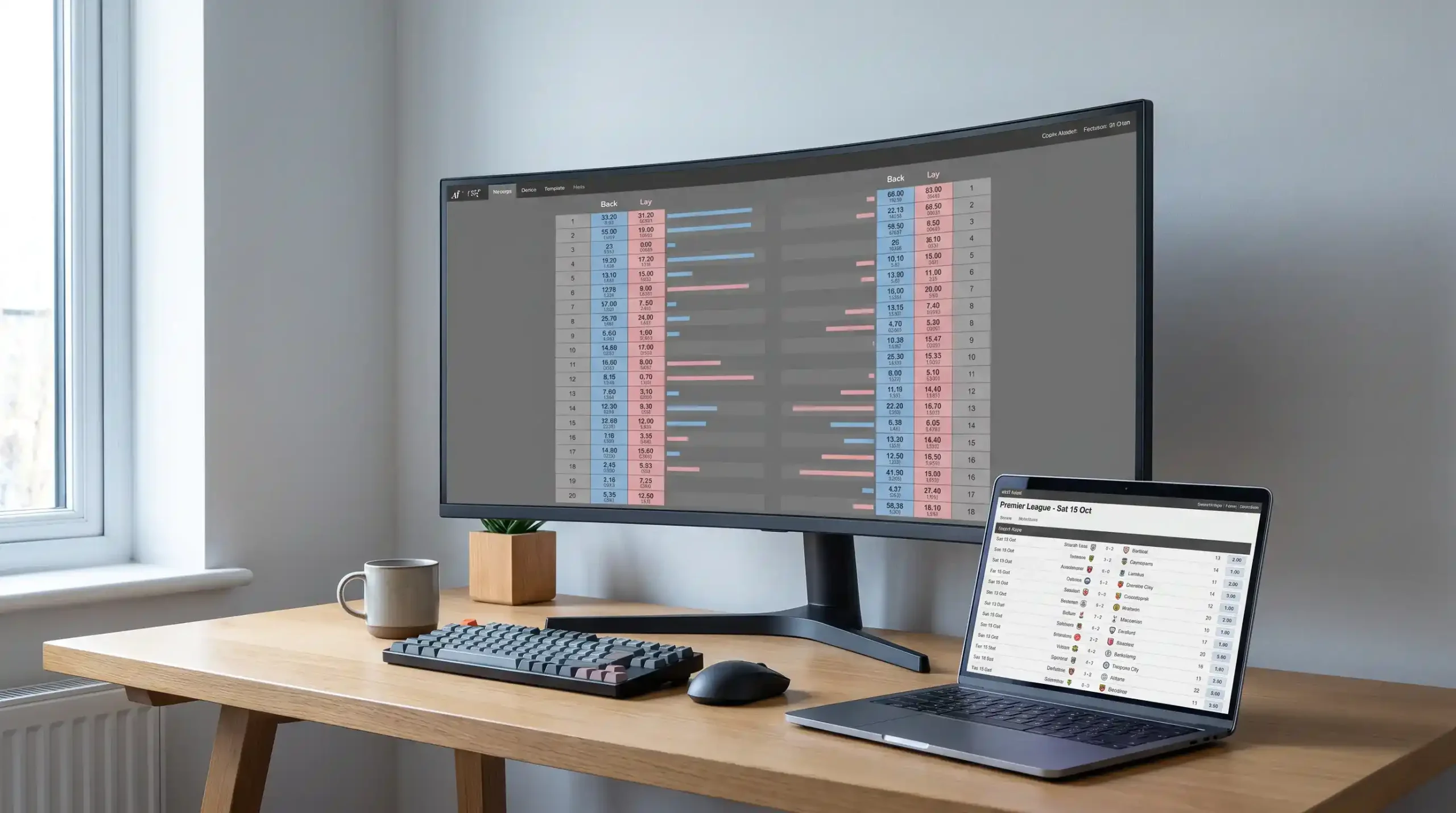
The first trade I made profitably and the trade I lost on the same fixture
A Champions League fixture, mid-2010s, on a betting exchange. I backed the favourite at 1.95 pre-match and laid them at 1.50 ten minutes into the second half when they were 1-0 up. Locked in a profit either way the match finished. The trade worked.
The same fixture also taught me what happens when trading goes wrong. I’d backed the under 2.5 at 2.10 pre-match and tried to lay it at 1.40 when it was 0-0 with 25 minutes left. The lay didn’t fill — the market had moved too fast — and the match ended 0-0. I was stuck with the original back, won the under bet, but missed the better trade. Football trading rewards the punter who plans both entry and exit before clicking; it punishes the punter who improvises.
How exchanges differ from sportsbooks
UK betting exchanges work fundamentally differently from sportsbooks. On a sportsbook, you bet against the operator, who sets the price. On an exchange, you bet against other punters, who place “back” and “lay” orders that match each other. The exchange takes commission on net winnings rather than building margin into the displayed price.
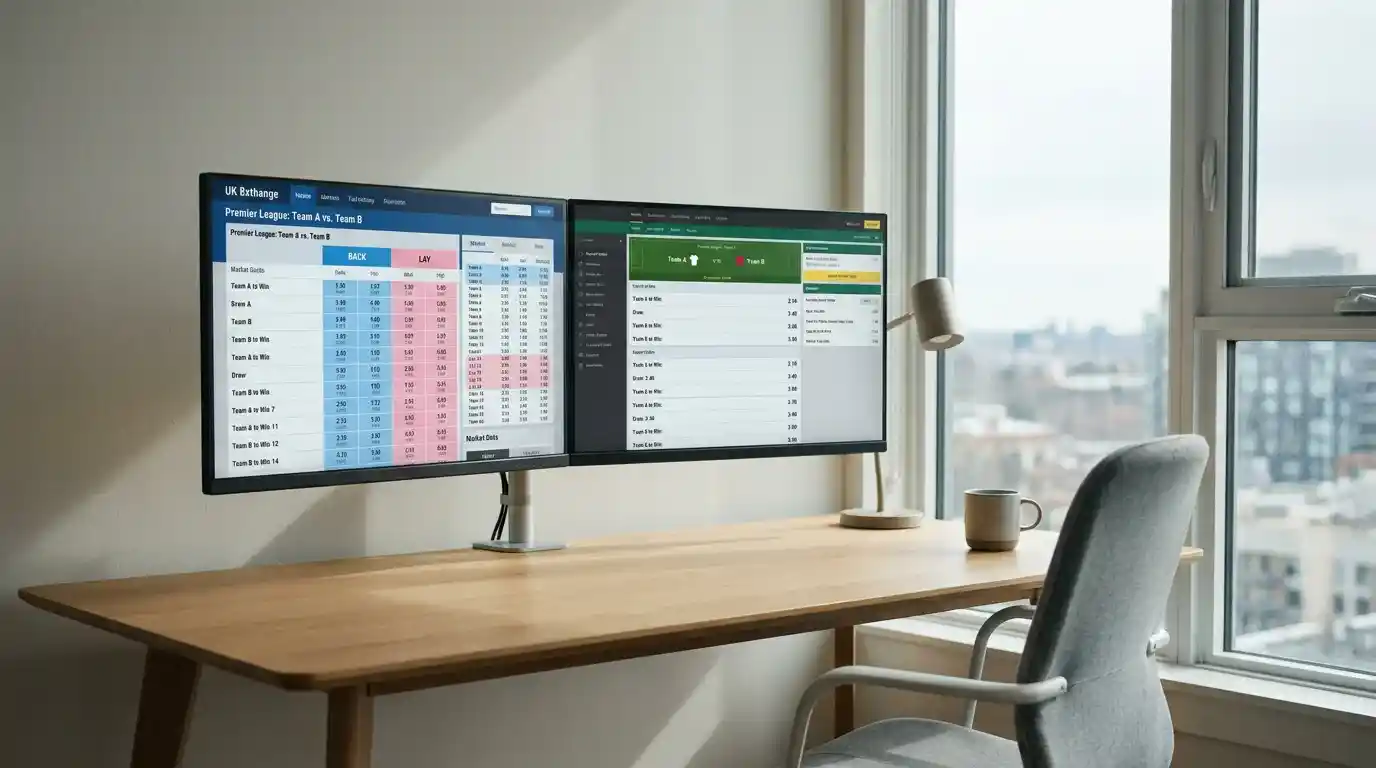
That mechanical difference produces sharper prices. Exchange prices typically run at 100-101% implied probability after commission, against 105-106% at UK sportsbooks. The exchange is the closest you’ll find to a true probability market in UK football betting.
It also produces a different mental model. On a sportsbook, you place a bet and it stays placed until the event resolves. On an exchange, every position can be reversed — you back a team and you can lay them later, settling the position before the event ends. That reversibility is what makes trading possible, and what makes exchanges the natural home for trading-style strategies.
The basic back-then-lay trade
The simplest exchange trade is to back at one price and lay at a shorter price later, locking in a profit regardless of the eventual outcome. Back a team at 3.00 pre-match. The team starts strong. Lay the team at 2.00 thirty minutes in. The position is “green-screened” — profit locked in if the lay matches your stake correctly.
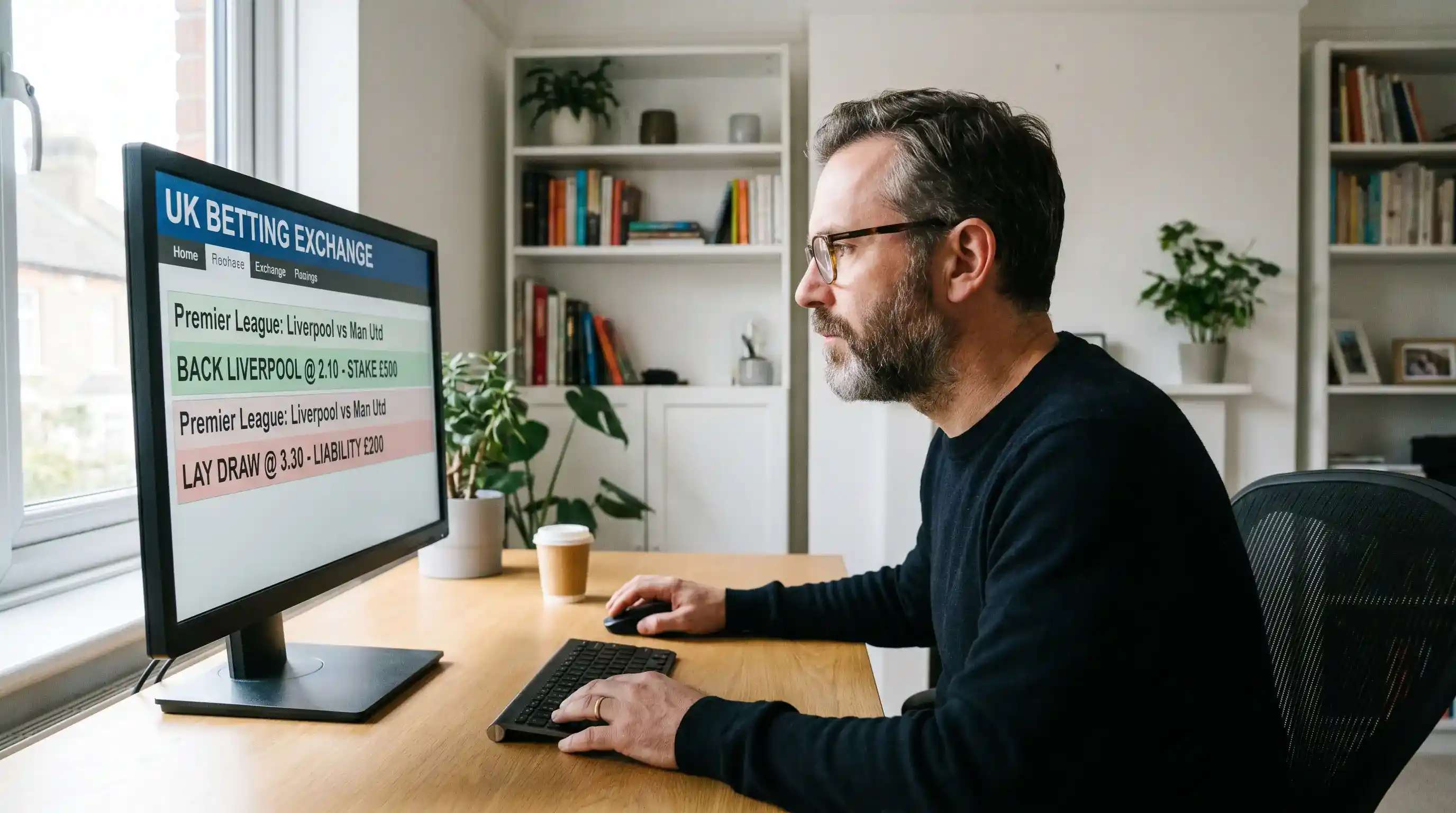
The maths: backing £100 at 3.00 commits you to win £200 if the team wins, lose £100 if not. Laying £150 at 2.00 commits you to win £150 if the team doesn’t win, lose £150 if they do. Net position if team wins: +£200 – £150 = +£50. Net position if team doesn’t win: -£100 + £150 = +£50. Locked profit of £50 either way.
The trade works when you can lay shorter than you backed. It fails when the price moves against you and you have to lay at a longer price. The discipline is in identifying entries with reasonable probability of the price shortening, not in trying to back every team you fancy.
Lay-the-draw and its tactical cousins
Lay-the-draw is the most common pre-match exchange trade in UK football. You lay the draw on a fixture where you expect goals — typically priced 3.20 to 3.50 pre-match. If the match produces an early goal, the draw price drifts to 4.50+ and you back it back to close the position at profit.

The trade fits fixtures where the goal-scoring environment is favourable: two attacking teams, both managers known to go for it, a fixture with European context. The mathematics work because draws in the Premier League run at about 24-26% but tend to occur in low-scoring matches. Selecting against that pattern shifts the implied draw probability down towards 18-20% in the right fixtures.
The risk is the late equaliser. A match 1-0 with 80 minutes played has the draw at 5.50 — easy to back to close the lay-the-draw position at a small loss. The same match at 1-1 with 80 minutes has the draw at 1.40 — devastating to close. The trade has asymmetric risk, and the discipline is in only entering when the underlying goal-scoring environment justifies the asymmetry.
Scalping and the short-form trade
Scalping is a faster trading style: enter and exit within minutes, capturing small price movements rather than waiting for big shifts. A scalper might back the favourite at 2.10 expecting the price to drift to 2.05 in the next ten minutes, then close immediately.
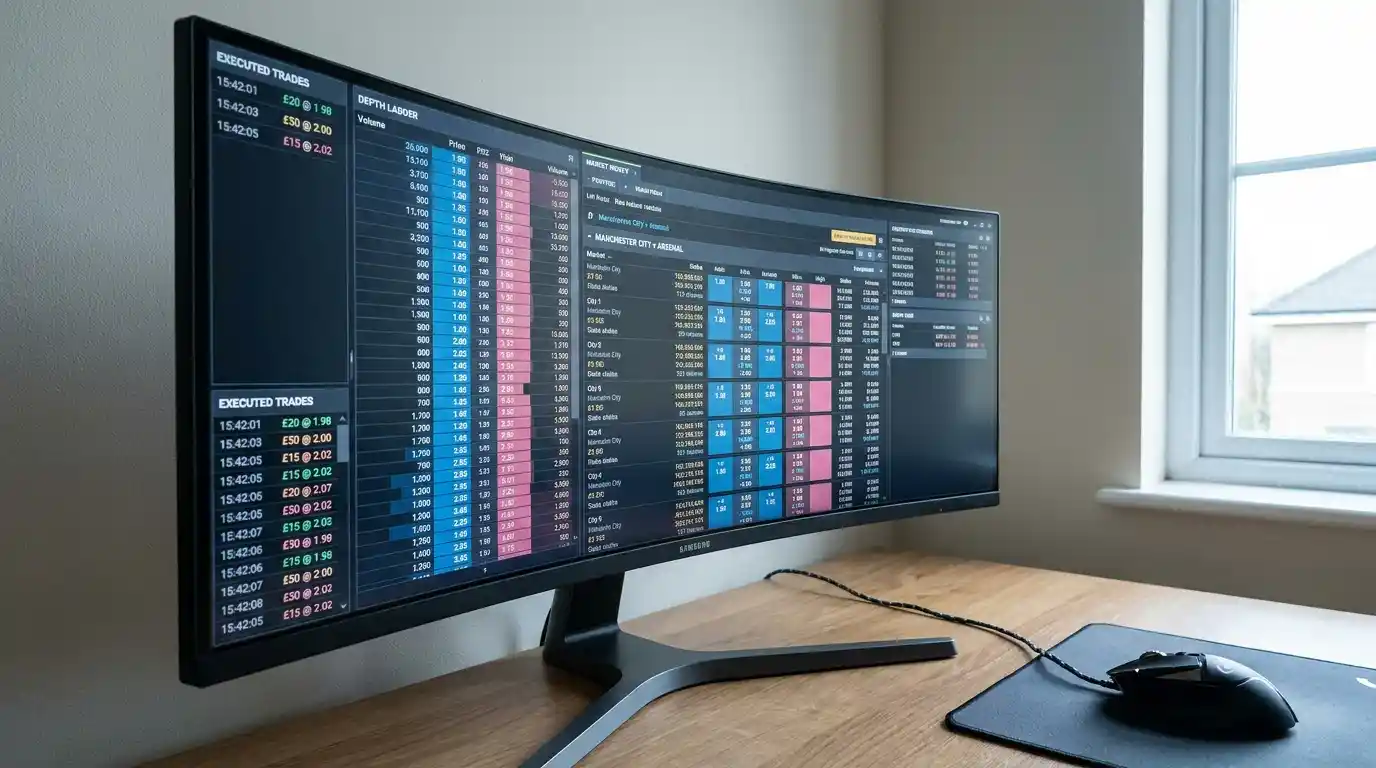
The maths are tight. A £100 back at 2.10 closed at 2.05 produces about £2 profit before commission. After 5% commission, maybe £1.50. To make £100 in a session, the scalper needs around 70 successful trades — assuming a hit rate above 50% and tight loss management on failed trades.
That’s a lot of clicks. The advantage is that the variance is low — most trades close near break-even, the wins and losses are small, and the bankroll moves slowly. The disadvantage is that the operator-side liquidity has to be there for the trades to fill, which means scalping works best on heavily-traded fixtures like Premier League weekends and Champions League ties, and not at all on smaller events.
The hedging trade between exchange and sportsbook
One of the cleanest UK trades is taking a price at a sportsbook and laying it on the exchange. The trade works when the sportsbook is offering an enhanced price — a price boost, an early-week opener, a market-leading quote — that exceeds the exchange’s market price.
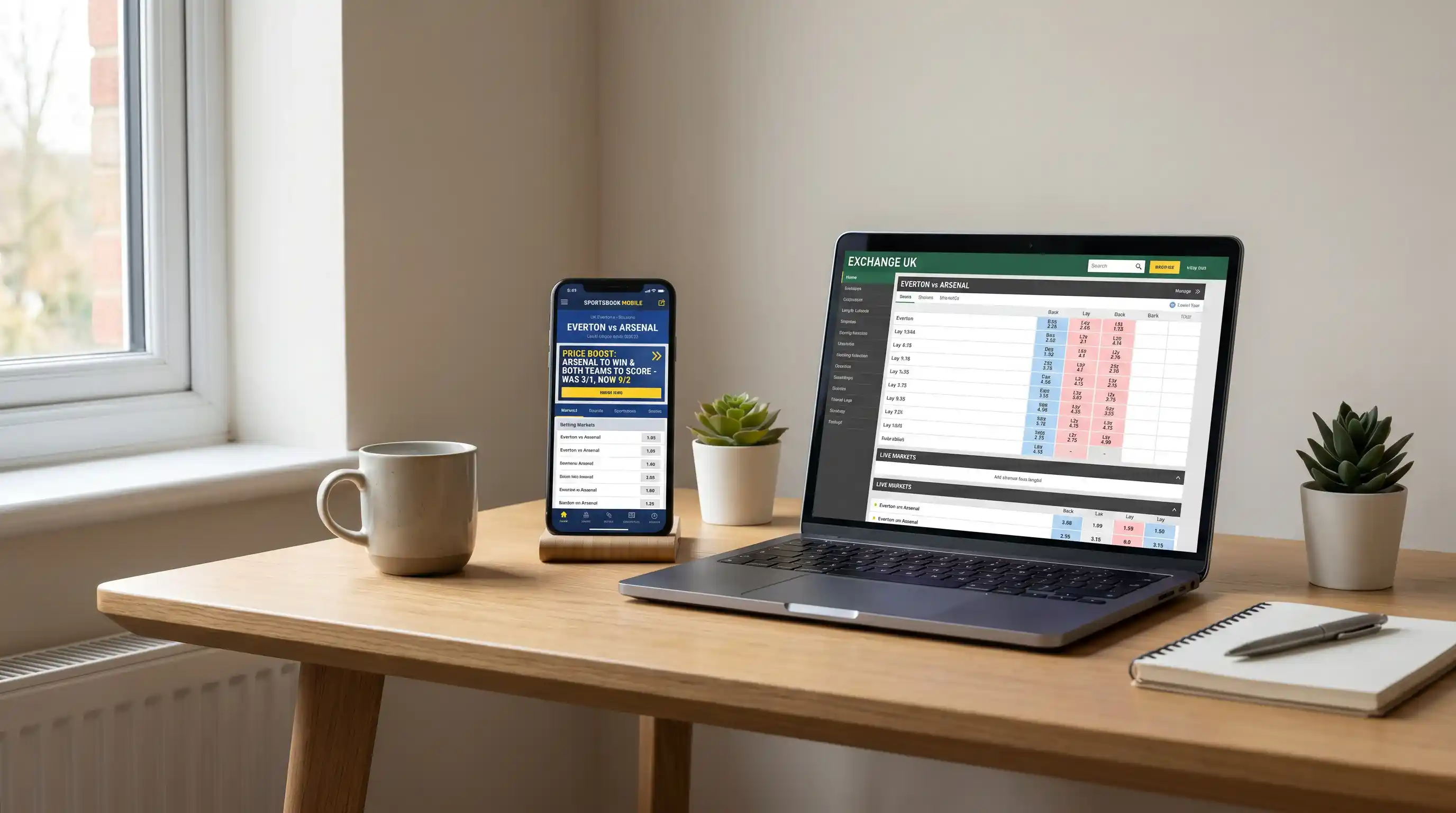
Example: a sportsbook offering 5.00 on an outright market that the exchange is trading at 4.20. Back £20 at the sportsbook for £100 potential return. Lay £100 at 4.20 on the exchange. The lay liability is £320. The sportsbook potential return is £100. Net position if the bet wins: +£80 (sportsbook) – £320 (lay liability) + £100 (lay matched) = -£140. Net position if the bet loses: -£20 (sportsbook stake) + £100 (lay stake) = +£80.
Wait — that didn’t work out. The numbers depend on getting the lay stake right. A correctly-sized lay leaves the punter with a small guaranteed profit either way. The maths is simple but unforgiving — get the lay stake slightly wrong and the trade goes from positive expected value to break-even or worse.
This is why most UK exchange traders run spreadsheet calculators or use the exchange’s built-in “guaranteed profit” sliders. The arithmetic isn’t hard but it’s exact, and getting it wrong on a 5.00 back can cost £40 on what should have been a £15 lock-in.
Why exchanges remain a minority share of UK football betting
Despite being structurally better-priced, UK exchanges hold a small minority share of the football betting market. Sportsbooks dominate — William Hill held about 37.83% of UK sports betting PPC click-through in February 2026 and Bet365 16.2%, both sportsbooks. Exchange-style operators sit well below those numbers.
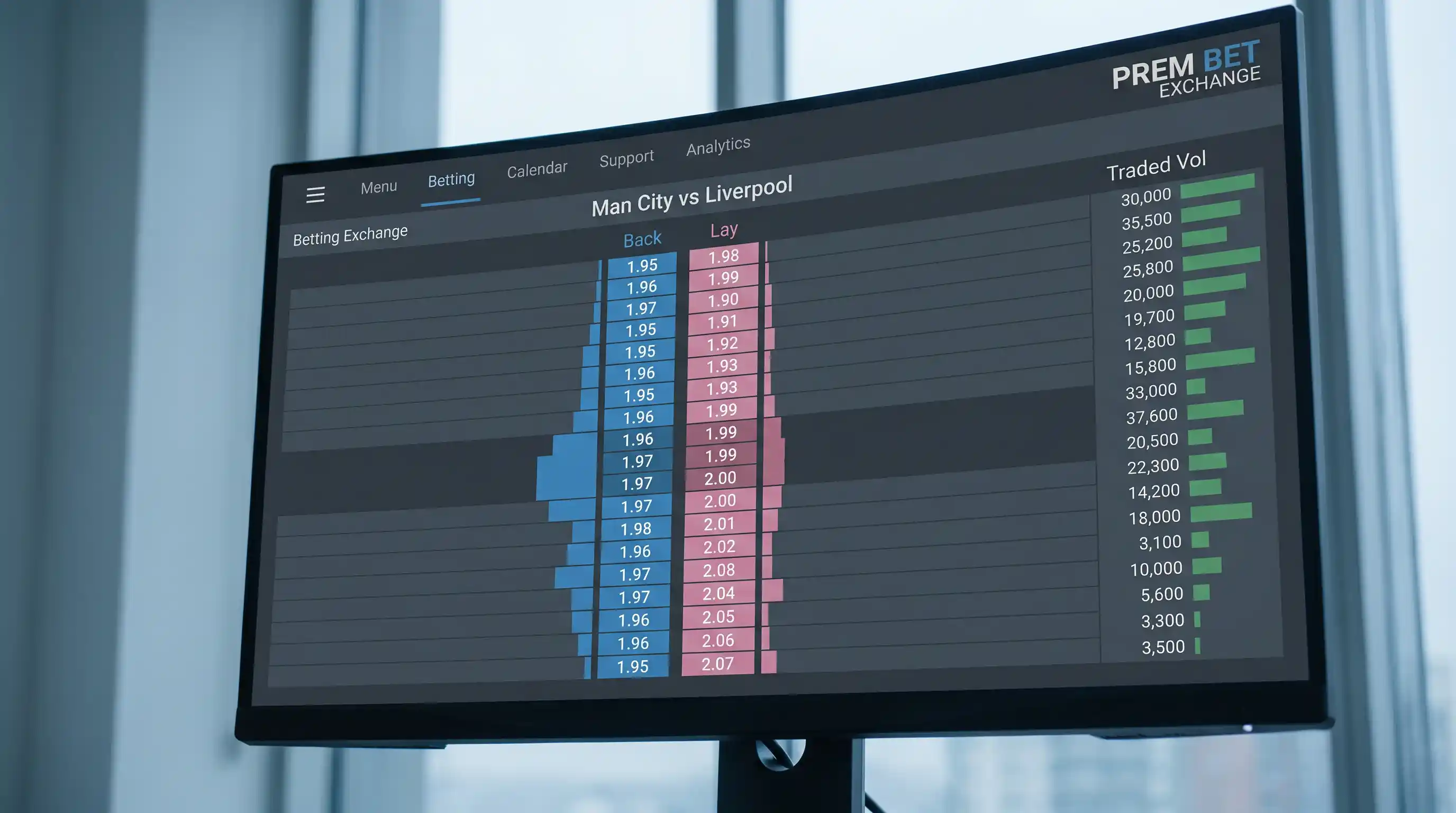
The reason is product accessibility. Exchanges are harder to use. Lay betting is unintuitive to retail punters. Position management requires running mental sums. And the markets that retail punters most enjoy — accumulators, free bets, Bet Builders, in-play prompts — aren’t offered on exchanges in the same form. Sportsbooks own the mass market because their product fits how most people want to bet.
Exchanges therefore work best for punters who’ve moved past the retail product offering — punters who want sharp prices, full position management, and the ability to express views that don’t exist as standard sportsbook markets. The audience is small but disciplined, and the products that fit that audience continue to develop. UK gambling reported 34M new registrations across the licensed market last year, with exchange-share holding steady — exchanges aren’t growing but they’re not losing ground either.
What trading teaches that straight betting doesn’t
Trading on a football exchange forces you to think about price movements, not just outcomes. Every position has an entry and an exit. Every entry can be exited at any time. That reversibility shapes the way you think about value — you stop asking “is this bet a winner?” and start asking “is this price likely to shorten or lengthen, and how much am I willing to risk for what payoff?”
The discipline is more useful than the trades themselves. Punters who’ve spent time on exchanges almost universally bet better at sportsbooks afterwards. They’ve internalised the concept of price relative to probability. They’ve learned to size positions against actual risk rather than against potential payout. They’ve stopped chasing romantic bets and started building disciplined risk profiles. Value betting fundamentals click into place once you’ve spent a season trading the same matches you were previously betting outright.
That mental shift is what trading is genuinely worth. The trades themselves are profitable only with serious commitment. But the discipline that trading teaches pays off across every football market the season offers — exchange and sportsbook alike.
Yes, structurally. Exchange overrounds run at 100-101% after commission, against 105-106% at UK sportsbooks. The exchange takes commission on net winnings rather than building margin into the displayed price. For high-volume punters, that 4-5% structural advantage is meaningful even after factoring in the smaller bonus and promotional ecosystem on exchanges. Entering trades without a planned exit. Punters back a team they fancy and then improvise when the price moves. Successful traders plan both the entry price and the exit conditions before placing the bet. If the trade doesn"t follow either path, they exit at the pre-planned stop rather than holding on hope. Straight betting first. Trading adds complexity — position management, two-sided pricing, commission calculation — on top of the underlying football analysis. Get fluent with reading prices and reading matches first, then add the trading layer when the fundamentals are solid. Trying to learn both at once usually produces faster losses than learning either separately.Are exchange prices really sharper than sportsbook prices?
What"s the most common trading mistake?
Should beginners start with trading or with straight betting?
This material was created by the Pitchledger team.
